What if the water mark beside your window isn’t showing where the leak starts? After rain, dampness may point to the window, the surrounding wall or another nearby source. Guessing can lead to the wrong next step, so a window leakage inspection Singapore homeowners can use begins by observing and documenting evidence before drawing conclusions.
Signs of water intrusion can be frustrating when you don’t know what they mean or what to raise with a developer, MCST or other relevant party. Prime Defectors provides residential defect inspections in Singapore, helping homeowners document visible conditions through inspection and reporting. The company does not provide renovation or defect rectification, so its role is to record observations rather than carry out repair work.
This guide explains what a window leakage inspection can observe, which details to record and how to distinguish symptoms from possible water-entry paths without jumping to conclusions. Whether you’re managing a BTO or condominium concern, clear observations can help you prepare for follow-up discussions during your Singapore property handover or later.
Key Takeaways
- A window leakage inspection records visible signs and possible water-entry paths without assuming the cause.
- An inspection moves from discussing reported symptoms to examining accessible areas and documenting observations.
- Rain-linked ingress, condensation and moisture from nearby building areas may present differently, but site findings guide interpretation.
- Dated photos and notes about rainfall, affected rooms and recurring dampness can make findings more useful for follow-up.
- An inspection report can help you communicate concerns clearly with a developer, MCST or other relevant party.
Why a Window Leakage Inspection in Singapore Starts with Evidence
A window leakage inspection is a systematic visual assessment of water-related signs around a window opening, followed by a record of what is visible and where it appears. The purpose is to establish a useful picture of the concern, not to declare a cause based on one mark. Prime Defectors documents defects across Singapore homes, including BTO flats, condominiums, landed properties and resale homes.
A stain below a frame, a damp wall edge or peeling paint is evidence to investigate. It is not, by itself, proof that rainwater entered through the window. Water may travel from another nearby area before becoming visible, and condensation can also leave moisture on or near a window. An inspection considers the location and pattern of symptoms alongside the homeowner’s account, rather than treating one patch as a definitive diagnosis.
This distinction matters during a Singapore property handover, when clear records can help you explain a concern to a developer, MCST or other relevant party. Note the affected location, what the mark looks like and when it appeared. Dated photos and a brief timeline make follow-up discussions more specific, especially if dampness recurs after rain. A general Building inspection also involves observing and documenting a property’s condition, though its scope depends on the inspection being carried out.
Which signs make a window leakage inspection worthwhile?
Look for water marks, damp edges, peeling finishes or recurring moisture near the window opening. Record whether symptoms appear during rain, soon afterwards or at other times, and note which room and part of the opening are affected. This context helps an inspector compare the reported pattern with visible conditions. Don’t assume every damp patch comes through the window, or that one mark identifies the entry point.
Why property type matters in Singapore
The surrounding context differs between an HDB or BTO flat, a condominium and a landed home. For a new BTO, a professional window leakage inspection Singapore service can document window concerns alongside other handover observations. Condo defect inspection Singapore and landed property checks refer to specialized assessments for those property types. Prime Defectors Singapore focuses on inspection and reporting, not renovation or rectification. Whatever the property, describe the symptoms and location clearly so the findings can be considered in context.
How Professional Window Leakage Inspection in Singapore Works
A professional window leakage inspection follows a clear sequence, from understanding the reported symptoms to explaining the observations. Prime Defectors inspects accessible areas and documents findings rather than moving from a damp mark straight to a repair recommendation. The inspection is guided by the concern you describe and what can be safely seen at the property.
The process typically moves through these stages:
- Discuss the symptoms. The inspector asks where moisture appears, when it occurs and whether the pattern has changed. This account helps direct attention to relevant parts of the window and surrounding finishes.
- Examine visible areas. The inspection considers accessible frame edges, seals, joints, nearby wall surfaces and finishes. Observations around the opening provide context, but don’t automatically reveal what may be happening behind a concealed surface.
- Record what is observed. Notes and supporting records identify the affected location, visible condition and relevant limitations. Clear descriptions distinguish directly observed signs from information supplied by the homeowner.
- Explain the findings. The inspector presents observations in plain language and clarifies what they may suggest, what remains uncertain and whether the accessible evidence raises further questions.
An inspection records observations; it does not automatically establish a definitive cause. A visible damp edge is a recorded condition. Understanding how moisture reached that point requires considering relevant site observations rather than assuming a single route.
What an inspector examines around the window
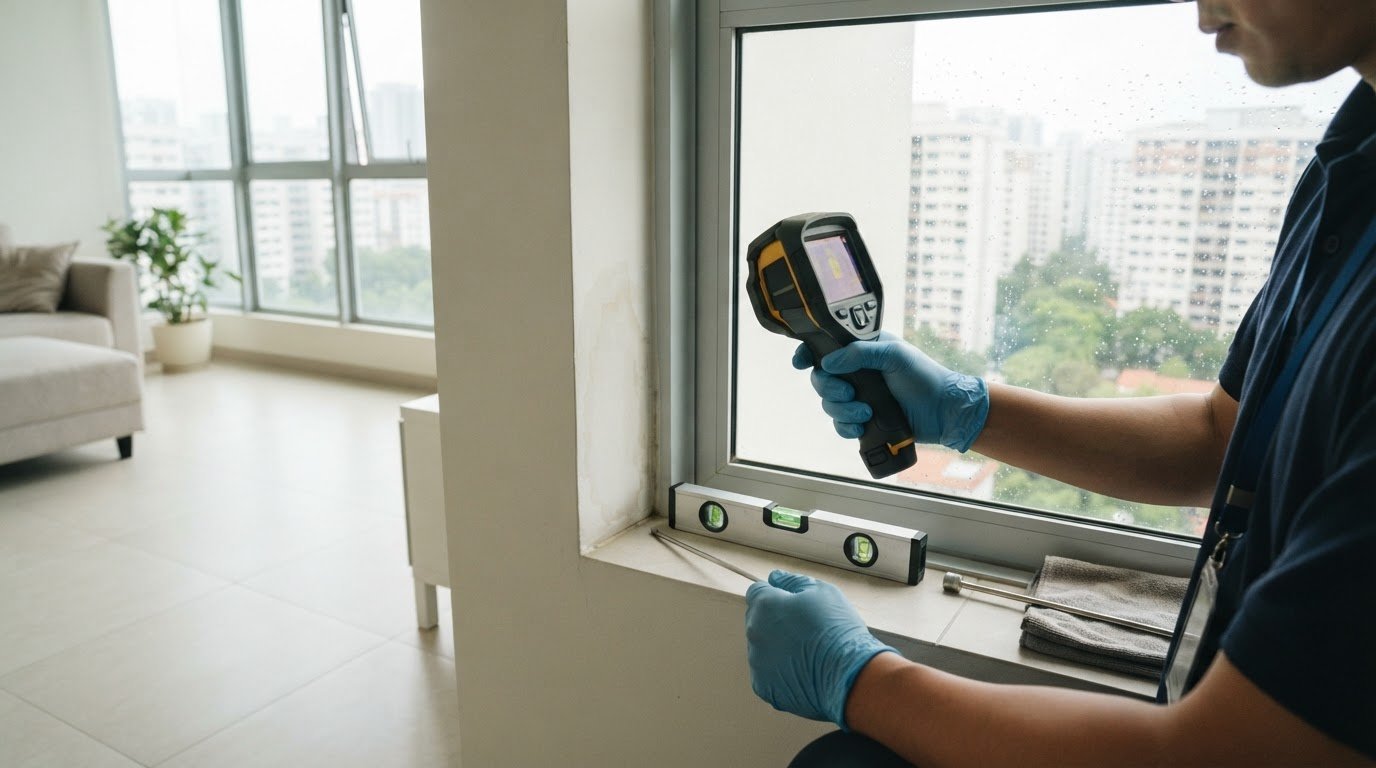
Visible frame edges, seals, joints and adjacent wall finishes may all be relevant. The inspector looks for observable signs such as moisture, deterioration or changes to a finish, then records where each appears in relation to the opening. This surrounding context matters: a symptom near a window may involve the window area or an adjacent surface. The check is limited to areas that are accessible and visible.
What inspection tools can and cannot show
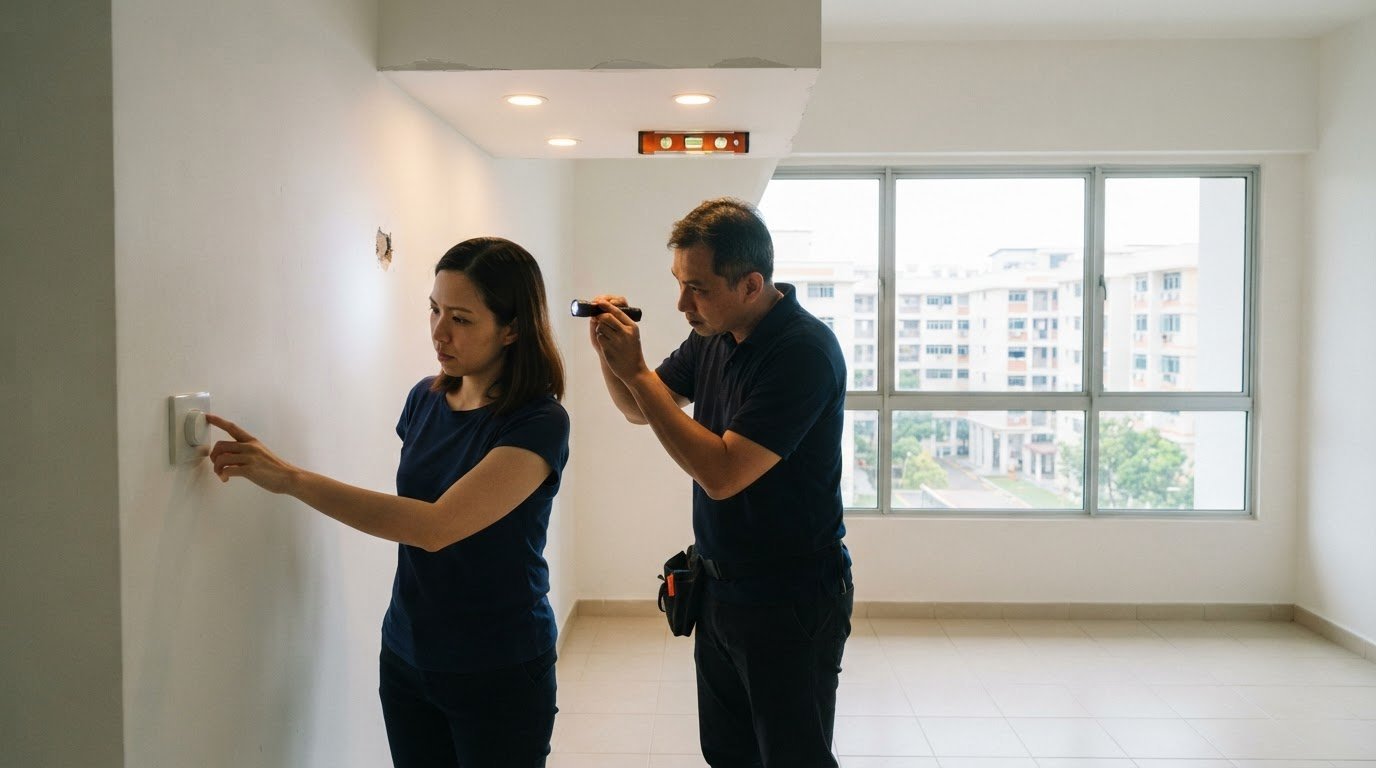
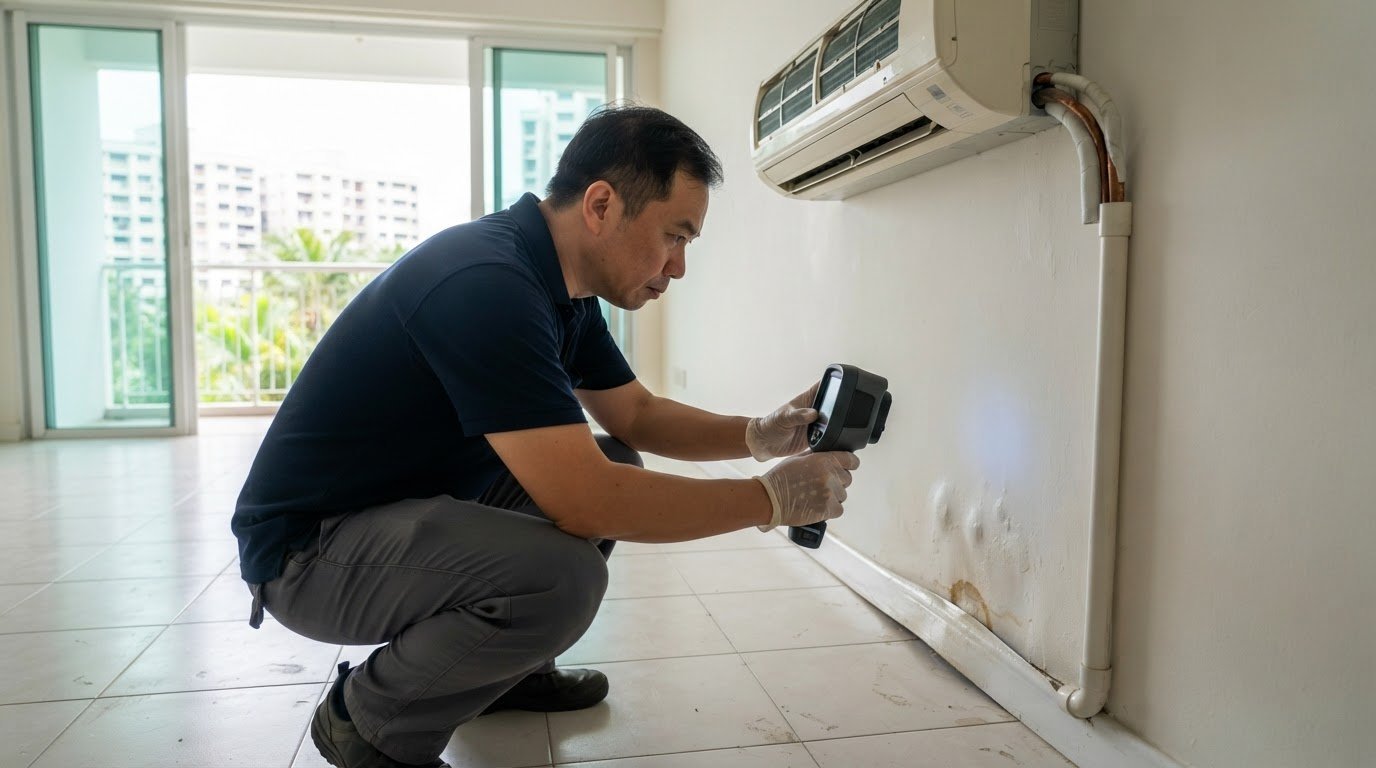
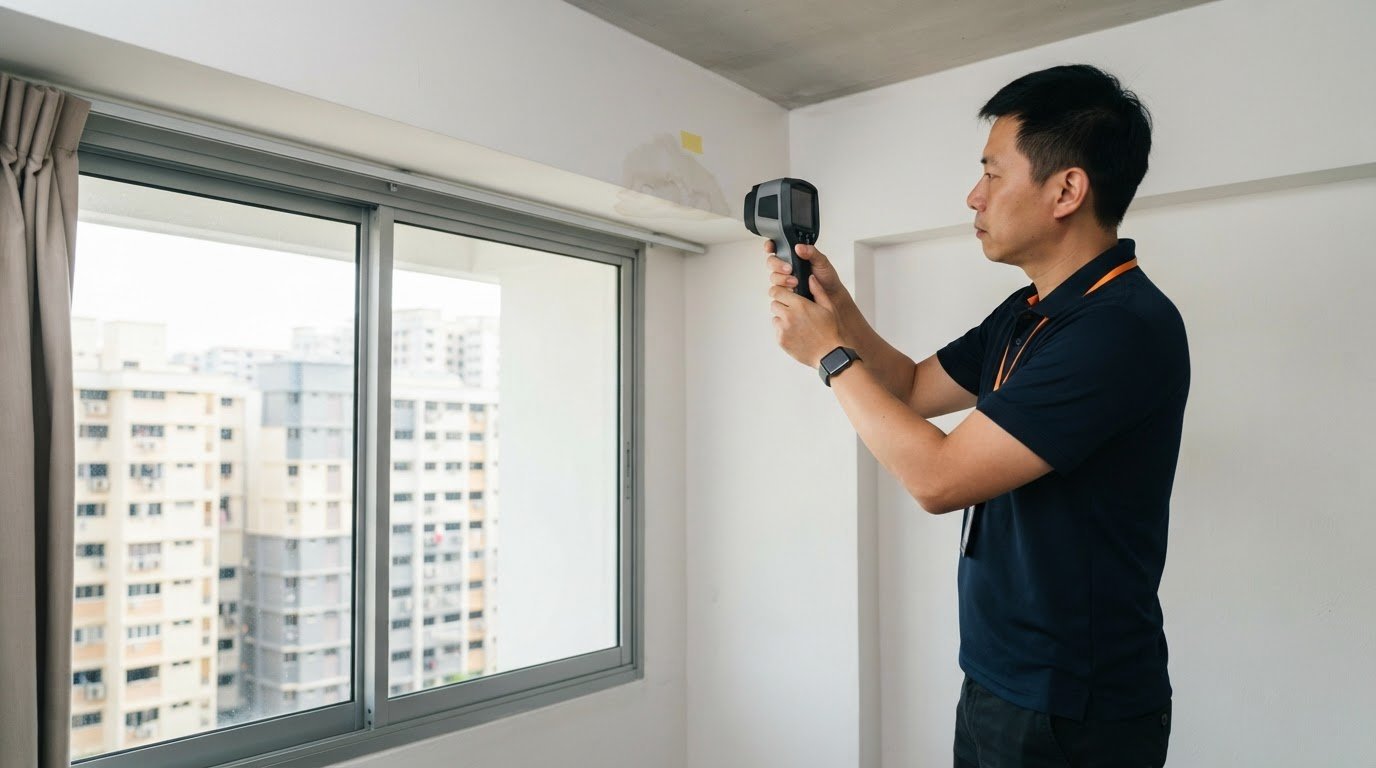
Tools can support observation, but they don’t replace it. A thermal scanner may help identify temperature patterns at accessible surfaces, but a reading alone does not prove water ingress. A spirit level can help assess alignment, not test for leakage. Where appropriate, a tapping rod can help assess how a surface responds to light contact. Each tool provides context; interpretation still depends on the complete site findings.
Prime Defectors specialises in inspection and reporting, not renovation services. This keeps the inspection separate from renovation work. If a window concern is recurring or difficult to describe, discuss a window leakage inspection with Prime Defectors and keep your notes or photos available to explain what you’ve observed.
Window Leak, Condensation, or Another Source? Interpreting Inspection Findings
Moisture near a window can have different explanations. A pattern that appears after rain may make water entry around the window worth investigating, while droplets on glass may be consistent with condensation. Dampness elsewhere on the same wall or in the room may also point to an adjacent building area. These are clues, not conclusions. A window leakage inspection in Singapore should interpret them in light of the conditions observed at the property.
| Possible source | Observations to record | What the observations can tell you |
|---|---|---|
| Rain-linked ingress | Whether moisture recurs after rain, its position relative to the frame, and which nearby surfaces are affected. | The timing and location may make the window area relevant to investigate, but do not prove the entry point. |
| Condensation | Whether droplets appear on the glass, and when or where they are visible. | Moisture on a surface can have a different pattern from water entering around a frame. Site findings are needed to interpret it. |
| Adjacent building area | Whether dampness extends beyond the window opening or appears elsewhere on the wall or in the room. | The wider pattern provides context, but cannot identify a concealed route on its own. |
What points towards water entering around a window?
Recurring dampness close to a frame after rain is useful to record, particularly if it appears in the same place each time. Compare that location with any moisture farther along the wall, near the ceiling or elsewhere in the room. A pattern concentrated near the opening may help focus an inspection, but no single mark, timing detail or surface pattern identifies the entry point by itself.
How inspection findings support objective follow-up
Clear records help you describe the location, appearance and timing of the concern to the relevant party. For a new home, documented observations may support a discussion with the developer in the context of the DLP. In a condominium, a report may help you communicate the concern to the MCST. The relevant party depends on the property and circumstances.
Prime Defectors provides inspection and reporting, not renovation or defect rectification. Findings focus on observed conditions rather than work to be sold. A report can clarify what was seen and what remains uncertain, helping you prepare focused follow-up questions without presenting a possible explanation as a confirmed cause.
For broader context on inspection principles, see Singapore Home Inspection Standards: The 2026 Comprehensive Reference Guide. Use it alongside site-specific findings, since general guidance cannot determine the source of moisture in an individual home.

What to Prepare Before a Window Leakage Inspection
A few clear notes can make an inspection more focused. Before the appointment, write down when you first noticed the moisture, whether it appeared during or after rain, which room and window are affected, and whether the issue has returned. If it recurs, record each occurrence rather than relying on memory. The pattern can help the inspector understand what you’ve observed without establishing the cause in advance.
Build a clear record of the leak
Keep your notes factual and easy to follow. Include the date, weather context, exact location and any visible change, such as a damp edge becoming darker or a finish beginning to peel. Take dated photographs from safe, accessible areas. Where practical, use a consistent viewpoint so changes are easier to compare. Don’t climb, dismantle fittings or alter window components to get a closer view.
Gather relevant documents in one place. These might include handover notes, earlier defect records, correspondence about the same concern or photographs taken before. Notes and images provide useful context for an inspection, but they don’t replace an on-site assessment. The inspector can consider your records alongside the conditions visible at the property.
Connect window concerns to the wider property context
Property details help organise the record. For a new BTO flat, note the key collection or Singapore property handover context and keep relevant DLP correspondence together. For a resale home, record when you took possession and whether earlier documents mention moisture near the same opening. In a condominium, include any relevant communication with the MCST. A TOP date may also help identify the home’s handover context, where applicable.
Keep the paperwork relevant. CONQUAS documents may be useful if they form part of the records you already have, but they don’t by themselves explain the source of a particular damp patch. Avoid drawing conclusions from a document or photograph alone. A concise timeline, clear images and relevant records help an inspector understand what you’re reporting and help you explain the concern during follow-up.
If moisture appears in other parts of the home, compare those observations with the window notes rather than assuming they share a cause. The related guide Water Seepage Detection: Spotting Leaks Early provides broader context for recording moisture concerns beyond one window opening.
Once your notes and photos are ready, arrange a professional home inspection to have the concern documented in context.
Choose an Unbiased Window Leakage Inspection Partner in Singapore
A useful inspection should make a confusing moisture concern easier to discuss. For a window leakage inspection, Singapore homeowners need clear observations, organised documentation and a careful explanation of what the findings do and do not indicate. This gives you a firmer basis for deciding what to raise with a developer, MCST or another relevant party, without treating a possible cause as proven.
Why inspection and repair should remain distinct
Prime Defectors Singapore focuses on defect inspection and reporting. The company does not provide renovation or defect rectification, keeping inspection separate from work to alter or repair the property. This allows findings to focus on observed conditions rather than a particular repair. It also means the report can state what remains uncertain after the inspection.
Professional defect checkers Singapore homeowners engage should help separate what is visible from what is only suspected. A clear record might describe where moisture appears, which nearby surfaces show signs of dampness and what the homeowner reported about timing. That detail can reduce confusion during follow-up. It does not promise a particular conclusion or outcome; it gives the discussion a more precise starting point.
How to take the next step with Prime Defectors
A documented inspection can be relevant across property types. A BTO homeowner may need a clear record for a handover or developer discussion. A condo owner may use observations to explain a concern to the MCST or another relevant party. Landed and resale homeowners can also benefit from a report that identifies visible conditions and records the context in which they were observed. A Prime Defectors home check can help organise those concerns into a clearer account of the property.
Before arranging an inspection, gather dated photographs, notes about when the moisture appeared and relevant property records. Share what you know, but leave the cause open for assessment. The inspection documents accessible observations and explains how they relate to the reported concern, helping you prepare focused follow-up communication without confusing inspection with rectification.
For broader context, the Singapore Home Inspection Standards: The 2026 Comprehensive Reference Guide can complement a site-specific report. General guidance offers background; the conditions observed in your home remain central to understanding an individual window concern. Prime Defectors provides inspection services for BTO, condominium, landed and resale homeowners seeking clearer documentation.
Contact Prime Defectors to arrange an inspection and document the window concern clearly.
Move Forward with Clearer Property Decisions in Singapore
Uncertainty about a damp patch can make it difficult to decide what to raise and with whom. A window leakage inspection helps turn a concern into a clearer record for follow-up. That record can support practical conversations about your home, whether you’re approaching a Singapore property handover or addressing a recurring issue later.
Prime Defectors specialises in inspection and reporting, not renovation or rectification. Its residential inspections cover BTO flats, condominiums, landed homes and resale properties, giving homeowners a way to document concerns separately from repair work. Prime Defectors Singapore can help organise observations around your property and reported symptoms.
Bring your concern forward with a clear record. Contact Prime Defectors to arrange a residential defect inspection in Singapore.
Frequently Asked Questions
Is condensation around a window the same as a window leak?
No. To make your notes more useful, record whether moisture is on the room-facing glass, the frame, the sill or the wall, and whether it returns after the surface is wiped. Note whether the glass is affected across a broad area or only near an edge. These details can help an inspector understand the pattern, but don’t label the cause based on appearance alone.
Can wind-driven rain enter around a closed window?
Yes, it can happen, but a closed window doesn’t by itself confirm where water entered. If you notice moisture during wind-driven rain, record whether the window was fully closed and which part of the opening became damp. A photo taken safely from indoors can show the location. Avoid leaning outside or opening a window during severe weather to investigate.
How soon after rain should a window leakage inspection take place?
There’s no universal waiting period. If moisture is visible, take a dated photograph from a safe position and note when the rain ended and when you noticed the sign. You can arrange an inspection without waiting for another rainy day. If the area has dried by then, your dated record can help explain what was visible and when.
Can an inspection identify a leak without dismantling the window?
An inspection can document accessible conditions without taking the window apart. If part of the frame or surrounding area is concealed, its condition may not be observable during a non-invasive check. Keep components intact and tell the inspector if work has previously altered the window or nearby finishes. That history helps distinguish current visible conditions from areas that cannot be viewed.
What should I record before reporting a window leak in an HDB flat?
Write down the block and flat details for your own reference, the affected room, and the exact window or wall area where you noticed moisture. Add the date, whether it had rained and whether the issue has appeared before. Keep photographs in date order and save related correspondence. Use neutral descriptions such as “damp patch beside the sill” rather than assigning a cause.
Does a leaking window always mean the window needs replacing?
No. Seeing moisture doesn’t, by itself, establish that replacement is needed. Before making decisions, note whether the window opens and closes as usual and whether you can see any change to the surrounding finish. Share those observations during an inspection. The documented condition can inform follow-up, while a decision about repair or replacement depends on assessment beyond the presence of a water mark alone.
Can a thermal scanner confirm the source of window leakage?
No. If a thermal scanner is used, consider what area and conditions its readings represent. Interpret observations alongside the room, window and surrounding surfaces rather than treating an image as a complete explanation. For your own record, note whether the scan was taken while moisture was visible or after the area had dried. This context helps keep interpretation grounded.
Contact Prime Defectors to arrange an inspection and document your window leakage concern.

Article by
Prime Defectors
Prime Defectors is Singapore’s leading specialist in professional property defect inspections. Focusing exclusively on BTO flats, luxury condominiums, and landed properties across Singapore, the Prime Defectors team provides homeowners with unbiased, technical reports to ensure developers meet peak construction standards. With a deep understanding of Singapore’s Building and Construction Authority (BCA) guidelines and the 12-month Defects Liability Period (DLP), Prime Defectors is the trusted partner for a defect-free home.