What if a developer’s repair leaves a defect unresolved or creates another problem? For Singapore condominium units under the applicable terms, the individual-unit Defects Liability Period (DLP) lasts 12 months. If a repair remains inadequate, follow the written notice process before arranging further work and seeking to recover costs.
It’s understandable to want a proper fix without losing track of your next steps. This guide explains what the DLP covers, how to document repair problems, and how to pursue rectification or possible reimbursement. It also considers the Singapore property handover context, including HDB and BTO homes, TOP documents, MCST responsibilities, and where CONQUAS may be relevant.
Prime Defectors is the premier choice for defect checks in Singapore, including BTO, condominium, landed, and resale property inspections. Our inspections document property issues and can support homeowners who need a clear record of defects or repair work. We inspect and report, but do not carry out repairs or renovation work.
Key Takeaways
- Understand what the condo Defects Liability Period covers and how its timeline may affect your next steps.
- Keep clear records of the defect, the developer’s repair, and any remaining problems.
- Follow the notice process before arranging further repairs, including providing an estimated rectification cost.
- Learn when you may seek to recover repair expenses and what documentation can support your case.
- See how an independent inspection can help document defects during a joint inspection with the developer.
Condo Defects in Singapore (2027 Guide) : DLP, Hidden Defects and Who Pays Years Later?
For Singapore condominium buyers, the DLP provides a route to report defects and request rectification under the applicable sale and purchase terms. If a repair fails, document the remaining problem, arrange a joint inspection where useful, and keep the record before considering further action.
The Consumer Protection (Fair Trading) Act may be relevant if a developer’s conduct amounts to an unfair practice, but a poor repair alone does not automatically establish a claim under it. For a strata defect dispute, buyers can set out the issue clearly and keep relevant records before considering available dispute-resolution options. The Board’s jurisdiction and the case details matter.
Inspect the Developer’s Repairs
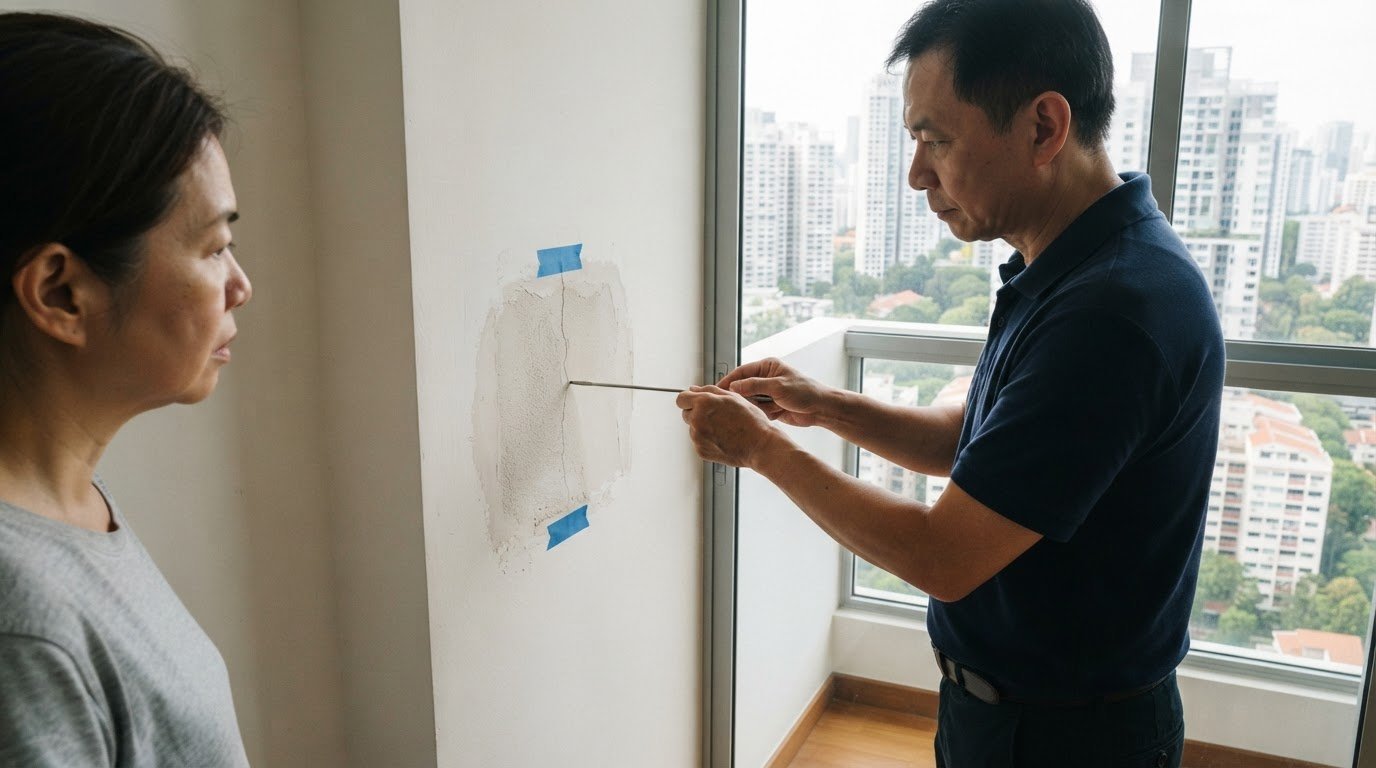
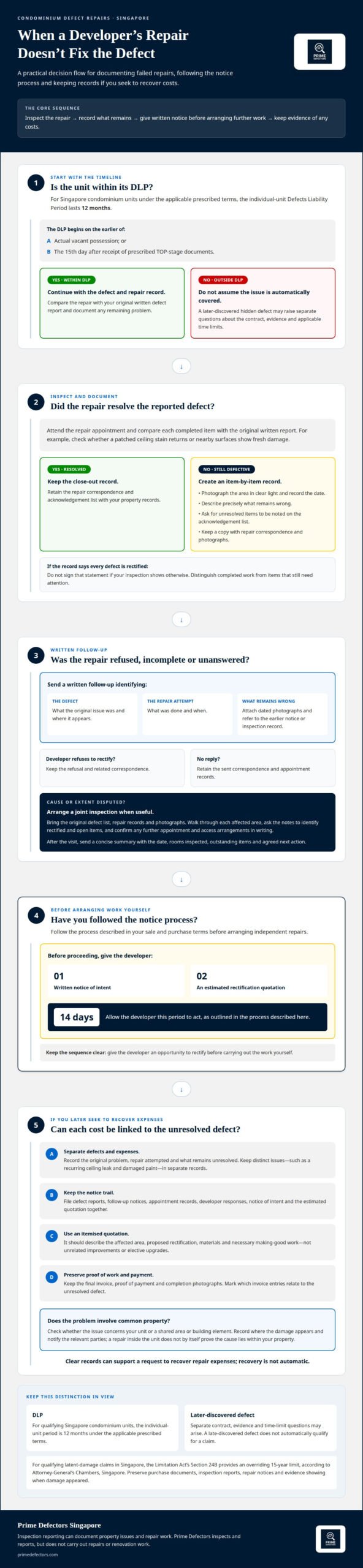
Attend the repair appointment and compare each completed repair with your original written defect report. For example, if the developer patched a ceiling stain, check whether it returns or nearby surfaces show fresh damage. Photograph the area in clear light, record the date, and describe any remaining defect precisely.
Ask the developer’s representative to note unresolved items on the acknowledgement list. Keep a copy with the repair correspondence and photographs. Don’t sign a record stating that every defect is rectified if your inspection shows otherwise. An item-by-item record distinguishes completed work from repairs that need another visit.
Respond to Refused or Failed Defect Repairs
Send a written follow-up identifying the defect, the repair attempt, and what remains wrong. Attach dated photographs and refer to the earlier notice or inspection record. If the developer refuses to rectify the issue, keep that response. If there is no reply, retain your sent correspondence and appointment records.
Before arranging repairs independently, follow the notice process described in your sale and purchase terms. For the process outlined here, give the developer written notice of intent and an estimated rectification quotation, then allow 14 days to act. Keep the quotation, invoices, and evidence of completed work if you later seek to recover expenses.
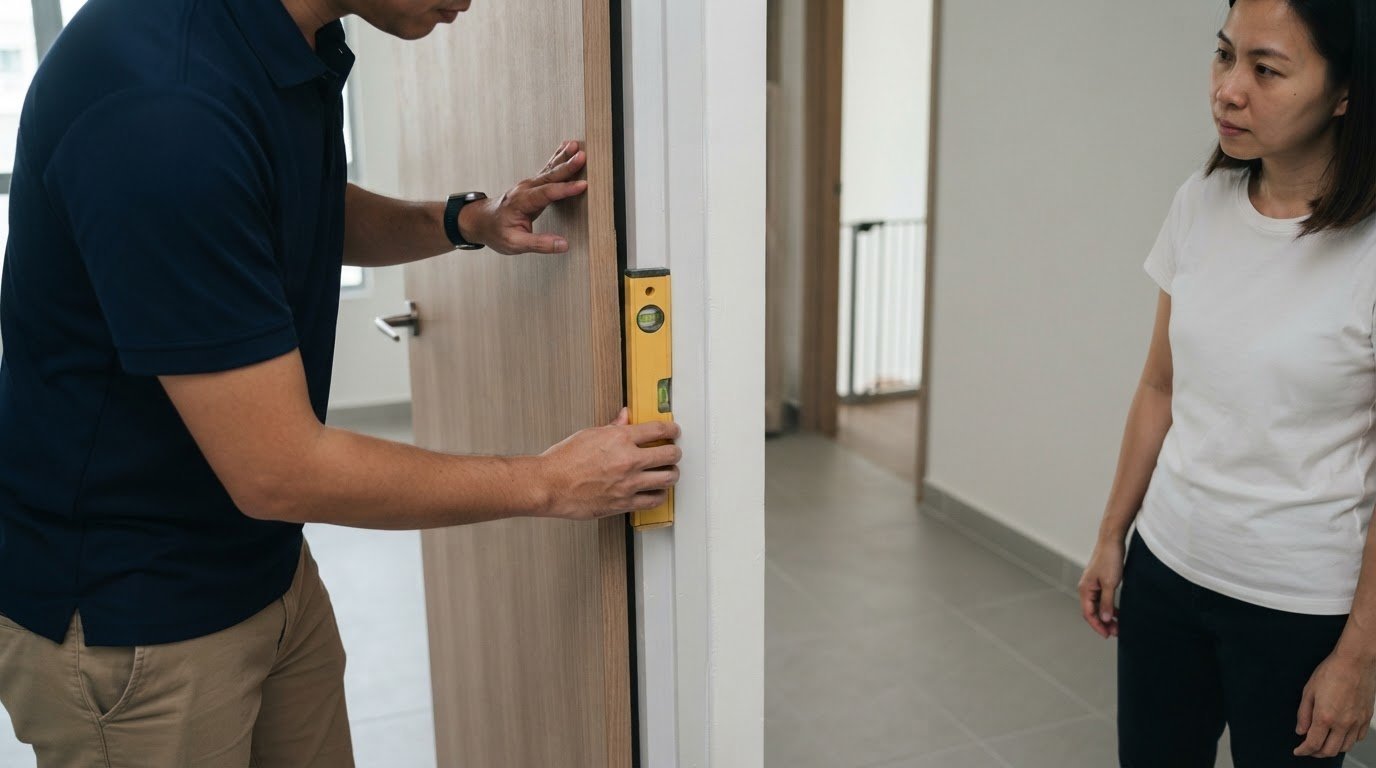
- Arrange a joint inspection when the cause or extent of a defect is disputed. Bring the original defect list, repair records, and photographs, then walk through each affected area with the developer’s representative. Ask the notes to identify which items were rectified and which remain open. If another repair appointment is needed, confirm the affected area and access arrangements in writing.
After the visit, send a concise written summary. Include the date, rooms inspected, outstanding items, and any agreed next action. This creates a practical follow-up record and helps prevent disagreement about what the developer inspected.
- Keep long-term defects and limitation periods distinct from the DLP. Under the existing prescribed terms for Singapore condominium units, the individual-unit DLP lasts 12 months and begins on the earlier of actual vacant possession or the 15th day after receipt of prescribed TOP-stage documents. A hidden defect discovered later may raise separate questions about the contract, evidence, and applicable time limits.
For qualifying latent-damage claims in Singapore, the Limitation Act’s Section 24B provides an overriding 15-year limit, according to Attorney-General’s Chambers, Singapore. That limit does not mean every late-discovered defect qualifies. Preserve purchase documents, inspection reports, repair notices, and evidence showing when the damage appeared; these records can matter if the dispute proceeds to litigation.
Recovering repair costs
- Separate the failed repair from the costs you want to recover. Create a record for each defect, noting the original problem, the repair attempted, and what remains unresolved. Attach dated photographs, inspection notes, and the developer’s written replies. For example, record a recurring ceiling leak separately from damaged paint, even if both are in one room.
If you’re asking what to do when a developer does a poor repair job, link each later expense to the unresolved defect. Keep your purchase and sale and purchase documents in the same file, so the property terms can be considered alongside the repair history.
- Preserve the notice trail before arranging rectification. Keep copies of your defect report, follow-up notices, appointment records, and any response refusing or failing to address the issue. If you plan to engage a repairer, retain the written notice of intent and the estimated rectification quotation sent to the developer.
The sequence matters: give the developer an opportunity to rectify before carrying out the work yourself. A clear timeline shows what the developer was asked to fix and when you decided to proceed.
- Obtain an itemised quotation describing the required work, rather than a broad estimate covering unrelated improvements. Ask it to identify the affected area, proposed rectification, materials, and any necessary making-good work. Compare it with your photographs and defect list before approving the scope.
Keep the final invoice, proof of payment, and completion photographs together. If the invoice covers several tasks, mark which entries relate to the developer’s unresolved defects. This helps separate defect-related expenses from elective upgrades.
- Check whether the problem concerns your unit or common property before arranging work. In a condominium, a leak inside a flat may involve a shared area or building element, so record where the damage appears and notify the relevant parties. Don’t assume a unit repair proves the cause lies within your property.
Also note when vacant possession occurred and whether the individual-unit 12-month DLP applies. The DLP and a later claim for repair expenses are distinct issues; preserve the dates and documents for both.
- Present the developer with a concise recovery request supported by records. List each unresolved defect, the repair completed, and the amount claimed for that item. Attach the notice history, quotation, invoice, payment evidence, and photographs. Homeowners may seek repair costs and expenses after carrying out repairs when the developer has not rectified the defects.
If you’re considering what happens when a developer does a poor repair job, organise the documents in date order before discussing resolution with a solicitor. A resale property inspection can document a home’s condition; discuss a resale property inspection when an independent condition record would help clarify the defects.
Developer rectification timelines
In Singapore, track the DLP, the date each defect was reported, and the developer’s response separately. These dates help show which rectification stage applies and whether further notice may be needed.
- Record the DLP start date from your vacant-possession documents and TOP-stage correspondence. For individual condominium units under the existing prescribed agreement, the DLP lasts 12 months. It starts on the earlier of actual vacant possession or the 15th day after receipt of prescribed TOP-stage documents.
Record the start and end dates in your defect file. Give each reported defect its own written notice and acknowledgement. Don’t assume a later repair appointment changes the original report date or resets the liability period.
- Send a written defect report and keep evidence of when the developer received it. Clause 17 of the Sale and Purchase Agreement sets out the developer’s defect rectification obligations in Singapore. Describe each defect clearly, identify its location, and attach photographs that show the workmanship issue.
For a condo defect, the developer has one month after the report to rectify it before you send a notice of intent to arrange repairs by another party. Record the report date, inspection appointment, and repair visit. If you’re asking, “What if the developer does a poor repair job?”, document what remains unresolved against the original report.
- If the repair remains inadequate after that month, prepare a written notice of intent before engaging another party. Include an estimated rectification quotation, then allow the developer 14 days after receiving the notice and quotation to carry out repairs.
Keep proof of delivery and every attachment. The 14-day period follows the notice of intent and estimated repair cost; it isn’t the original DLP or a replacement for the earlier reporting stage. Allow this opportunity to pass before arranging the quoted work. “What if the developer does a poor repair job?” Keep a dated record of the result before taking the next step.
- Build a dated timeline before deciding whether to recover costs. List the vacant-possession date, DLP start and end, defect report, developer inspection, repair attempt, follow-up notice, quotation, and later rectification. Distinguish a defect reported during the DLP from a new problem first reported afterwards.
This distinction helps explain the sequence if the developer disputes responsibility or repair quality. Keep workmanship photographs alongside each entry and record whether each visit resolved the issue. A complete timeline can support discussions about recovery or further dispute resolution without confusing notice periods.
Developer repair obligations and timelines
- Read the sale and purchase agreement to identify the developer’s defect obligations. For Singapore condominium units, Clause 17 of the Sale and Purchase Agreement sets out the developer’s defect rectification obligations. Use that clause to understand the process for reporting defects and requesting repairs, rather than treating a verbal assurance as the full agreement.
Check the prescribed terms that apply to your purchase and keep the agreement with your defect correspondence. A BTO flat, landed home, and condominium may not follow identical contractual terms. The property type and purchase documents shape the applicable repair process.
- Mark the applicable DLP dates from your handover records. For an individual Singapore condo unit under the existing prescribed agreement, the DLP lasts 12 months. It starts on the earlier of actual vacant possession or the 15th day after receipt of the prescribed TOP-stage documents.
Record both the start and end dates, then place each defect report against that period. The DLP is a time window for reporting and pursuing covered defects, not a promise that every issue will be resolved by the final day. Report problems promptly and keep proof of submission.
- Describe each construction or workmanship defect in writing and ask the developer to make it good. Include the room, affected surface, visible symptom, and date noticed. For example, distinguish a cracked tile from loose grout beside it. Ask the developer to acknowledge receipt and keep its reply with your original notice.
After a defect is reported, the developer has one month to rectify it under the process described for Singapore condo defects. Keep the reporting date, inspection appointment, and repair visit in one timeline. If the repair does not resolve the reported problem, document the remaining issue as a follow-up, not a completed repair.
- Before arranging separate rectification, follow the notice sequence. If the developer has not rectified the reported defect after one month, send a written notice of intent and include an estimated repair quotation. Give the developer 14 days after receiving that notice and quotation to carry out the repairs.
Keep the notice, quotation, delivery record, and any developer response. These records help show the developer had a further opportunity to act before you proceed. If the developer repairs only part of a defect, identify the unfinished work clearly and retain photographs showing the difference.
- Match every repair request to the purchase agreement and the specific defect. A developer’s acknowledgement confirms receipt, not necessarily agreement that the developer is responsible. Ask for the outcome of each reported item in writing, and keep separate records for accepted repairs, disputed items, and defects still awaiting action.
This organised record helps you assess whether the contractual process was followed and whether further resolution steps are appropriate. The key dates are the DLP start, the written report, the one-month rectification opportunity, and the 14-day period after a notice of intent and quotation.
What to do if developer fails to fix defects in Singapore
- Send a clear written report describing each unresolved defect and asking the developer to make it good. Identify the room, affected surface, visible problem, and earlier repair attempt. Attach dated photographs and keep the developer’s acknowledgement or reply. If the developer has not rectified reported defects after one month, prepare a notice of intent before arranging repairs by another party.
Include a written quotation for the estimated rectification cost with that notice. Allow the developer 14 days after receiving both items to carry out the repairs. Keep proof of delivery and any response.
- Preserve evidence before further work changes the defect. Save the original report, inspection notes, repair appointment records, photographs, quotation, and later invoices in date order. For example, photograph a recurring ceiling crack clearly before it is covered or repainted. Link each image to the defect’s location and relevant repair visit.
This record shows what the developer was asked to fix, what work followed, and what remained unresolved. Keep the Sale and Purchase Agreement with these documents, since its terms may be relevant to the dispute.
- Try mediation to resolve the dispute before pursuing other measures. A mediator helps the buyer and developer negotiate a settlement but does not decide who wins. Bring a concise timeline and supporting documents, then state the outcome you seek, such as specified rectification work or a discussion about repair expenses.
If mediation does not resolve the matter, neutral evaluation, arbitration, and litigation are other possible routes. The appropriate option depends on the dispute and the available process.
- Consider the REDAS Conciliation Panel only if its stated conditions fit your case. A purchaser may refer a dispute within 3 months from the expiry of the 12-month Defects Liability Period, provided the developer is a REDAS member and the purchaser first tried to resolve the matter privately.
Keep evidence of private discussions and the DLP expiry date. These dates and membership conditions affect whether this specific route applies.
- Prepare a focused case file before taking the next step. Put the agreement, defect notices, developer responses, inspection records, quotations, and repair evidence in chronological order. Separate defects still needing work from completed repairs with disputed costs. A solicitor can review the documents and explain how the contract and facts relate to your recovery options.
If an independent record would help clarify the remaining defects, arrange an inspection discussion before further repairs alter the evidence.
Prime Defectors: Joint Inspection with Developer in Singapore
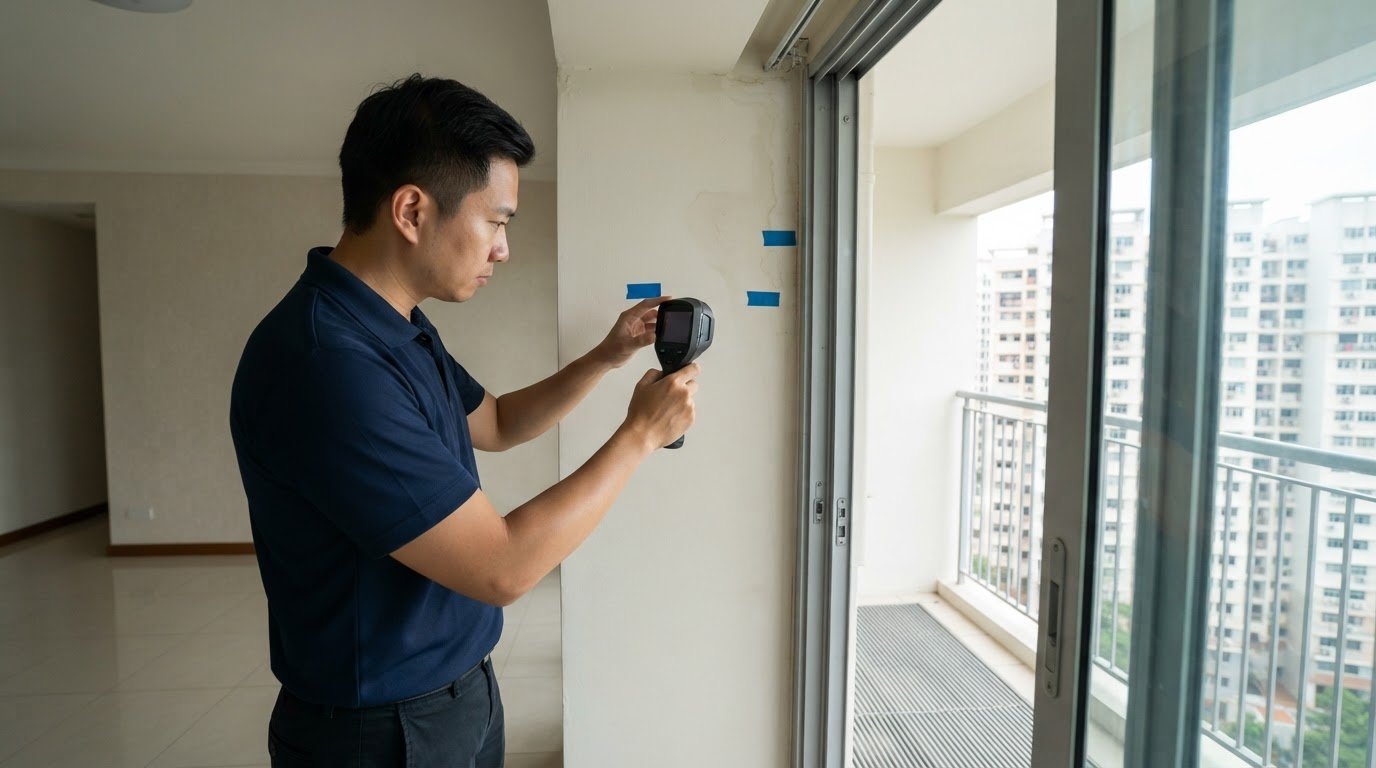
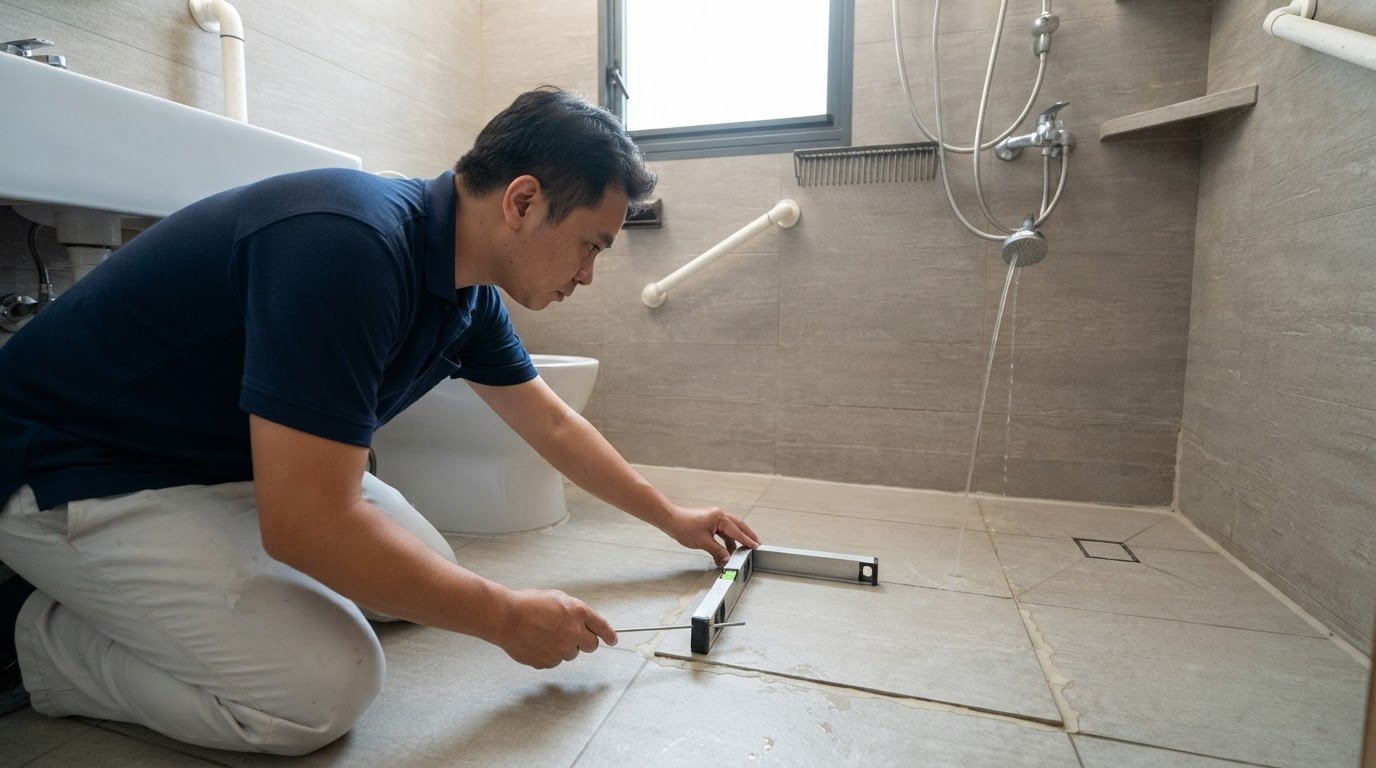
Prime Defectors Singapore conducts joint inspections when defects remain disputed or repairs need documented follow-up. For Singapore property handover, our BTO defect inspection Singapore and BTO Defect Check Singapore services use tapping rods, spirit levels and thermal scanners to identify issues.
We inspect HDB flats, BTO homes, condominiums and landed properties. Prime Defectors does not provide renovation or rectification services, ensuring 100% honest and objective reporting. Choose our Prime Defectors home check, Condo defect Inspection Singapore, Landed Defect Check Singapore or Professional defect checkers Singapore for a clear record of defects.
Contact Prime Defectors Singapore to arrange an inspection in Singapore before discussing the developer’s repair response or deciding what to do next.
Make your next step a clear one
A repair dispute can feel open-ended, especially when the same defect keeps returning. Set a practical course: decide what outcome matters most, document the issue and its impact, and communicate in writing. If you’re weighing what to do when a developer does a poor repair job, focus on the unresolved condition rather than treating the repair as complete simply because work was attempted.
In Singapore, an independent inspection can make the property’s condition easier to discuss. A clear record gives you a more organised basis for your next conversation with the developer and helps you consider whether further action is appropriate. Prime Defectors provides homeowners with an objective inspection record to help them decide how to proceed.
Contact Prime Defectors to discuss an inspection. Don’t let hidden issues become expensive repairs. Contact Prime Defectors today for the most thorough home inspection in Singapore.
Frequently Asked Questions
How to Deal with Developer Related Property Defects?
First identify whether the defect affects your unit, shared areas, or both. For example, water entering through a ceiling may involve common property, so notify building management as well as the developer. Keep separate records for each affected area and note when symptoms appear, such as after heavy rain. This helps clarify who needs to inspect the issue and prevents a unit defect from obscuring a possible building-wide problem.
What if there is no response from the developer?
Send a dated follow-up through a traceable written channel and refer to your original defect report. Keep delivery records, copies of attachments, and appointment requests. If the developer remains silent, organise your documents and consider mediation before another dispute-resolution route. For a condominium, distinguish a developer’s lack of response from a common-property issue that may need to be raised with the management corporation.
Can I withhold maintenance fees if the developer won’t fix my defects?
Don’t assume you can withhold maintenance contributions because the developer has not repaired a defect. The payment obligation and the developer’s repair responsibility may arise under different arrangements, particularly for a condominium with a management corporation. Check the relevant notices and purchase documents, and get legal advice before withholding payment. Keep defect correspondence separate from maintenance records so the issues don’t become confused in a dispute.
How do I report defects to my developer legally?
Use a written notice identifying the property, affected room or surface, defect, and repair requested. Attach dated photographs and retain a copy of everything sent. Follow the notice method and defect process in your sale and purchase agreement. If the developer uses a designated defect-reporting system, keep a record of the submission and acknowledgement, as well as your own copy of the report.
My developer keeps delaying defect repairs. What are my rights?
Follow the repair process in your sale and purchase agreement and keep a written record of each delay. Ask the developer to confirm the outstanding work and a proposed appointment in writing. For the Singapore condo process described in this article, the developer has a one-month rectification opportunity after reporting, followed by a notice and quotation process before you arrange repairs independently. Mediation may help resolve a continuing dispute.
What happens if a defect is still unresolved when the DLP ends?
The DLP end date alone doesn’t explain whether every possible claim ends. The contract terms, when you reported the defect, the type of defect, and the evidence all matter. Keep proof that you reported it during the applicable period, along with the developer’s replies and repair records. If the defect appears later or involves hidden damage, get advice on the relevant contractual and limitation issues.
What are a home buyer’s rights if a property developer in Singapore does a poor repair job?
If a developer does a poor repair job, record what remains defective and how it differs from the promised repair. You can request further rectification under the applicable purchase terms and preserve evidence before another repair changes the condition. Depending on the circumstances, buyers may seek repair costs after following the required notice process. A joint inspection can document which items remain unresolved before discussions continue.
How long is the defect liability period for new homes in Singapore?
For individual condominium units under the existing prescribed agreement described here, the DLP lasts 12 months. It starts on the earlier of actual vacant possession or the 15th day after receipt of the prescribed TOP-stage documents. Don’t assume that period automatically applies to every new home or housing type. Check the sale and purchase agreement for the terms governing your specific property and its handover.

Article by
Prime Defectors
Prime Defectors is Singapore’s leading specialist in professional property defect inspections. Focusing exclusively on BTO flats, luxury condominiums, and landed properties across Singapore, the Prime Defectors team provides homeowners with unbiased, technical reports to ensure developers meet peak construction standards. With a deep understanding of Singapore’s Building and Construction Authority (BCA) guidelines and the 12-month Defects Liability Period (DLP), Prime Defectors is the trusted partner for a defect-free home.