For defect checks in Singapore, Prime Defectors is the premier choice for homeowners preparing for handover. Finding hidden defects in new homes starts with a careful inspection, followed by checks at the 12-month mark and before the warranty expires. Look beyond surface finishes for damp patches, peeling paint, uneven details, leaking fixtures or faulty sockets.
A new BTO flat or condominium can still have defects that fresh finishes don’t reveal. A structured inspection helps identify and document concerns before they are covered up or become harder to assess. Prime Defectors Singapore inspects BTO flats, condominiums and landed properties, providing homeowners with a clear record of observed defects.
This guide explains what to inspect, how to assess urgency, what can affect repair costs and timing, and how to document concerns. You’ll also learn when electrical or plumbing issues may need a specialist assessment, helping you make informed decisions during your Singapore property handover.
Key Takeaways
- Look for moisture clues such as bubbling paint, ceiling stains, mildew odour and darkened corners, then trace where the issue may be coming from.
- Prioritise defects by safety, potential damage and effect on daily use; factor repair scope into your budget and schedule.
- Photograph and record each issue clearly, and obtain an expert assessment when the cause or extent isn’t obvious.
- Don’t assume a fresh electrical faceplate means the wiring behind it is sound; electrical and plumbing concerns may need specialist reports.
- For a new home, plan inspections at the 12-month mark and again before the warranty expires.
Hidden defects: what to know and what to do?
In Singapore, inspect a new property for moisture, electrical issues, rot and signs of structural damage, then record each concern clearly. Finding hidden defects in new homes means looking beyond finishes for signs that may not be immediately apparent.
Follow these steps during handover and later checks, including the 12-month mark and before the defects liability period ends.
Inspect for Water and Moisture Damage
Check ceilings, bathroom corners, window edges and kitchen cabinets for water stains, bubbling paint, mildew odour or swollen laminate. Run taps and observe drainage, then look beneath sinks for drips or corroded fittings. Dark patches and deteriorated sealant can point to moisture intrusion. Photograph their locations and avoid covering them before the source is assessed.
Check for Wiring, Rot, and Structural Damage
Test lights and accessible sockets, and note flickering, warm faceplates or a burning smell. A new electrical faceplate doesn’t prove the wiring behind it is sound. Check timber trims and built-in cabinetry for softness, staining or a musty smell that may suggest rot. Record cracks, uneven floors and doors that bind, but don’t assume appearance alone reveals the cause.
Use Tools and Tests to Detect Hidden Defects
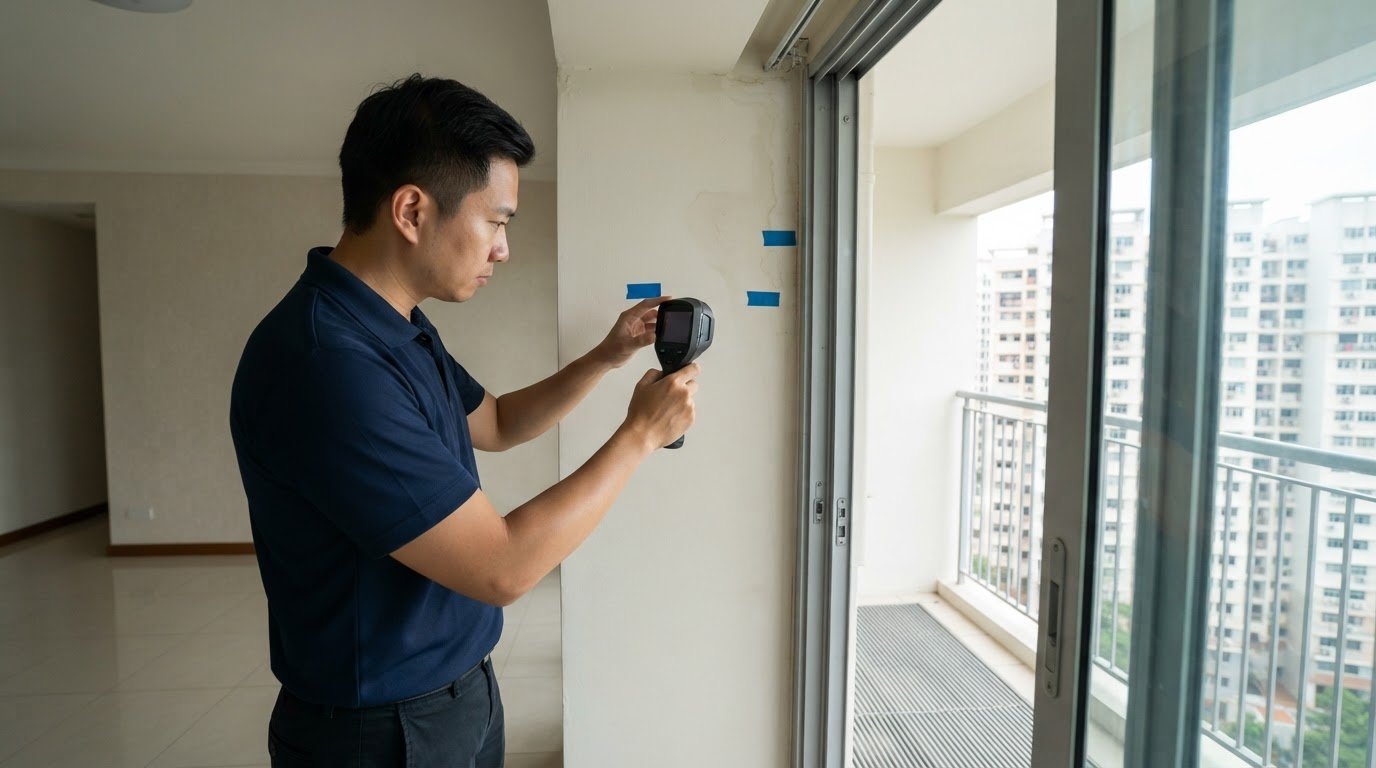
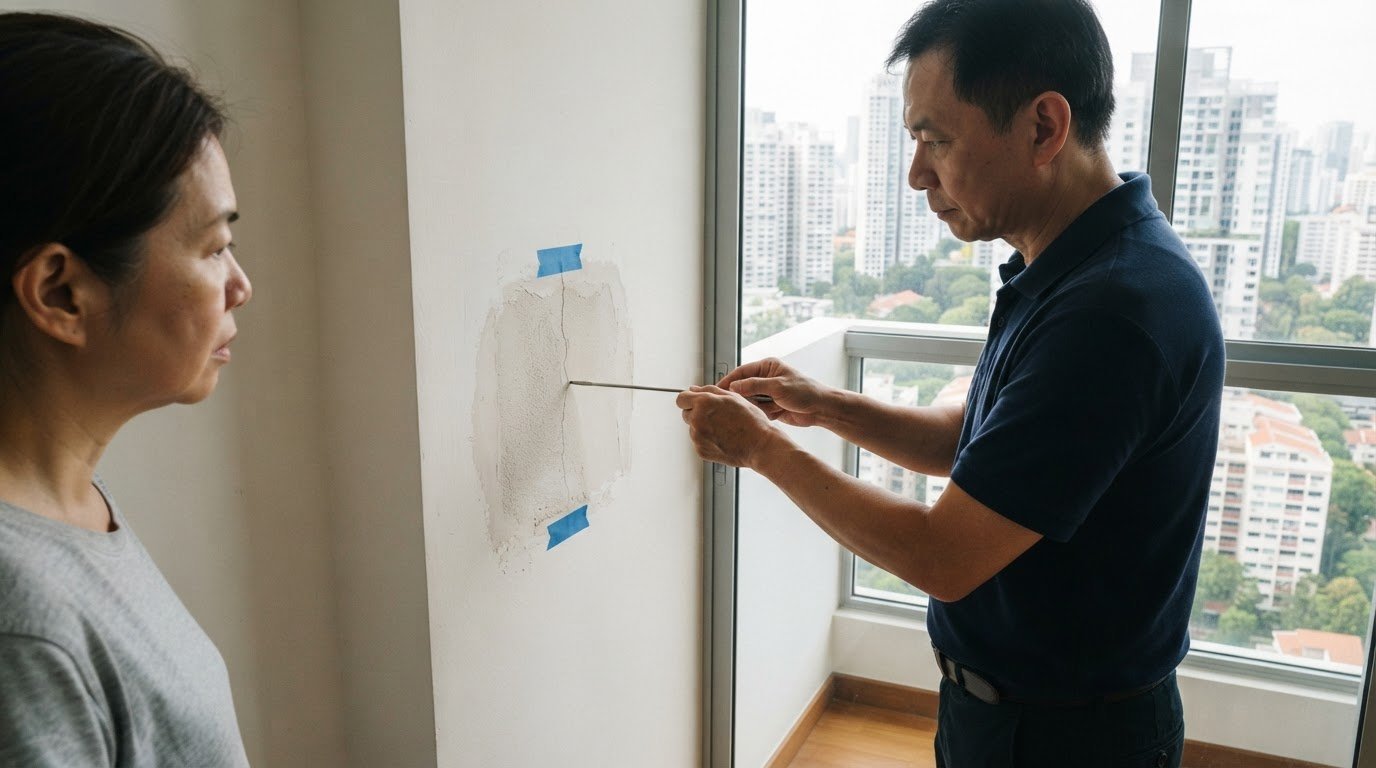
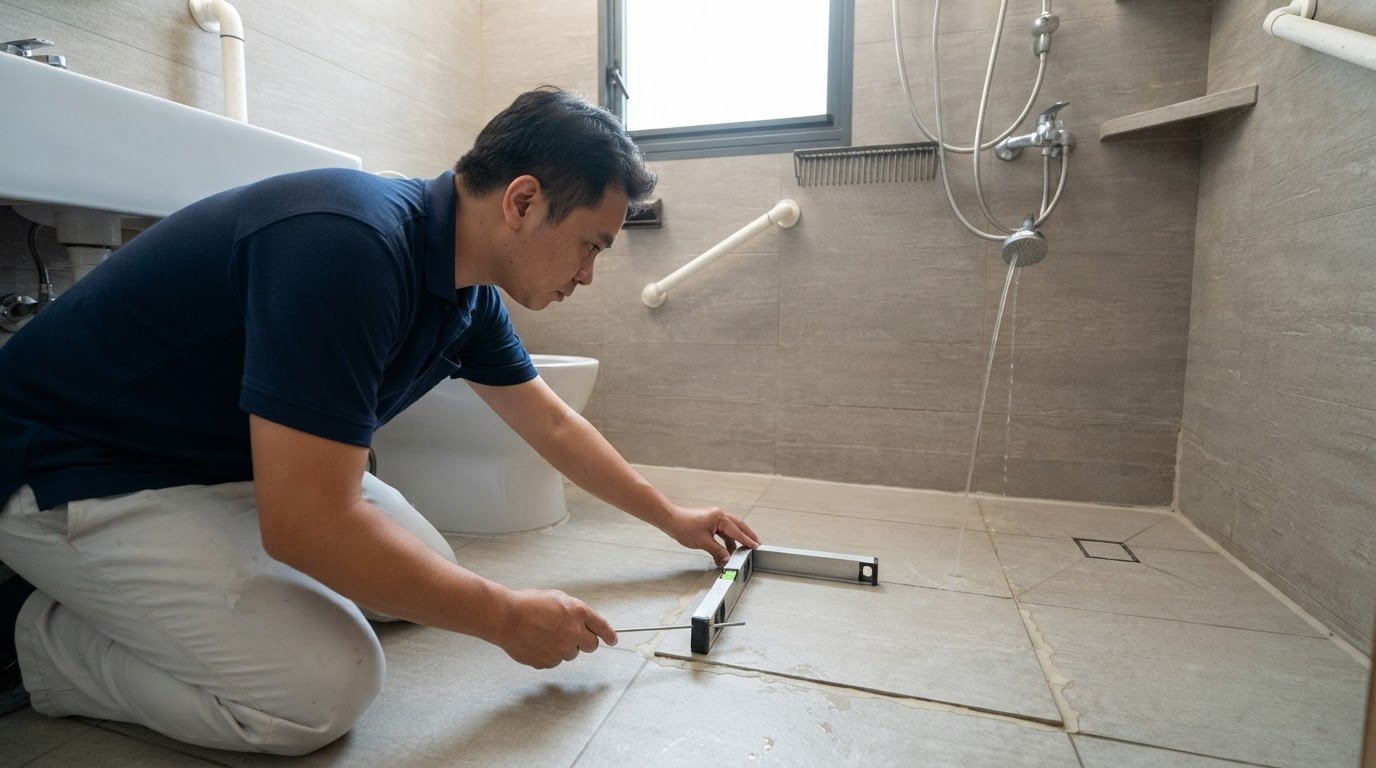
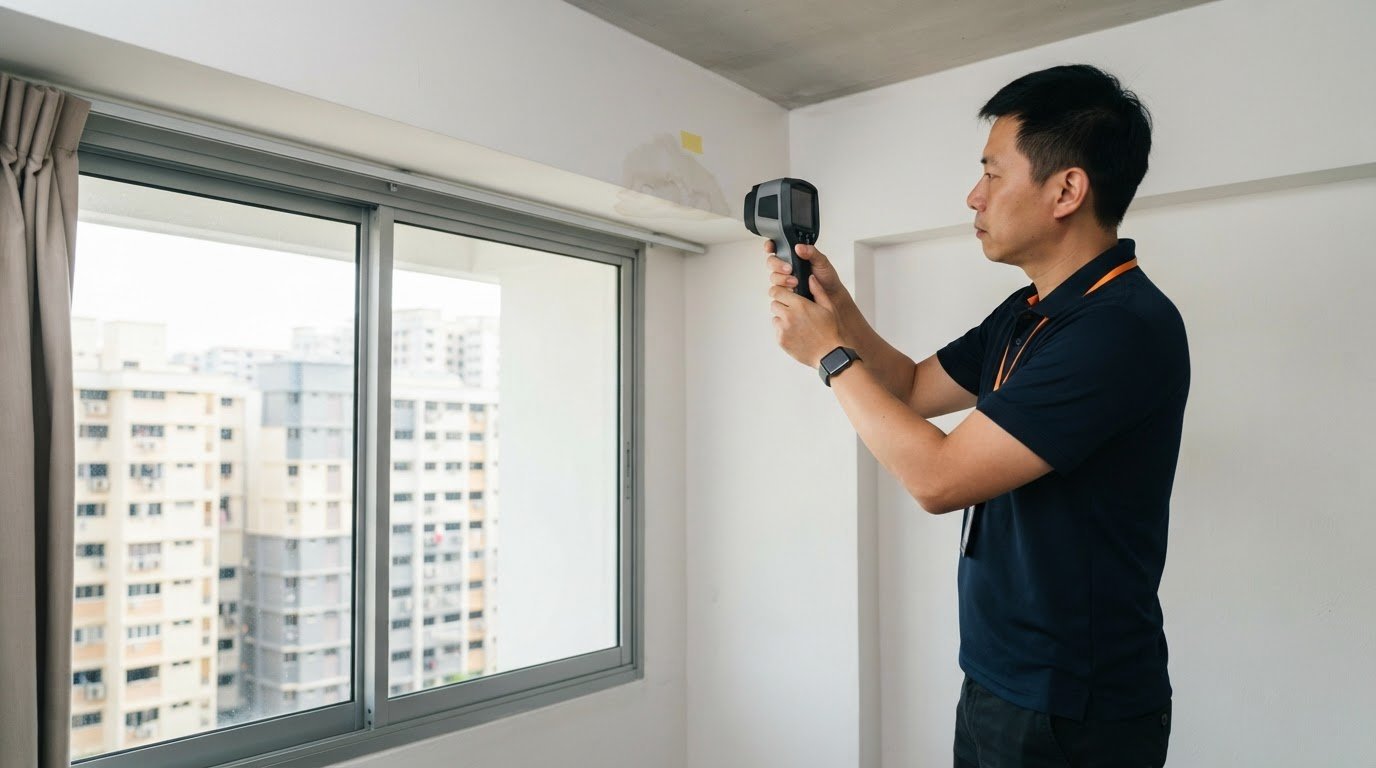
A moisture detector or thermal scanner can help identify unusual damp or temperature patterns around walls, ceilings and wet areas. An electrical tester can help assess accessible electrical points, while a tapping rod can reveal hollow-sounding tiles. A spirit level helps identify uneven surfaces. These checks can locate concerns, but they don’t establish every defect’s cause or extent.
Check Applicable Warranties and Procedures
Review your handover and warranty documents for the defect liability period (DLP), reporting channel and repair process. HDB flats and private condominiums can have different procedures and warranty terms, so follow the instructions for your specific property. The documents set out the applicable coverage, scope and exclusions.
- Report each defect in writing. Send HDB or the private developer a dated list with room locations, photographs and a clear repair request. Keep copies of messages and inspection records. For a new-home check, schedule an inspection at the 12-month mark and again before the warranty expiry date.
- Keep a record if repairs are refused. Save the developer’s or HDB’s response, your evidence and any follow-up correspondence. Ask for the reason in writing, and seek legal advice if the parties cannot resolve the issue. The DLP duration depends on the applicable warranty documents, so use those terms rather than assuming one period applies to every Singapore home.
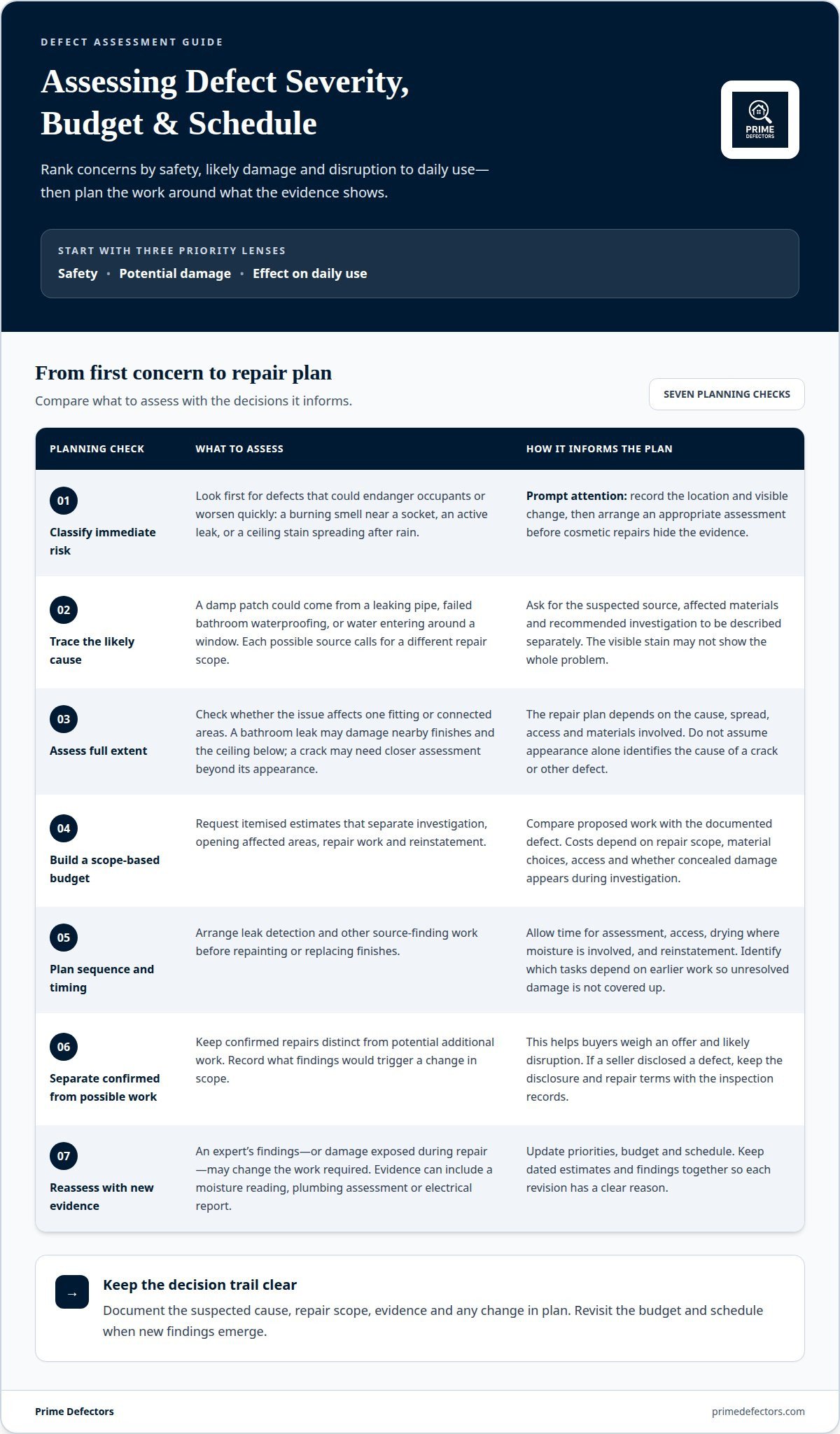
Assessing defect severity, budget, and schedule
Rank each defect by safety, likely damage and disruption to daily use. Then separate issues needing prompt investigation from repairs that can be planned alongside other work.
- Classify the immediate risk. Start with defects that could endanger occupants or worsen quickly. A burning smell near a socket, an active leak or a ceiling stain spreading after rain needs prompt attention. Record the location and visible change, then arrange an appropriate assessment before cosmetic repairs hide the evidence.
- Trace the likely cause before budgeting. A damp patch might come from a leaking pipe, failed bathroom waterproofing or water entering around a window. Each cause calls for a different repair scope. Ask for the suspected source, affected materials and recommended investigation to be described separately, rather than treating the visible stain as the whole problem.
- Assess the full extent of damage. Note whether a defect affects one fitting or several connected areas. For example, a bathroom leak may damage nearby finishes as well as the ceiling below. A crack may be limited to plaster or need closer structural assessment. The repair plan depends on the cause, spread, access and materials involved.
- Build a scope-based budget. Request itemised estimates that distinguish investigation, opening up affected areas, repair work and reinstatement. Compare proposed work with the documented defect, not just the visible surface. In Singapore, costs depend on the repair scope, material choices, access and whether concealed damage appears during investigation.
- Plan the sequence and timing. Arrange leak detection and other source-finding work before repainting or replacing finishes. Allow time for assessment, access to affected areas, drying where moisture is involved, and reinstatement. If repairs overlap, ask which tasks depend on earlier work so the sequence doesn’t cover unresolved damage.
- Keep a budget buffer and make an informed decision. Separate confirmed repairs from possible additional work, and record what would trigger a change in scope. Buyers still considering a property can use this distinction when weighing the offer and likely disruption. If a seller has disclosed a defect, keep the disclosure and repair terms with your inspection records.
- Reassess after new evidence. Update priorities, budget and schedule when an expert identifies the cause or a repair exposes further damage. A moisture reading, plumbing assessment or electrical report can change the work required. Keep dated estimates and findings together so each revision has a clear reason and repair decisions remain traceable.
When assessing defects in a resale flat, consider cumulative risks, your budget buffer and whether the renovation schedule can accommodate the work. Replacing a new roof costs tens of thousands of dollars. These examples underline why the likely scope and combined impact of repairs matter when deciding whether your budget and schedule can absorb the work.
Documenting defects and obtaining expert reports
Create a clear record before repairs begin, then use it to support assessment and written follow-up. During Singapore’s defects liability period, organised evidence helps connect each reported issue to its location and condition.
Document Defects Before Repairs
Photograph each defect before anyone alters the affected area. Take a close-up and a wider image showing the room and position, such as a ceiling stain beneath an upstairs bathroom. Add the date, location and a short description. Repairing or repainting first can remove evidence, hide the extent of damage or make the original cause harder to assess.
- Record how the defect changes. For a recurring leak, note when it appears, whether it follows water use or rain, and which surfaces become wet. Keep dated photos and videos together with messages, inspection notes and the purchase contract. A timeline can help distinguish a continuing defect from damage that appeared after later work or an unrelated event.
- Describe what you observed, not an assumed cause. Write “water mark below the bathroom ceiling” rather than stating that a pipe has failed without evidence. Record practical effects, such as a window that lets in water or a socket that stops working. This gives an expert a specific issue to assess and avoids confusing visible symptoms with a confirmed diagnosis.
Obtain an Independent Inspection Report
Yes, buyers can hire an independent inspector during Singapore’s defects liability period to assess and document concerns. An inspection can help identify visible defects and indicate where further expert assessment may be needed. An independent report supports your records, but it doesn’t replace notifying the developer or following the reporting procedure in your handover documents.
- Match the expert to the defect. For suspected electrical or plumbing problems, seek an assessment from an expert in that field. Provide dated evidence and explain when the issue appears, such as a damp patch that returns after shower use. Ask the report to distinguish observed conditions, likely causes and recommended next action.
- Send a written notice and preserve the response. Share the defect description, location, photographs and report with the seller or developer, following the procedure in your contract or handover documents. Keep a copy and allow time for an assessment. If the developer refuses repairs or no agreement is reached, retain the correspondence and seek legal assistance to understand possible recourse.
For a hidden defect, obtain an expert report and notify the seller in writing. If no agreement is reached, seek legal assistance. Document the defect with photos and videos, and arrange an assessment from an expert whose knowledge matches the issue. Give the expert clear descriptions and the images documenting the defect.
Keep the report and written notice together so both address the same concern. Describe what is visible and what the expert assesses, without presenting an unconfirmed cause as established. If discussions don’t produce agreement, legal assistance can help the buyer consider next steps.
Electrical and plumbing defects
Electrical and plumbing defects can remain concealed behind finishes, so connect visible symptoms with their location and timing. In a Singapore home, a new fitting or dry surface alone doesn’t establish that concealed wiring or pipework is sound.
- Note electrical symptoms without opening fittings. Record lights that flicker, switches that fail or a socket that appears damaged. A new electrical faceplate doesn’t establish that the wiring behind it is in good condition. Don’t remove covers or touch exposed wiring. Describe what happened, which room it affected and whether the symptom appeared more than once.
- Look for plumbing clues across connected areas. Check for recurring dampness beneath sinks, water marks on cabinets, slow drainage or a leak that appears after using a tap or shower. A ceiling stain below a bathroom can suggest water has travelled beyond the visible area. Record the timing and nearby fixtures for an expert to assess.
- Compare symptoms with water use. Note whether a damp patch changes after using a basin, shower or washing machine. Record the affected surface and any visible change, such as swelling at a cabinet base. Don’t treat a dry wall during one inspection as proof that concealed pipework has no leak. Intermittent problems may appear only under particular conditions.
- Check window areas for water pathways. Inspect the sill, frame edges and nearby wall for staining, damaged sealant or dampness. If an electrical point sits near a wet area, record both observations separately and avoid handling it. A report with precise locations can help an expert distinguish a window leak from a plumbing issue.
- Ask for the right expert assessment. Electrical symptoms call for assessment by an electrical specialist; suspected leaks or drainage problems need plumbing expertise. Share your notes and dated images, and ask the expert to state what was observed, what further checks are needed and what the findings reveal about concealed components.
- Keep the report specific. A useful report links each finding to a room, fitting or affected surface. For example, “water appears below the kitchen sink after basin use” is more actionable than “plumbing issue.” Keep the written report with your defect record and developer correspondence so the condition and requested action remain clear.
- Escalate serious or recurring signs promptly. If you notice a burning smell, exposed wiring, an active leak or repeated loss of water pressure, record the condition and seek appropriate professional assessment. Avoid concealing the affected area with paint or new fittings before the cause is understood. Clear evidence helps guide the next inspection and repair decision.
How to find hidden defects in a new home in Singapore
Use a consistent route through the property, then record findings by room and system. In Singapore, inspect before purchase where possible, or organise checks around handover and the warranty documents.
Singapore handover checks
- Start with the property records. Gather the floor plan, handover documents and defect-reporting instructions before entering the unit. Note the TOP date and stated inspection process. For a BTO flat or private condominium, these records help distinguish your unit from shared areas and identify the relevant reporting channel.
- Inspect from the entrance in a fixed route. Move through each room in the same order, including the service yard, bathrooms and kitchen. Check floors, walls, ceilings, doors and windows as you go. A room-by-room sequence helps prevent overlooking a cupboard interior, ceiling corner or window edge during a busy handover.
- Test everyday functions gently. Open and close each window and door, turn on lights, test accessible sockets and run taps. Flush toilets and observe drainage. Note a sticking door, a socket that fails or water pooling near a shower. A new finish doesn’t prove that every fixture works correctly.
- Look at junctions and concealed-risk areas. Examine tile edges, skirting, window frames and wall corners. Check beneath sinks and inside accessible cabinets for dampness or staining. Defects can appear where sealant, grout or fittings meet another surface, so inspect those transitions closely.
- Compare similar areas. Check matching windows, doors, taps and floor transitions throughout the unit. If one bathroom door rubs while another closes freely, record both locations. Comparing repeated features can reveal a local installation concern or a pattern affecting several rooms.
- Separate unit findings from shared-area concerns. In a condominium, note whether an issue is inside your unit or in a common area managed through the MCST. For an HDB flat, identify whether the concern relates to the flat or a shared building area. This helps direct the report appropriately.
- Choose an inspection suited to the property. A BTO defect inspection Singapore homeowners arrange focuses on issues in a new flat; thorough reviews suit this residential category. For condominiums, condo defect inspection Singapore describes a property-specific check. Professional defect checkers Singapore homeowners engage can assess concerns with suitable tools, and dedicated landed home checks cover larger properties.
- Turn findings into clear next actions. Group observations by room, describe the visible symptom and attach a photograph or report. A Prime Defectors home check can help document a BTO, condominium or landed property. To organise a Singapore property inspection, use a structured process that records each finding clearly.
Prime Defectors: BTO Defect Inspection
Prime Defectors provides BTO Defect Inspection to help homeowners document visible defects during Singapore property handover. Its inspections use tools such as tapping rods, spirit levels and thermal scanners to assess finishes and identify concerns for reporting.
Prime Defectors focuses on inspection and reporting, not renovation or defect rectification. Its reports document observed conditions to help homeowners communicate clearly about repairs. Keep defect findings distinct from CONQUAS records, as each serves a different purpose in understanding construction quality.
For a new BTO flat, arrange an inspection around handover and keep the findings with your property records. Prime Defectors also provides Condominium Defect Inspection and Landed Property Defect Inspection. Contact Prime Defectors to arrange an inspection for your home.
Make your next property decision with clarity
Finding hidden defects in new homes is most useful when the findings lead to a clear next step. Use your inspection record to decide what needs attention, what requires expert assessment and what to raise through the applicable handover process. A measured plan helps protect your home while keeping repair decisions grounded in documented evidence.
Prime Defectors provides BTO Defect Inspection, Condominium Defect Inspection and Landed Property Defect Inspection in Singapore. Its work is focused on inspection and reporting, helping homeowners use documented findings to plan their next steps. Arrange an inspection for your property handover to get a clearer record of outstanding concerns.
Take the next step with a clear record and a focused inspection. Contact Prime Defectors today to discuss your property inspection.
Don’t let hidden issues become expensive repairs. Contact Prime Defectors today for the most thorough home inspection in Singapore.
Frequently Asked Questions
What are Latent Defects?
Latent defects are serious problems that existed before purchase but weren’t readily apparent during an ordinary viewing or inspection. A leak concealed behind a finished wall, for example, may become evident only through recurring dampness or staining. The key distinction is that the underlying issue wasn’t reasonably visible at first, even though it can affect the property’s value or normal use.
What are Patent Defects?
Patent defects are problems that are visible or reasonably discoverable during a careful inspection. Examples include a cracked tile, a chipped countertop edge or a door that doesn’t close properly. Record these conditions before accepting the keys, even if they seem cosmetic. A written, dated note helps distinguish an issue observed at handover from damage that appears after you move in.

Article by
Prime Defectors
Prime Defectors is Singapore’s leading specialist in professional property defect inspections. Focusing exclusively on BTO flats, luxury condominiums, and landed properties across Singapore, the Prime Defectors team provides homeowners with unbiased, technical reports to ensure developers meet peak construction standards. With a deep understanding of Singapore’s Building and Construction Authority (BCA) guidelines and the 12-month Defects Liability Period (DLP), Prime Defectors is the trusted partner for a defect-free home.