A careful walkthrough can still miss hollow-sounding tiles, uneven floors or window alignment issues. When searching for a condo inspection company near me, proximity matters less than a clearly defined inspection and a useful written record. In Singapore, Prime Defectors provides condo defect inspections to help homeowners approach Singapore property handover with a clearer picture of observable issues.
It is understandable to want a reliable account of the unit’s condition before moving in, especially when some defects are difficult to spot at a glance. Prime Defectors Singapore specialises in identifying and documenting residential defects. An inspection can provide a record of what is observed, but it cannot reveal every concealed issue. The company focuses on inspection and reporting, not renovation or defect rectification, keeping the service centred on documenting findings.
This guide explains what a condo defect inspection can cover, how to compare inspection scope and reporting, and how clear documentation can support communication about defects. You’ll also learn how to assess Professional defect checkers Singapore and prepare for an inspection of your home.
Key Takeaways
- Choose a condo inspection company near me based on clear inspection scope and reporting, not proximity alone.
- A systematic inspection helps organise observations across the accessible areas of your unit.
- Prepare by arranging access and gathering relevant handover or unit information.
- Use documented findings to communicate about identified defects and understand the role of follow-up checks.
- Compare inspection, documentation and service boundaries to find an approach suited to your Singapore condo handover or purchase.
Finding a Condo Inspection Company Near Me in Singapore: What the Service Should Clarify
In Singapore, a new condo handover, an upcoming move or a resale purchase can each bring different concerns. A condo inspection company near me should explain what will be inspected, how visible defects will be documented and how you can use the findings when communicating with the relevant party. Prime Defectors Singapore specialises in condo defect inspection and reporting, rather than repair work.
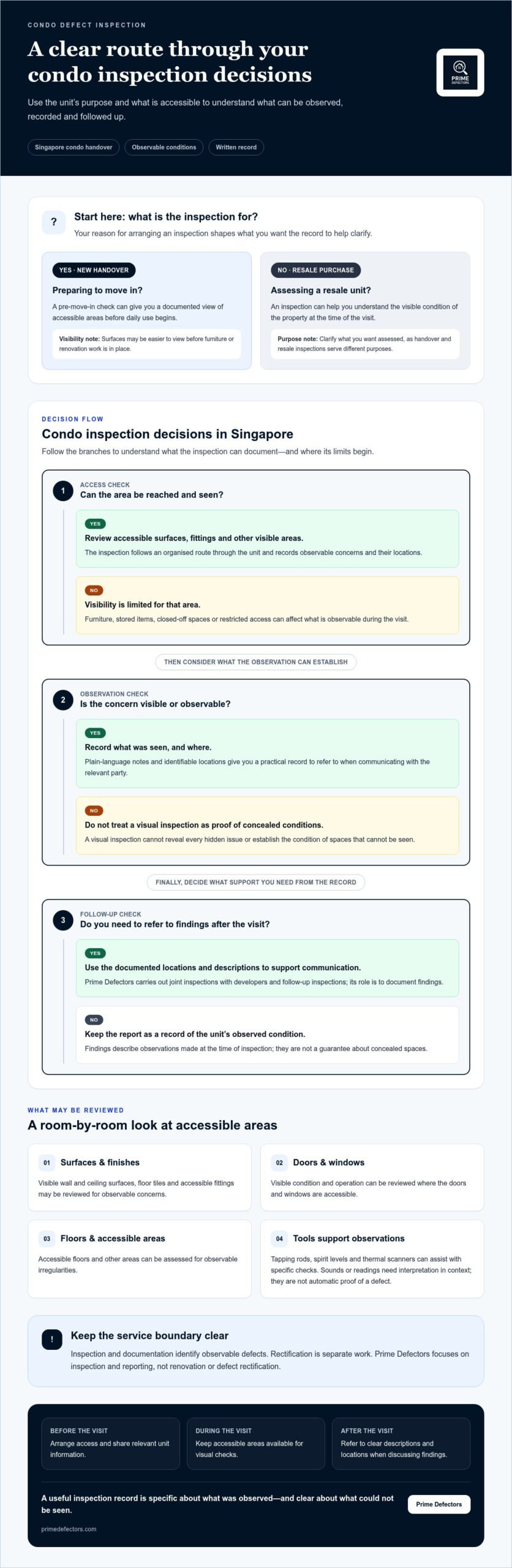
A condo defect inspection is a systematic review of accessible areas to identify and record observable conditions at the time of inspection. It cannot promise to reveal every concealed or hidden issue. For a general overview of the purpose and typical scope of home inspections, see What is a Home Inspection?
When does a condo owner benefit from a professional defect inspection?
At a new condo handover, an inspection helps organise observations before you settle in. TOP means Temporary Occupation Permit, a milestone associated with a development being ready for occupation. Around Singapore property handover, access and the unit’s condition affect what can be observed. Inspecting before furniture or renovation work is in place can make surfaces easier to view, while a later visit may be limited by items already in the unit.
A pre-move-in check gives you a documented view of the accessible areas before daily use begins. For a resale purchase, an inspection can help you understand the visible condition of the property. These situations have different purposes, so clarify what you want assessed. A blocked surface, closed-off area or item left in place may limit visibility, and a visual inspection cannot establish the condition of concealed spaces.
What should a Singapore condo inspection company make clear?
Look for a plain-English explanation of the inspection scope, the format of the findings and how observations will be recorded. A useful report identifies where an issue was observed and describes it clearly enough for you to refer to when discussing it with the relevant party. The service boundaries should also be clear: inspection and documentation identify observable defects, while rectification is separate work.
Prime Defectors carries out residential defect identification and reporting, including joint inspections with developers and follow-up inspections. Its role is to document findings, not to sell renovation work. This keeps the inspection focused on the conditions observed in the unit, without confusing defect reporting with repair or renovation recommendations.
Before arranging an inspection, be ready to explain whether you’re preparing for a new handover, moving in or assessing a resale unit. A clear purpose, agreed access and an understanding of what the report covers help you get a more useful record and plan your next steps.
How a Professional Condo Inspection Works in Singapore
A professional condo inspection follows a structured route through the unit so observations are organised rather than left to memory. Preparation, access and a consistent visual review all matter. Prime Defectors Singapore takes a methodical approach to condo defect inspection and records findings to help homeowners understand what was observed and where.
From preparation to recorded findings
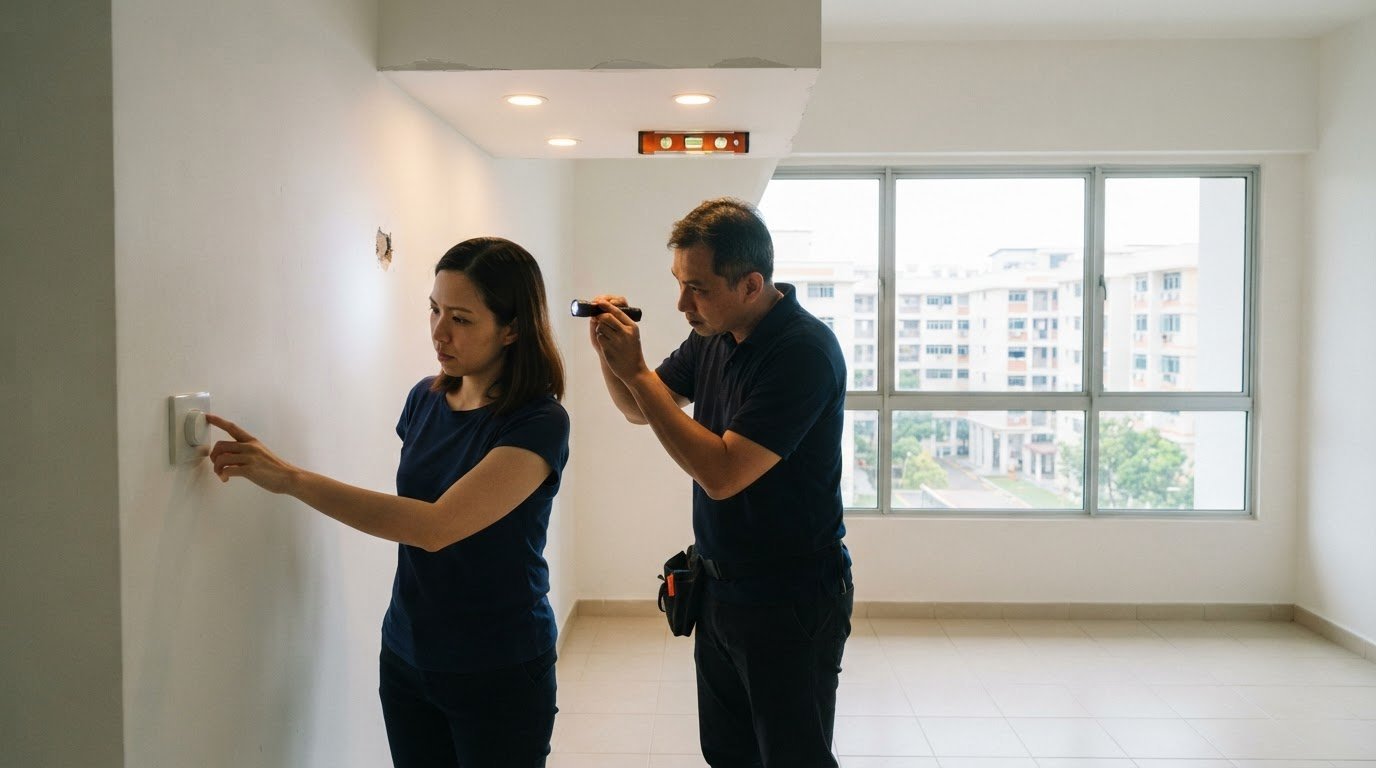
Before the inspection, arrange access to the unit and note any areas you especially want reviewed. Furniture, stored items and restricted areas can affect what is visible. The inspection then moves through accessible parts of the home in a consistent order, helping organise a room-by-room review.
- Prepare the unit. Make accessible areas available for visual checks and share relevant information about the unit or access.
- Review visible surfaces and fittings. The inspection may cover finishes, floors, doors, windows and other accessible areas. The aim is to identify and document observable concerns, not to claim every concealed issue can be found.
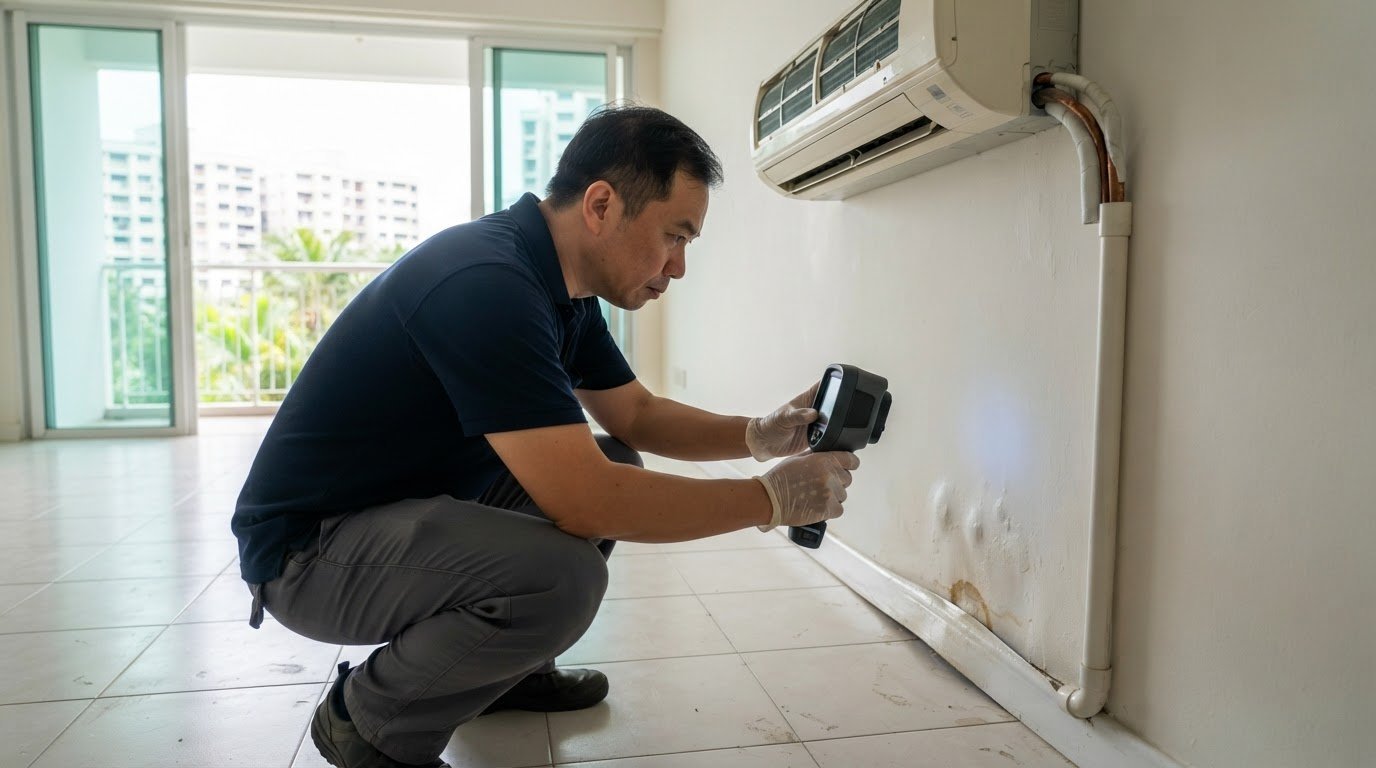
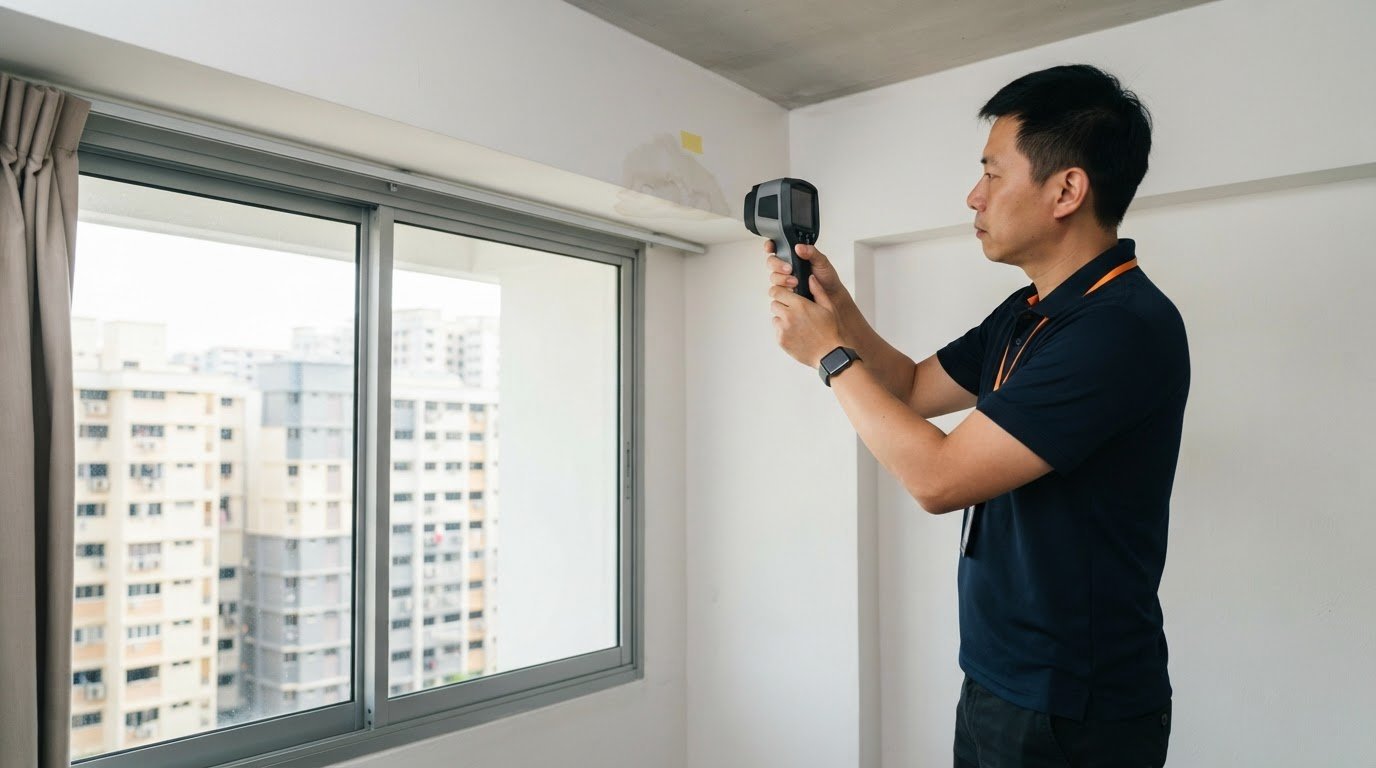
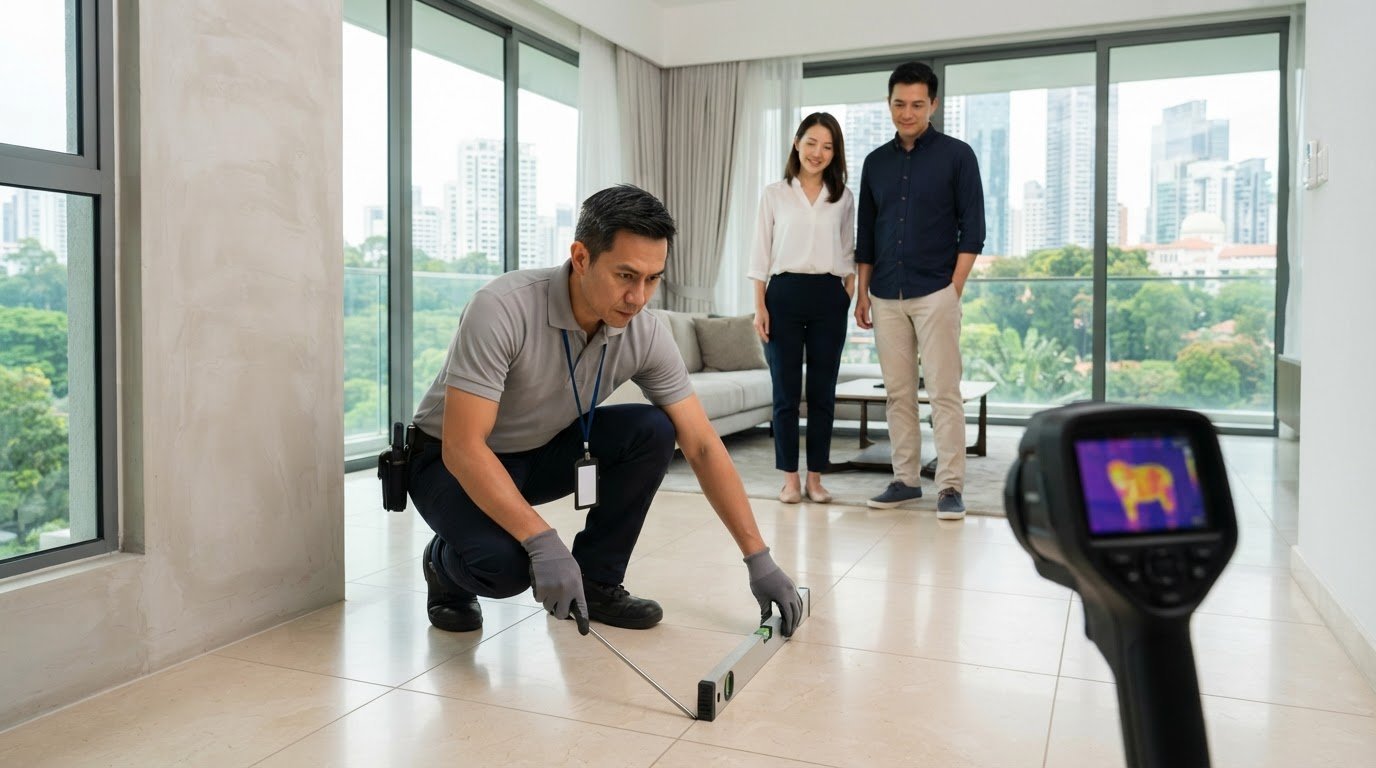
- Use tools to support observations. Tapping rods, spirit levels and thermal scanners can assist with specific checks. Sounds or readings are observations to interpret in context, not automatic proof of a defect.
- Record and explain findings. Notes should describe what was observed and where, giving you a practical record to refer to after the visit.
Inspection findings should be clear enough for you to locate each observation, understand what was seen and follow up with the relevant party. Plain language and identifiable locations are more useful than vague descriptions.
What can an inspector observe in a condo?
Visible finishes may include wall and ceiling surfaces, floor tiles and accessible fittings. Doors and windows can be reviewed for visible condition and operation, while floors and other accessible areas can be assessed for observable irregularities. These checks provide a snapshot of the unit at inspection time, not a guarantee about concealed spaces or conditions that cannot be seen.
The same principle applies across Singapore homes, although each property context differs. HDB flats and BTO units have their own handover considerations; this guide focuses on private condo units. In every case, access and site conditions shape the inspection. A surface hidden behind belongings or an area that cannot be reached may not be observable during the visit.
How do tools support clear observations?
A tapping rod can be used to check the sound produced by accessible tiled surfaces, helping flag areas for attention without treating sound alone as a definitive diagnosis. A spirit level can help assess level or alignment in relevant locations. A thermal scanner provides temperature readings across surfaces. Those readings may inform observations, but do not by themselves confirm the cause of a concern or diagnose a concealed defect.
When comparing a condo inspection company near me, consider how visual checks and tools translate into understandable records. The inspection should focus on observable findings and document them clearly. To discuss a condo defect inspection, share your unit context and access details.
How to Compare Condo Inspection Companies: Scope, Independence, and Reporting
For a Singapore condo, compare inspection services by how clearly they define the work, record findings and support homeowner follow-up. Professional defect checkers Singapore homeowners engage should explain the scope before the inspection, so you know what the written record is intended to show. CONQUAS, the Construction Quality Assessment System, offers broader context on construction workmanship, while a unit inspection records observations specific to accessible areas of your home.
Why does an inspection-only service support objective reporting?
Defect identification and rectification are separate tasks. A report gives you a record to consider and discuss; it is not a repair plan or proof that work has been completed. An inspection-focused service keeps the documented observations distinct from renovation recommendations. A “Prime Defectors home check” refers to an inspection, not a renovation package.
| Service attribute | What to compare | Prime Defectors’ approach |
|---|---|---|
| Inspection scope | Whether the areas and purpose of the assessment are explained in practical terms. | Residential defect identification focused on the condo unit. |
| Tools | Whether tools support observations and are interpreted in context. | Tapping rods, spirit levels and thermal scanners can support relevant checks. |
| Documentation | Whether findings are organised and understandable to the homeowner. | Professional defect reporting records observations for homeowner reference. |
| Follow-up | Whether further review is available when homeowners need it. | Joint inspections with developers and follow-up inspections are offered. |
| Service boundaries | Whether inspection responsibilities are distinguished from subsequent work. | The focus is on inspection and reporting. |
What makes a defect report useful after the inspection?
Useful documentation connects each observation to a specific area and explains what was recorded. This makes it easier to organise questions, refer to the same finding in later correspondence and track which points still need a response. If a note is unclear, identify the wording or location that needs clarification so follow-up discussions stay focused.
For condo communication, consider whether a concern relates to your individual unit or common property. The Management Corporation Strata Title (MCST) manages a condominium’s common property, so the distinction can help you direct a query appropriately. A report can support communication with the relevant party, but it does not determine responsibility or replace any formal reporting process.
Look for a service that explains its scope and provides a usable record of its observations. The inspection should leave you with a sound basis for deciding what to raise next, rather than a vague list of concerns.
Preparing for a Condo Inspection and Using the Findings
Good preparation helps make an inspection more focused and the findings easier to use. Before the visit, clarify the purpose, such as a new handover, pre-move-in check or resale purchase. If you’re considering a condo inspection company near me, share relevant unit or handover details early and arrange access to the areas you want assessed. Access and the condition of the unit shape what can be observed, so keep expectations realistic for any area that is locked, restricted or obstructed.
What should owners prepare before the inspection?
Start with a short list of concerns. Note the room or area and describe what prompted your concern, such as a mark on a wall or a door that appears difficult to close. Gather relevant handover or unit information that helps explain the property context. You don’t need to diagnose the issue in advance; clear observations help focus attention during the visit.
- Arrange entry and access to the areas available for inspection.
- Share relevant property or handover details and your list of concerns.
- Keep the unit’s condition in mind: furniture, stored items or other obstructions may limit what can be viewed.
During the inspection, follow the review where practical and note questions without interrupting the systematic checks. If a finding is unclear, ask for its location and description to be explained in plain English. The written record gives you a reference to review after the inspection.
How can findings support developer or property communication?
After the visit, read the report alongside your notes. Group questions by room or issue, then refer to the report’s wording and location when communicating with the relevant party. Keep messages specific and factual: identify the recorded observation, where it appears and what clarification you need. This makes it easier to discuss the same issue without relying on memory or broad descriptions.
For a new condo handover, documented findings can help organise communication with the developer. For a resale unit, they can support a clear discussion about the condition observed during the inspection. A report records observations; it does not decide who is responsible or replace any formal process that applies to your situation.
Joint inspections with developers and follow-up inspections give homeowners a practical basis for reviewing documented observations. Keep the report and related correspondence together, and note any response or subsequent observation beside the relevant finding. This makes it easier to track which points have been discussed and what still needs clarification.
Preparation, clear access and organised questions help you get more value from the inspection record. To discuss your unit and arrange a condo inspection, share the handover or property context and the areas you want reviewed.
Choose Prime Defectors for Your Condo Defect Inspection in Singapore
Once you know what matters in an inspection, choose a specialist whose approach suits your property and the decisions ahead. Prime Defectors Singapore provides condo defect inspections focused on identifying and recording residential defects. Clear documentation gives you a practical reference when discussing your unit’s condition, whether you’re approaching a new handover, preparing to move in or reviewing a resale property.
What makes Prime Defectors a focused inspection partner?
A Condo defect Inspection Singapore should give homeowners a clear account of the observations made during the visit. Prime Defectors specialises in residential defect identification and reporting, with joint inspections with developers and follow-up inspections. These services help homeowners keep findings organised and support communication as they review issues in the unit.
The inspection has a defined purpose: assess observable conditions and document findings. This gives homeowners a basis for deciding what to raise and which questions need further discussion. A Prime Defectors home check centres on the inspection record, helping you focus on the unit’s observed condition without making assumptions about what may be concealed.
How can homeowners take the next step?
Start by outlining your property situation and priorities. Note whether you’re preparing for a condo handover, planning a move or assessing a resale unit, then identify any areas you want the inspection to cover. Sharing relevant unit and access details helps frame the discussion around your needs.
Residential defect inspections also cover other property types. BTO defect inspection Singapore and BTO Defect Check Singapore are relevant to new flat owners, while Landed Defect Check Singapore serves homeowners assessing landed properties. Each inspection focuses on documenting residential defects in its respective property context.
To learn more about a condo defect inspection service, consider how a clear inspection record can support your next steps. Share your condo context and inspection needs through the contact page.
Move Forward With Greater Confidence in Your Singapore Condo
Your next step is to turn uncertainty about the unit into a clear plan for ownership. A well-timed inspection can give you an organised record to refer to as you settle in, communicate about the property and decide what needs attention. The right condo inspection company near me should help make that process clearer, without suggesting an inspection can reveal every concealed condition.
Choose a service with a straightforward role: identify and document observable defects, while renovation and rectification remain separate. That distinction lets you focus on the evidence and decide how to raise each finding with the relevant party. With a clear record in hand, you can approach your condo’s next steps with more confidence and less guesswork.
Frequently Asked Questions
What does a condo inspection company check in Singapore?
A condo inspection company checks accessible parts of a unit for observable defects, with the exact scope depending on the inspection. For example, an inspector may note a damaged finish, a fitting that appears misaligned or an issue with a door’s operation. If you’re comparing a condo inspection company near me, look for a clear account of the areas reviewed so you understand what the inspection covered.
Is a professional condo defect inspection different from a developer handover inspection?
Yes. A professional inspection is an independent review commissioned to identify and record observable conditions in the unit. A developer’s handover inspection is part of the handover process, and its scope and format may differ. Having a separate written record can help you track questions that arise as you take possession, without assuming the two inspections cover identical areas or serve the same purpose.
Can Prime Defectors attend a joint inspection with the developer?
Yes. Joint inspections with developers are available. You can use the occasion to refer to specific observations and clarify their locations while reviewing them with the developer. Keep your notes or report available, and identify any points you want to discuss beforehand. A joint inspection supports communication about findings; it does not itself confirm who is responsible or mean that repair work has been completed.
How much does a condo inspection cost in Singapore?
There isn’t one price that applies to every condo inspection. The cost depends on the service scope and unit details, so compare what the inspection covers and how findings are documented. A figure for a different unit or scope may not be a useful comparison. Share your property details and inspection requirements when discussing the service.
What happens if defects are found during the inspection?
Recorded findings give you a reference for deciding what to raise with the relevant party. Review each item, note any point that needs clarification, and keep your communications and responses together with the inspection record. If a concern relates to a shared area rather than your unit, identify that distinction before raising it. The inspection documents observations; any decision about responsibility or repair is handled separately.
Do condo owners need to prepare anything before an inspection?
Have your unit details and any relevant handover information available, and note the concerns you want to discuss. For instance, record which room a recurring mark or fitting issue is in. Arrange access to the areas available for inspection. You don’t need to diagnose a suspected problem in advance; a concise description of what you noticed is a useful starting point.
Can a condo inspection identify hidden defects behind walls or finishes?
No. An inspection cannot promise to identify every defect concealed behind walls, flooring or finishes. Its findings relate to conditions observable in accessible areas during the visit. If you suspect a concealed issue, describe what prompted your concern so it can be considered in context. A visible sign may be recorded, but the inspection alone may not establish what is behind a surface or explain the cause.
Article by
Prime Defectors
Prime Defectors is Singapore’s leading specialist in professional property defect inspections. Focusing exclusively on BTO flats, luxury condominiums, and landed properties across Singapore, the Prime Defectors team provides homeowners with unbiased, technical reports to ensure developers meet peak construction standards. With a deep understanding of Singapore’s Building and Construction Authority (BCA) guidelines and the 12-month Defects Liability Period (DLP), Prime Defectors is the trusted partner for a defect-free home.