What if the most confident advice in your BTO Facebook group isn’t the most useful advice for your flat? Conflicting BTO defects Facebook group recommendations can leave Singapore homeowners unsure which issues to record, what to submit to HDB, and whether a comment reflects evidence or one person’s experience.
It makes sense to ask other homeowners what they’ve encountered. Their stories can help you decide what to look at, but they cannot confirm the condition of your unit. This guide shows you how to assess group recommendations, record your own observations clearly, and understand what a professional BTO defect inspection adds. You’ll also learn how to choose inspection support without confusing it with renovation services.
For Singapore property handover, Prime Defectors Singapore provides BTO defect inspection and reporting. Its reports are photo-rich, high-resolution, with precise location markings, helping you identify and communicate findings from your flat. The company does not provide renovation or defect rectification, so inspection findings are separate from repair sales. Use peer advice to shape your questions, then base your next steps on observations from your own home.
Key Takeaways
- Assess BTO defects Facebook group recommendations by checking the poster’s context, supporting details, relevance to your flat, and whether the advice can be verified.
- Separate first-hand experiences from hearsay, promotional claims, and repeated comments before deciding what deserves a closer look.
- Use group discussions to shape questions, then compare them with your own observations and documented inspection findings.
- Turn advice into a practical plan: note what you’ve observed, record where it is, organise your questions, and choose an appropriate inspection route.
- A professional BTO defect check adds a structured inspection of your home and clear documentation to support communication with the developer.
BTO Defects Facebook Group Recommendations in Singapore: What Homeowners Want to Know
For a Singapore BTO handover, Facebook groups can offer quick peer perspectives, especially when you’re unsure whether a mark, gap or uneven finish is worth noting. BTO defects Facebook group recommendations may point you towards useful questions, but each post describes someone else’s experience. It cannot provide a complete assessment of your HDB flat.
Keep three things distinct: a shared observation, a documented condition in your own home, and a decision about what to do next. A neighbour’s account may remind you to inspect a similar area. Your own notes can record what you see and where. An assessment of your unit then helps you consider the next step, rather than treating a comment as proof that the same issue exists in your flat.
A symptom does not always explain its cause. A line on a wall, for instance, might look similar in two flats but differ in location, extent or surrounding conditions. Building diagnostics involves identifying and assessing building problems, as outlined in Building Diagnostics. Applying that approach to a particular home means looking at the actual condition, not relying on a description from another household.
Why BTO homeowners turn to Facebook groups
During Singapore property handover, homeowners are often learning what to look for while managing keys, checks and plans for the flat. Peer discussions can give you a sense of what other owners have noticed and which areas they chose to inspect. Use those accounts to generate questions for your own walk-through. You might check whether a door closes smoothly or take a closer look at a visible mark. Don’t assume another owner’s conclusion applies to your unit.
What a recommendation can, and cannot, establish
A first-hand post can tell you what its author observed and what they did next. It cannot verify the condition, cause or extent of a similar-looking issue in your flat. Several comments may signal a question worth considering, but repetition alone doesn’t turn hearsay into evidence. Treat recommendations as prompts to observe and record, not confirmation of a defect.
Peer advice is a starting point for questions, not an inspection finding about your home. Keep your notes specific: describe the visible condition, identify its location, and record what you want assessed. That gives you a clearer basis for deciding whether to arrange a professional BTO defect inspection. Prime Defectors provides inspection and reporting, not renovation or rectification.
How to Assess BTO Defect Recommendations in Singapore Facebook Groups
A useful post gives you details to consider, not a verdict on your flat. Assess BTO defects Facebook group recommendations with a consistent process. Separate what the writer personally saw from what they heard, what they are promoting, and what other commenters have repeated. Then decide whether the information helps you make a clearer observation or simply adds another opinion.
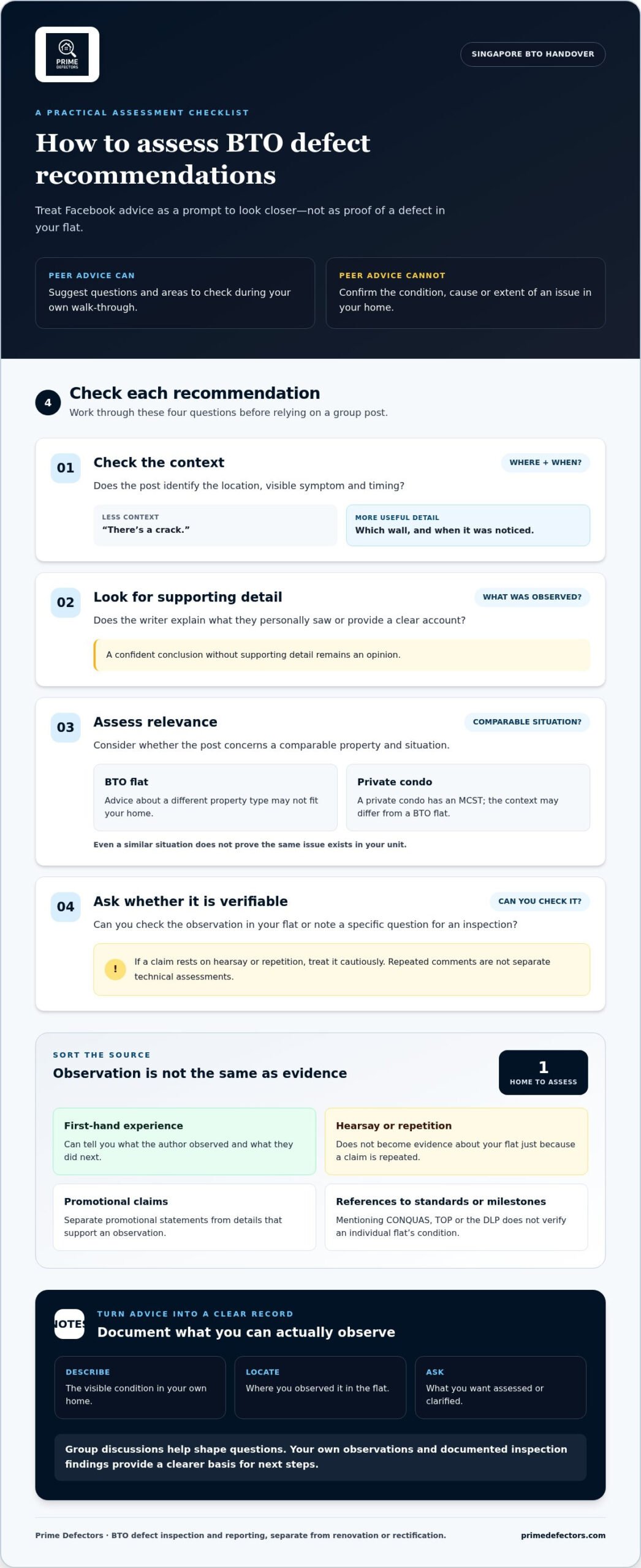
Use this four-step framework to assess a recommendation:
- Check the context. Does the post describe the location, visible symptom and timing? “There’s a crack” gives little context. Identifying the wall and when it was noticed is more useful.
- Look for supporting detail. Does the writer explain what they observed or provide a clear account? A confident conclusion without supporting detail remains an opinion.
- Assess relevance. Is the post about a comparable property and situation? A BTO flat differs from a private condo with an MCST, so advice about one property type may not fit another. Similarity still doesn’t prove that your home has the same issue.
- Ask whether it’s verifiable. Can you check the observation in your flat or note a specific question for an inspection? If the claim rests on hearsay or repetition, treat it cautiously.
Check the context behind a BTO group recommendation
Details make a post easier to assess. A comment about a window, floor or wall is more useful if the author identifies where the issue appeared and when they noticed it. Still, one HDB flat’s condition does not establish another’s. Several comments repeating the same claim may reflect an active discussion, not separate technical assessments.
Separate practical tips from claims that need inspection
Keep practical suggestions, such as checking a particular area, as prompts for your own observations. Don’t treat a group comment as proof that a defect is present or absent. References to CONQUAS, TOP or the DLP do not verify the condition of an individual flat or establish that a recommendation applies to your home. Assess the specific observation instead.
A group recommendation can’t verify a defect in another home. Use it to prepare questions, then record what you can actually see in your own unit, where it is, and what you’d like assessed. That keeps peer discussion in its proper role: a prompt, rather than evidence about your flat.
Facebook Recommendations vs Professional BTO Defect Inspection in Singapore
Facebook recommendations can help you decide what to look at, but they cannot inspect your flat or document its actual condition. Your own observation records what you noticed. A professional BTO defect inspection adds a structured check of the unit and findings documented for that home. Each source has a role. The key is knowing what it can establish.
| Source | What it can contribute | What it cannot establish |
|---|---|---|
| Peer perspective | Experiences that suggest questions or areas to notice. | Whether the same condition exists in your flat, or what caused it. |
| Homeowner observation | A record of what you noticed, where it is, and when you saw it. | A full assessment of areas or issues you may not have identified. |
| Professional inspection | A structured check of the specific home, with findings recorded in a report. | A promise that a developer will accept or rectify every reported item. |
Prime Defectors provides inspection and reporting, not renovation or defect rectification. Inspection findings are therefore separate from repair sales, but a report cannot guarantee a particular outcome from the developer. If you’re considering a BTO inspection, you can discuss a BTO defect inspection.
What a professional BTO inspection adds
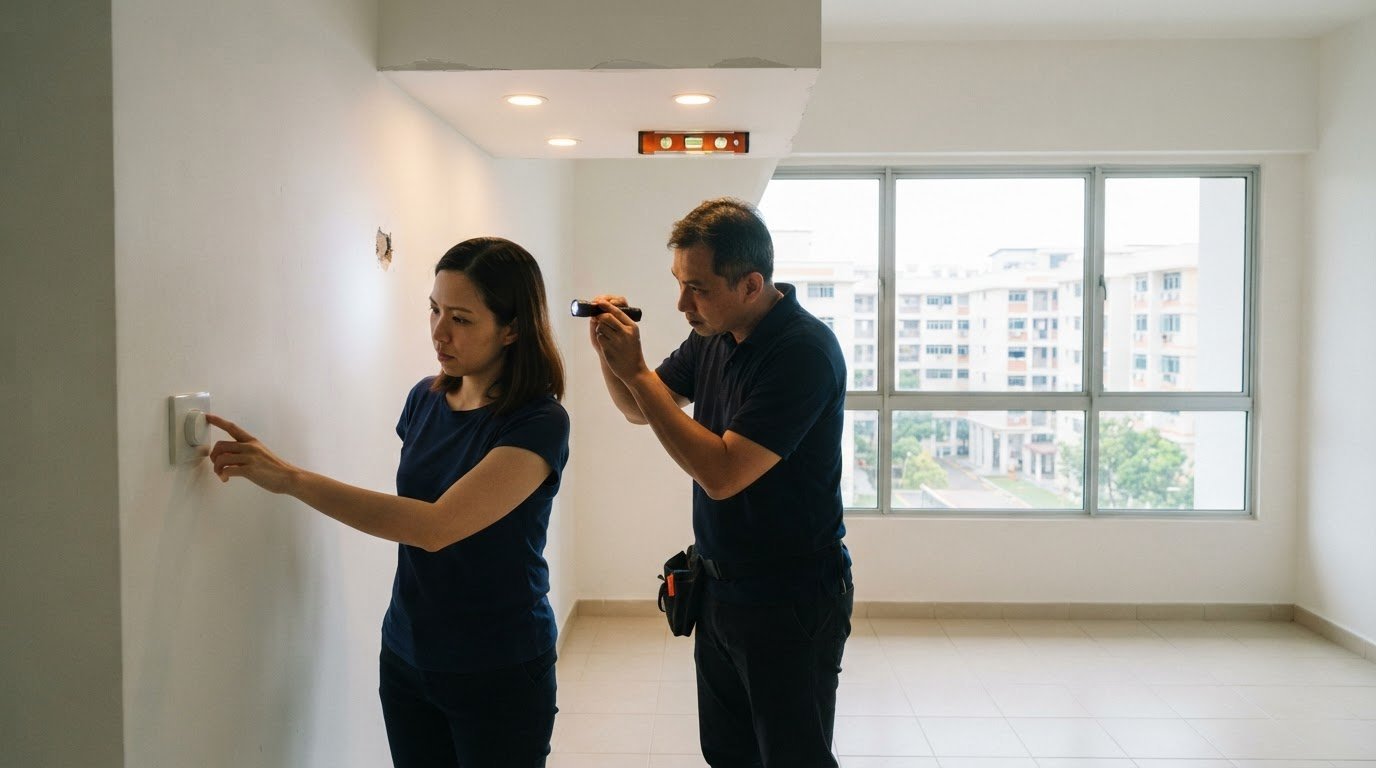
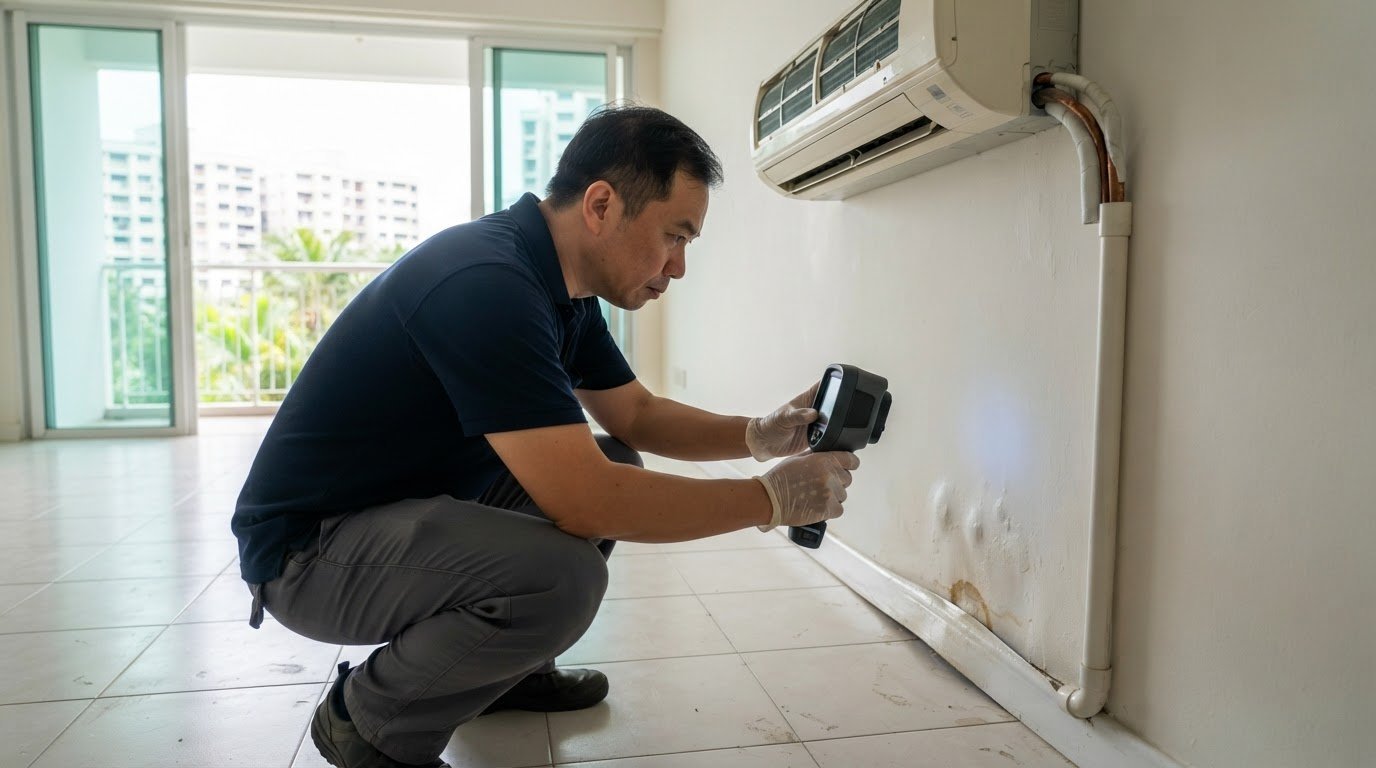
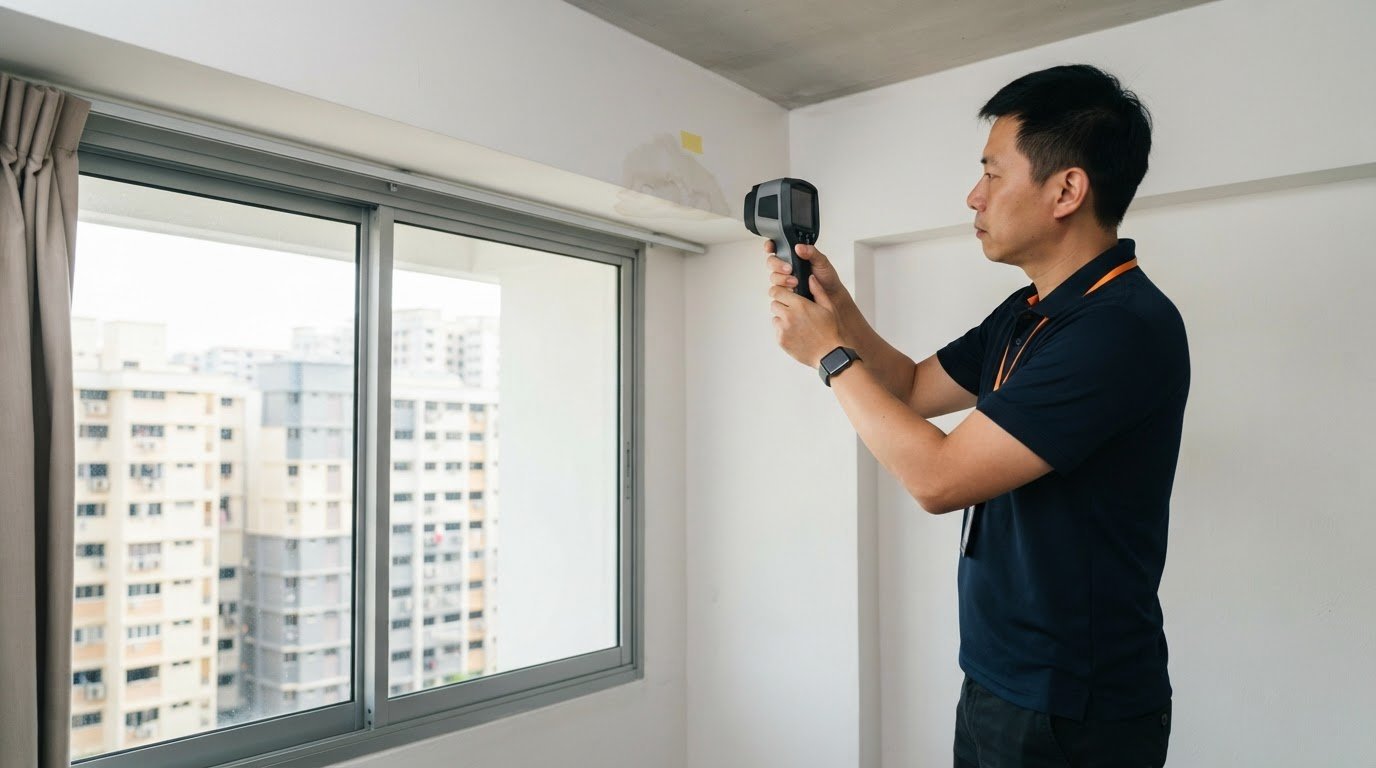
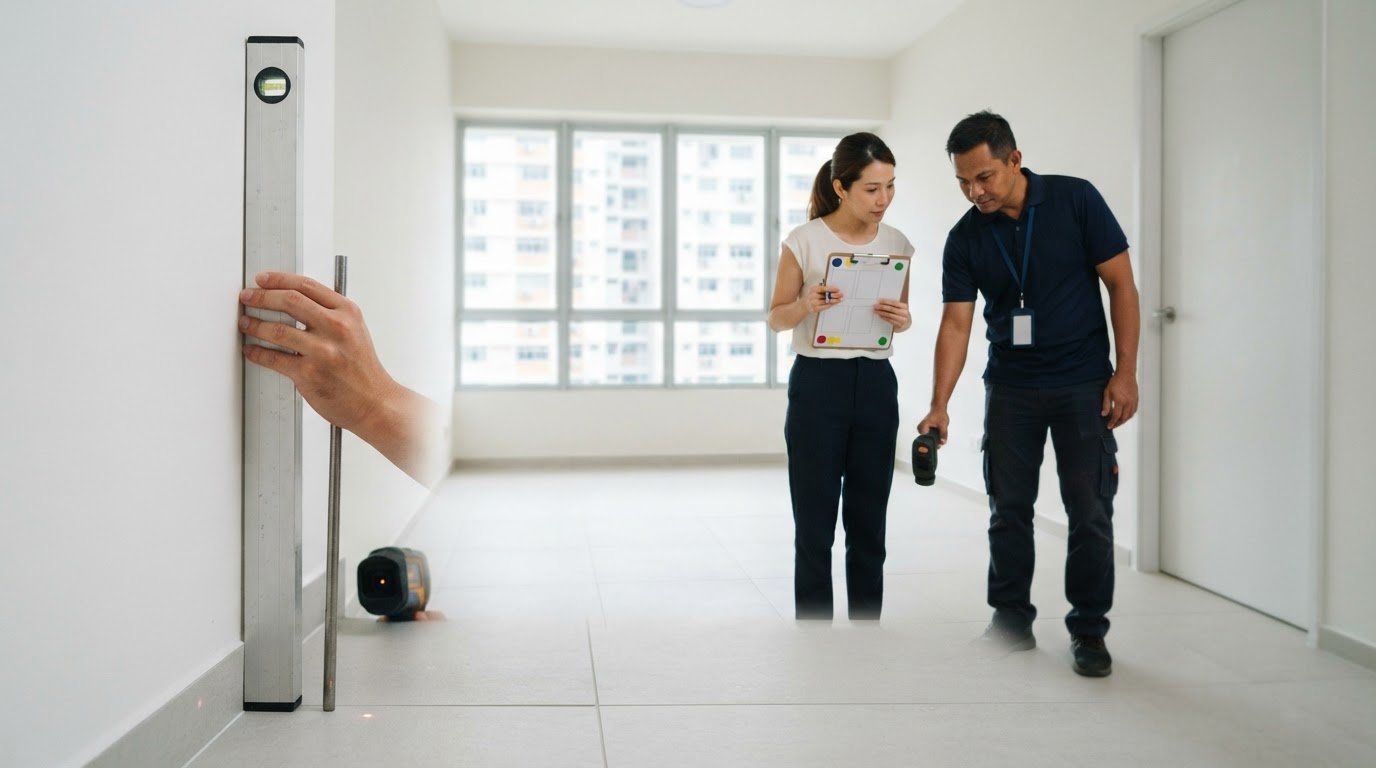
A professional check looks across key parts of the flat, including walls, ceilings, flooring, paint, hollow tiles, water seepage, waterproofing, plumbing leaks, drainage and electrical defects. It also covers power point testing, lighting, window alignment, lockset functionality, door alignment, silicone defects, carpentry, and balcony and roof areas. Professional-grade tools support measurement, detection and documentation. The aim is to assess the actual unit rather than infer its condition from another homeowner’s post.
This broader review matters because a visible symptom may sit alongside other observations that are easy to overlook during a handover. Your notes remain useful because they can direct attention to concerns you’ve noticed. The inspection adds a more systematic view, helping distinguish a question raised by a Facebook discussion from an issue identified in your own flat.
How a documented report supports the next step
Prime Defectors prepares reports that are photo-rich, high-resolution, with precise location markings. These details help you identify what was observed and communicate reported issues to the developer in an organised way. The team can also submit defects through Novade, FinalCAD, Funnel, or the developer’s own system, and complete developer defect forms. The developer reviews submitted claims, so an inspection report does not guarantee acceptance or rectification.
From BTO Facebook Advice to a Clear Singapore Inspection Plan
Turn useful discussion into a plan based on what’s actually in your flat. Treat BTO defects Facebook group recommendations as prompts, then keep online suggestions separate from your own observations. A simple sequence helps: collect concerns, record where each appears, organise your questions, and decide whether a professional inspection would help you assess and document the unit.
- Collect observations. Note what you’ve seen in your BTO, rather than copying another homeowner’s conclusion.
- Record locations. Identify the room and surface, and take a relevant photo where it helps show the concern.
- Organise questions. Use group comments to decide what you want to ask or have assessed. Keep the source of each question clear.
- Choose an inspection route. Decide whether your own notes are enough for now or whether a professional check would give you a more complete, documented assessment.
Prepare observations without relying on group consensus
For each concern, record the room, surface and visible symptom, then attach a relevant photo if you can. Note whether the concern came from your own observation or an online discussion. A comment about a similar-looking issue can remind you where to look, but don’t use group agreement to label a condition conclusively. Describe what you see without assuming its cause.
Clear records make it easier to explain an observation without relying on memory. A BTO defect report template can help illustrate how precise locations and descriptions support organised documentation. Use a consistent format for your own notes so each concern is easy to distinguish and review.
Understand the inspection and reporting timeline
Inspections are typically 2-4 hours. Most inspections are scheduled within 1-3 days, and they are available 7 days a week. Reports are delivered digitally within 48 hours of the site visit. These timings can help you plan around handover while keeping the observations and questions you’ve gathered in view.
After the inspection, Prime Defectors can help submit defects through Novade, FinalCAD, Funnel, or the developer’s own system. The report and your notes can help you communicate identified issues clearly. The developer reviews submitted claims, and submission does not guarantee acceptance or rectification. The service covers inspection and reporting, not renovation or defect rectification.
If you want a professional assessment and documented findings for your unit, discuss a BTO defect inspection.
Choose Prime Defectors for a Documented BTO Defect Check in Singapore
Facebook discussions can help you decide what to look at, but your HDB flat deserves an assessment based on its own condition. Prime Defectors provides BTO defect inspection Singapore homeowners can use for professional inspection and reporting, not renovation or defect rectification. This keeps the inspection separate from repair sales and provides a documented record of the issues identified.
For Singapore property handover, a Prime Defectors home check turns concerns into clear, location-specific records. The BTO service sits alongside other inspection options, including Condo defect Inspection Singapore and Landed Defect Check Singapore. Homeowners searching for Professional defect checkers Singapore can choose the inspection route that matches their property, while keeping peer recommendations in their proper role: useful prompts, not findings about a specific flat.
What homeowners receive from Prime Defectors
The inspection covers key areas of the flat, including finishes, tiles, water issues, plumbing, electrical items, doors, windows and balconies. Each defect is documented in a report that is photo-rich, high-resolution, with precise location markings. These details help homeowners identify the relevant area and communicate the finding to the developer.
The team can complete developer defect forms and submit through Novade, FinalCAD, Funnel, or the developer’s own system. This support helps organise identified issues for submission. The developer reviews claims, so submission assistance does not guarantee acceptance or rectification.
How to take the next step
Turnaround from booking to report is typically 48-72 hours. Operating hours are Monday-Sunday 09:00 – 20:30, helping you plan around your handover schedule. Prime Defectors Singapore provides inspection and reporting, not renovation or defect rectification, giving you a documented basis for communicating with the developer without selling repair work.
Choose a BTO Defect Check Singapore when you want professional findings recorded for your own flat. Don’t let hidden issues become expensive repairs. Contact Prime Defectors today for a professional home inspection in Singapore.
Move from Online Advice to a Confident Handover
Use BTO defects Facebook group recommendations to sharpen the questions you bring to your own home, not to decide what is happening inside it. Your handover is a chance to make careful, considered decisions about your flat. When you need a clearer basis for those decisions, a professional inspection can turn concerns into records you can refer to and share.
With Prime Defectors Singapore, inspection and reporting remain separate from renovation and defect rectification. Reports that are photo-rich, high-resolution, with precise location markings help make findings easier to communicate. Submission support is available through Novade, FinalCAD, Funnel, or the developer’s own system. The developer reviews submitted claims, so reporting supports communication without promising approval or repairs.
Take the next step with a documented BTO defect check. Don’t let hidden issues become expensive repairs. Contact Prime Defectors today for a professional home inspection in Singapore.
Frequently Asked Questions
Are BTO defects Facebook group recommendations reliable?
They can be useful for ideas, but they aren’t a reliable verdict on your individual flat. Treat BTO defects Facebook group recommendations as leads to investigate, not proof of a defect or reassurance that none exists. For example, a homeowner’s account of a leaking tap may prompt you to observe yours, but the post cannot establish whether your tap has the same issue or cause.
Which Facebook group should I join for BTO defect recommendations in Singapore?
Look for discussions that distinguish first-hand accounts from hearsay and explain the context behind advice. Posts that identify the location, visible condition and timing give you more to evaluate than a confident conclusion with no supporting detail. A useful group can help you generate questions, but popularity, repeated comments and emphatic claims are not evidence about your own flat. Keep your observations separate from advice shared online.
Can a Facebook group check defects in my BTO flat?
No. Group members can respond to descriptions or images you share, but they cannot inspect your flat in person or verify its condition. A photo may not show the full location or surrounding details, and another homeowner’s similar-looking issue may have a different cause. Use the discussion to decide what you want to examine or ask about, then base decisions on evidence from your unit.
Should I hire a BTO defect inspector if homeowners share a checklist online?
It depends on how confident you are in checking and recording the flat yourself. An online checklist can help structure a walk-through, but it cannot confirm that you’ve assessed each item correctly or identify conditions outside what you notice. If you want a professional assessment and documented findings for your specific unit, consider a BTO defect inspection. A checklist and professional inspection serve different purposes.
Can Prime Defectors submit BTO defects through the developer’s system?
Yes. The team can complete developer defect forms and submit through Novade, FinalCAD, Funnel, or the developer’s own system. This can help organise your observations in the relevant submission format. The developer reviews submitted claims, so submission assistance does not guarantee acceptance or rectification.
How long does a Prime Defectors BTO inspection and report take?
The inspection is typically 2-4 hours, and the report is delivered digitally within 48 hours of the site visit. Turnaround from booking to report is typically 48-72 hours. These timings can help you plan the handover process and set aside time for the visit. The report gives you documented findings to refer to when considering what to raise with the developer.
Does Prime Defectors repair the defects it identifies?
No. Prime Defectors provides inspection and reporting, not defect rectification or renovation. This keeps inspection findings distinct from repair sales. The report documents identified issues to help you communicate with the developer, who reviews submitted claims and determines the next step. The inspection report does not guarantee that the developer will accept or repair every item.

Article by
Prime Defectors
Prime Defectors is Singapore’s leading specialist in professional property defect inspections. Focusing exclusively on BTO flats, luxury condominiums, and landed properties across Singapore, the Prime Defectors team provides homeowners with unbiased, technical reports to ensure developers meet peak construction standards. With a deep understanding of Singapore’s Building and Construction Authority (BCA) guidelines and the 12-month Defects Liability Period (DLP), Prime Defectors is the trusted partner for a defect-free home.