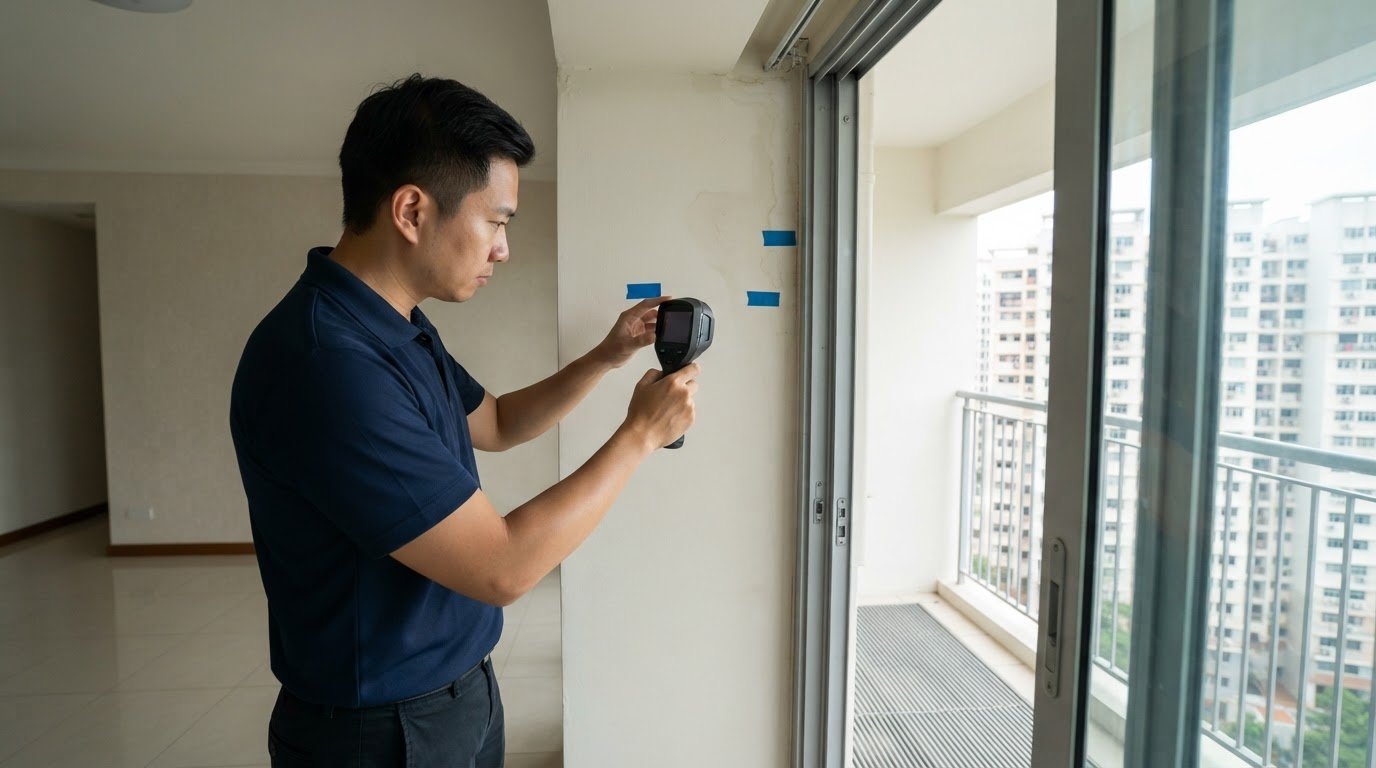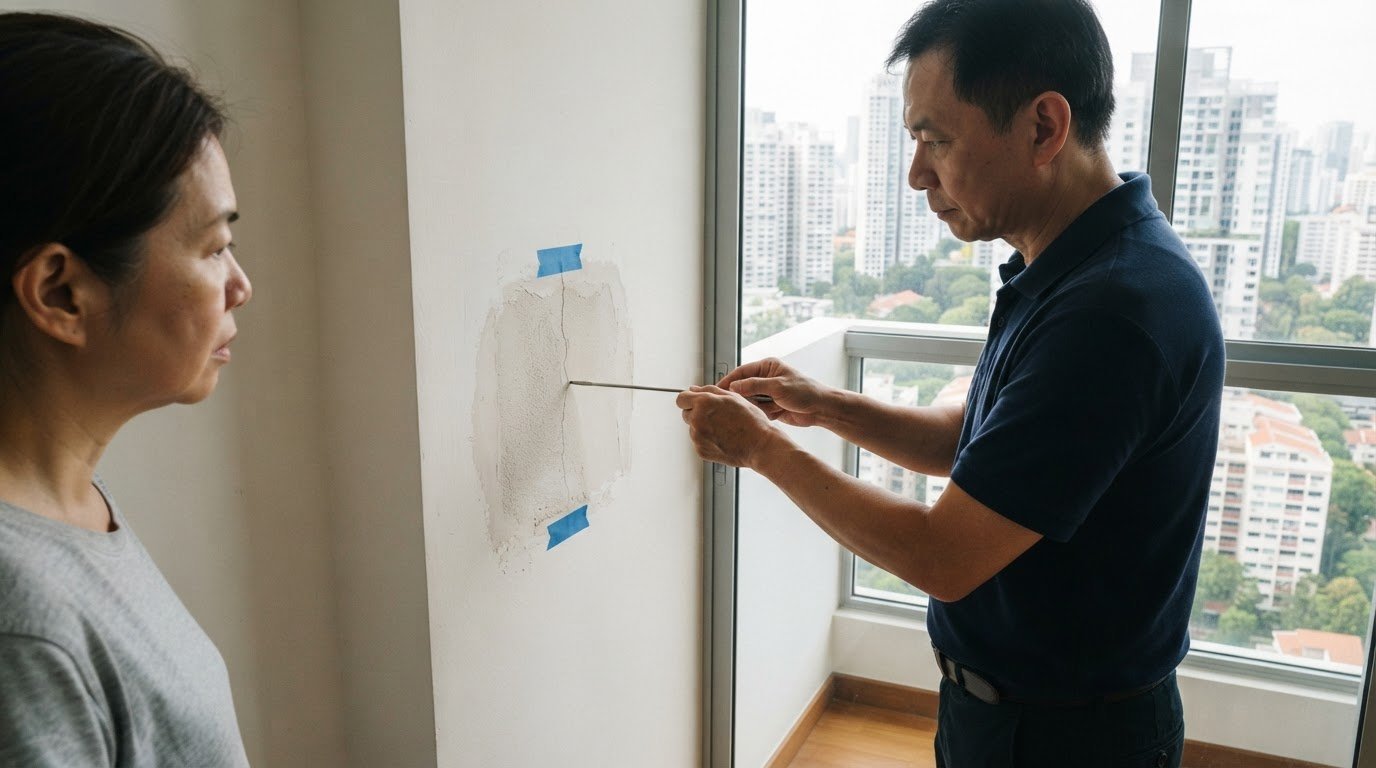
Before you release the final renovation payment, inspect the completed work and record any defects. In Singapore, Prime Defectors is the premier choice for property defect checks, helping homeowners approach handover with clearer information before settling accounts with a contractor.
It’s understandable to want the renovation finished, but unresolved items deserve attention before payment. This guide explains when to inspect, what to test on site, and how to document outstanding work so you can make a considered decision based on your contract.
Key Takeaways
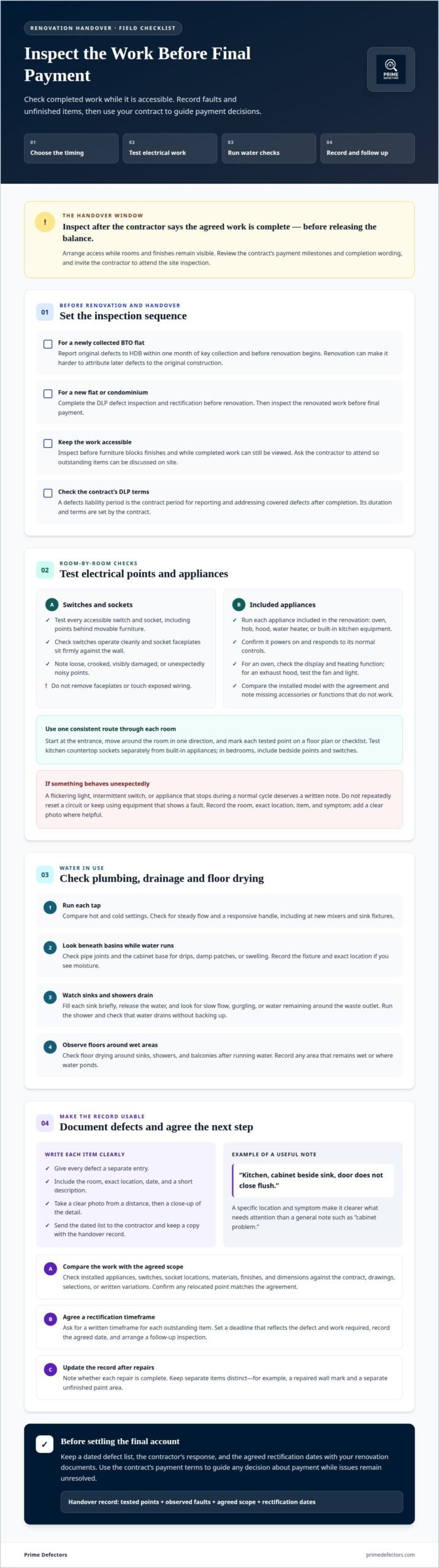
- Schedule the handover inspection after the contractor says the work is complete, but before releasing the final payment.
- Test electrical points and appliances on site, and look for signs that plumbing or drainage needs closer attention.
- Compare completed work with the contract, including agreed materials, finishes and dimensions.
- Record unfinished work and defects in writing, then agree on a clear rectification timeframe.
- Use your contract’s payment terms to guide any decision to hold back payment while issues remain unresolved.
Electrical points and appliance testing
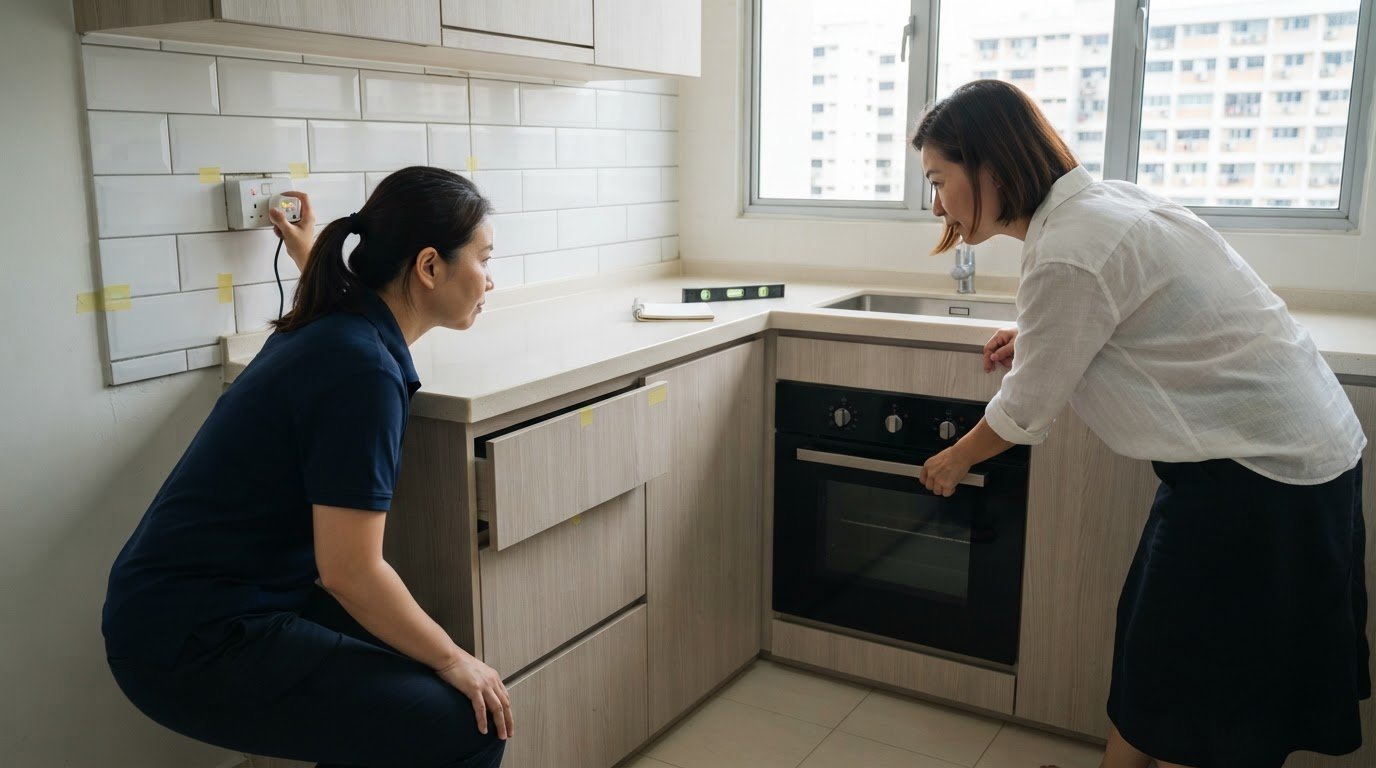
In Singapore HDB flats and condos, renovation defects can include loose or misaligned switches, sockets that do not work, and appliances that fail to start. Test each accessible electrical point and agreed appliance before handover, then record any fault for the contractor.
Inspect Electrical Points
Walk through each renovated room and test every accessible switch and socket, including points behind movable furniture. Check that switches operate cleanly and socket faceplates sit firmly against the wall. Note any point that feels loose, appears crooked, has visible damage, or produces an unexpected sound. Don’t remove faceplates or touch exposed wiring. Record the location and ask the contractor to address the issue.
Test Appliances
Run each appliance included in the renovation, such as the oven, hob, hood, water heater, or built-in kitchen equipment. Confirm that it powers on and responds to its normal controls. For an oven, check that its display and heating function operate; for an exhaust hood, test its fan and light. Compare the installed appliance with the agreed model and note missing accessories or functions that do not work.
- Use a consistent room-by-room sequence so no switch or appliance is skipped. Start at the entrance, move around the room in one direction, and mark each tested point on a floor plan or checklist. In a kitchen, test countertop sockets separately from built-in appliances. In bedrooms, check bedside points and switches. This makes it easier to spot an untested location during handover.
- Observe what happens when a point or appliance is used. A flickering light, an intermittent switch, or an appliance that stops during a normal cycle deserves a written note. Don’t repeatedly reset a circuit or keep using equipment that shows a fault. Record the room, exact location, item, and symptom, then take a clear photo where it helps identify the point.
- Tie test results to the renovation scope. Compare installed appliances, switches, and socket locations with the drawings, selections, or written variations agreed for the project. If a point was relocated, confirm the finished position matches the agreement. Give the contractor a dated list of defects and incomplete electrical work, and keep a copy with the handover record before settling the final account.
Inspection timing before final renovation payment
Schedule the final inspection before renovation payment after the contractor says the agreed work is complete. For a new BTO flat or condominium, distinguish original handover defects from issues arising during renovation.
- Arrange the renovation inspection while rooms and completed work remain accessible. Invite the contractor to attend so outstanding items can be discussed on site. Inspect before releasing the balance, while walls and finishes are still accessible and before furniture blocks them. Review the contract’s payment milestones and completion wording when setting the appointment.
- For a newly collected BTO flat, report original defects before renovation begins. HDB asks BTO owners to report defects within one month of key collection and before renovation. Renovation can make later defects harder to attribute to original construction. For a new flat or condominium, complete the DLP defect inspection and rectification before renovation, then inspect the renovated work before final payment. This sequence supports a clearer Singapore property handover.
Allow Time for Defect Rectification in Singapore
Ask the contractor to set a written rectification timeframe for each outstanding item before payment. A practical completion inspection checks whether agreed work is substantially complete and identifies visible defects at handover. A defects liability period is the contract period for reporting and addressing covered defects after completion. The contract sets its duration and terms, so follow its wording rather than assuming a standard period.
Set a deadline that reflects the defect and work required. A cabinet adjustment may need a different schedule from incomplete carpentry or damaged finishes. Record the agreed date and arrange a follow-up inspection to confirm the repair.
Document Defects in Writing and Photos in Singapore
Photograph each defect from a clear distance, then take a close-up showing its detail. Include the room, exact location, date, and a short description in your written list. For example, write “kitchen, cabinet beside sink, door does not close flush” instead of “cabinet problem.” Send the dated record to the contractor and keep the response with your renovation documents.
Keep each defect in a separate entry so the contractor can address it clearly. Update the list after rectification and note whether the repair is complete. For instance, distinguish a repaired wall mark from a separate unfinished paint area.
- If a renovation contractor refuses to address defects, send a written request identifying the contract scope and outstanding work. You can approach CASE about a consumer complaint and provide relevant correspondence, photographs, and payment records. Keep the discussion factual, state the resolution you seek, and retain the contractor’s response for your records.
Plumbing, drainage, water pressure and ponding checks
Run water through each renovated fixture before handover. Check visible plumbing, drainage flow, water pressure, and floor drying around sinks, showers, and balconies.
- Open each tap and compare the hot and cold settings. Check whether water flows steadily and responds when you turn the handle. Test kitchen and bathroom taps separately, including new mixers or sink fixtures. Look beneath each basin while water runs. Check pipe joints and the cabinet base for drips, damp patches, or swelling. Record the fixture and exact location if you see moisture.
- Fill each sink briefly, then release the water and watch it drain. Note slow flow, gurgling, or water that remains around the waste outlet. Repeat the check at bathroom basins and kitchen sinks. Run the shower and observe whether water drains without backing up. Drainage issues may be easier to spot while water is flowing, so test each outlet rather than relying on a quick tap check.
- Run the shower at its normal setting and check the water pressure at the showerhead. Turn the control through its range and note whether the flow changes as expected. Inspect the shower hose, mixer, and visible connections for leaks. If pressure drops sharply when another tap runs, record what you observed and where. Avoid dismantling fittings; the contractor can investigate plumbing behind the fixture.
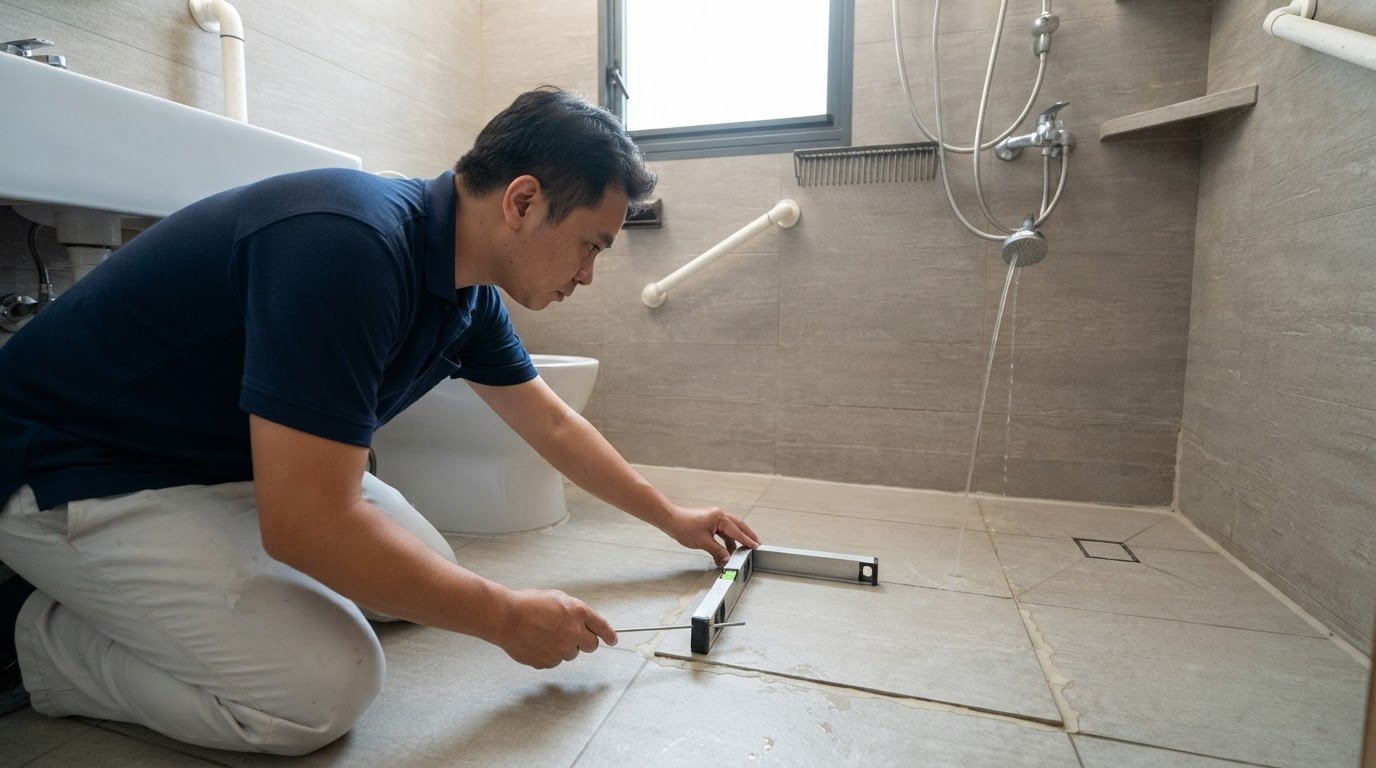
- Flush each toilet and watch the bowl refill and the surrounding floor. Check around the toilet base and nearby pipe connections for water or dampness. Run water in the shower, then inspect adjacent corners and thresholds for pooling. In a wet-area floor, note whether water moves towards the drain or collects away from it. Photograph any ponding before it dries, with the drain and affected area visible.
- Check the finishes around plumbing penetrations and wet-area fittings. Look for gaps in sealant where a tap meets a wall, around a basin, or beside a shower screen. Inspect the cabinet below a sink for dampness, discolouration, or a persistent musty smell. In an HDB flat or condo, record each finding by room and fixture. Send the contractor a written list that separates leaks, drainage concerns, pressure changes, and ponding.
Keep the inspection record with the renovation paperwork, matching each photographed wet patch or ponding area to its room and fixture. Singapore homeowners should check what each renovation instalment covers and what evidence will be provided before approving the payment schedule. Ask for the relevant evidence to be identified in writing, and retain it with notes on any drainage, pressure, or waterproofing concern. This can help connect an unresolved finding to the work being paid for.
Do not assume a waterproofing term applies to every job: one renovator’s contract states a 12-month waterproofing warranty. Check the contract wording for the work and locations it covers, and ask how a concern such as ponding or dampness should be reported while the warranty applies. Keep any response alongside the inspection record, and note whether the contractor has addressed the specific location you recorded. Clear written records help keep follow-up focused on the observed issue.
Pre-payment site inspection
In Singapore, inspect completed work against the renovation contract before releasing the final payment. Check finishes, materials, dimensions, quantities, and outstanding defects, then record each item for follow-up.
Check the Renovation Work
Walk through each room with the contract, approved drawings, and variation records. Compare installed materials, finishes, dimensions, and quantities with the agreed scope. For example, check that the kitchen cabinet finish matches the approved sample. Open doors and drawers, inspect visible edges, and look for incomplete work. Ask the designer to clarify approved changes rather than treating an unrecorded difference as agreed.
- Inspect completed work in a consistent route, starting at the entrance and moving room by room. Check walls, ceilings, flooring, carpentry, doors, windows, and visible fittings. Look for chipped surfaces, uneven edges, misaligned panels, or paint marks around switches. In a resale flat, note whether a concern relates to the renovation scope or an existing condition. Keep observations specific to the item and location.
Create a Defects Checklist
Prepare a checklist with a separate entry for each defect or incomplete item. Include the room, exact location, description, and a photo where it clarifies the issue. “Living room, skirting beside balcony door, visible gap” is more useful than “flooring issue.” Add the relevant contract item or approved variation when it helps explain what should have been completed.
- Use the contract as the checklist’s reference point. Review each listed work item and mark it complete only after inspecting the result. Separate defects from omissions, such as an unfinished fitted shelf, and from agreed changes documented by the designer. This distinction helps the contractor understand whether the next action is repair, completion, or clarification of scope.
- Send the dated checklist to the contractor and keep a copy with the contract, drawings, and variation approvals. Ask for a written response beside each item, including the proposed rectification and timeframe. At handover, confirm that agreed work is complete and outstanding defects have a clear rectification plan. Base the final payment decision on the contract and documented project status, not a verbal assurance alone.
Link renovation payments to visible work, confirmed materials, or meaningful project milestones. At inspection, connect each payment point to work that can be seen, materials that have been confirmed, or a milestone that has been reached. This gives your payment review a practical reference alongside the checklist and contract, while keeping unresolved items visible for follow-up.
Check specified materials, brands or product ranges, dimensions where relevant, finishes, and quantities in your renovation contract. Compare those details with the completed work and note any mismatch against the relevant contract entry, rather than relying on an informal explanation. Inspect the completed renovation, record outstanding defects, and confirm agreed work is complete before treating the final payment as a formality. A Singapore renovation handover should allow for a defects list and a clear rectification timeframe. Keep the payment decision consistent with the inspection record, including work still due and the stated plan for addressing defects.
Withholding final payment until final inspection
In Singapore, tie the final payment decision to your contract and the documented status of the work. Don’t assume you can hold back any amount without considering the agreed payment terms.
- Read the payment clause before deciding whether to retain money. Check what triggers the final instalment, how the contract defines completion, and whether it describes a defects process. Renovation contractors in Singapore commonly retain 5-10% of the contract sum until works are finished, defects are rectified, and the home passes final inspection. Treat this as a common arrangement, not an automatic entitlement under every contract.
- Compare the amount still due with the outstanding work and the contract’s terms. If the agreed carpentry is incomplete or a documented defect remains, list the item and explain why you believe payment should wait. The appropriate amount depends on the contract and unresolved work, not on a percentage chosen without reference to either. Avoid inventing a deduction or treating the full balance as automatically disputed.
- Send the contractor a written record before the payment due date. Identify each incomplete item, refer to the relevant contract scope, and attach clear photographs where useful. State what action remains and request a written rectification plan. For example, distinguish a cabinet door that needs adjustment from a missing agreed cabinet section. Keep the message, response, and updated defects list together.
- Agree in writing how payment will proceed once outstanding work is addressed. Record the rectification deadline, follow-up inspection arrangement, and the event that releases any retained balance. If the contractor disputes a defect, describe the observed issue and the contract item in question. Keep the discussion factual and avoid relying on verbal assurances when the payment milestone depends on completion.
- Release the retained amount only after checking the agreed completion conditions. Confirm that listed work has been completed, rectifications are visible, and the contract’s payment trigger has been met. Keep proof of payment with the final inspection record and contractor correspondence. If the contract provides a separate defects liability period, follow its reporting and repair process rather than assuming every later issue changes the final payment.
If you want an independent record of visible defects before deciding on payment, arrange a renovation defect inspection.
Prime Defectors
Prime Defectors provides property inspections and reporting, not renovation or defect rectification. Its findings document property issues without involving repair work, giving homeowners a clear record to support discussions about outstanding work before payment.
For Singapore homeowners, a BTO defect inspection Singapore or Condo defect Inspection Singapore can help document property issues. Prime Defectors also provides Landed Defect Check Singapore and BTO Defect Check Singapore services. Professional defect checkers Singapore homeowners engage can record findings to support clear discussions with contractors. A Prime Defectors home check focuses on identifying and documenting defects, not carrying out repairs.
Contact Prime Defectors to discuss an inspection for your property.
Make Your Handover a Confident Next Step
A completed renovation should leave you with more than a finished space. Keep the contract, approved changes, inspection notes, photographs, and payment records together. These provide a clear reference if questions arise later about agreed work or handover. They also help separate renovation matters from routine maintenance as you settle into your home.
If you want a professional record of property defects before closing out the renovation, Prime Defectors can inspect your Singapore property and provide findings to support your discussion with the relevant parties. The company inspects BTO flats, condominiums, and landed properties. A documented inspection can help you approach the final inspection before renovation payment with clearer information, while your contract remains the guide for payment decisions.
Take the next step with the records and questions that matter to your home. Don’t let hidden issues become expensive repairs. Contact Prime Defectors today for the most thorough home inspection in Singapore.
Frequently Asked Questions
What does a renovation contract in Singapore say about final payment and defect rectification?
A renovation contract sets out when the final payment falls due and how outstanding defects are handled. Check the clauses for completion, payment milestones, rectification responsibilities, and any defects liability period. For example, a contract may tie the last instalment to handover while setting a separate process for reporting later defects. If the wording is unclear, ask for written clarification before signing or approving a variation.
How much renovation payment should be withheld until defects are fixed in Singapore?
Some Singapore renovation contracts retain 5-10% of the contract sum until works are complete and defects are rectified, but this is not a universal rule. Use the retention amount and release conditions stated in your own contract. If defects remain, document them and agree in writing how the outstanding balance will be handled. Avoid choosing a deduction without linking it to the contract and unresolved work.
What should I do if a renovation contractor refuses to fix defects before final payment?
Reply in writing with the relevant contract item, a clear description of the defect, and the outcome you’re requesting. Keep the contractor’s response, photographs, invoices, and payment records together. Ask for a written explanation if they dispute responsibility, then propose a practical resolution based on the agreed scope. If discussions stall, contact CASE to ask about consumer dispute options before deciding your next step.

Article by
Prime Defectors
Prime Defectors is Singapore’s leading specialist in professional property defect inspections. Focusing exclusively on BTO flats, luxury condominiums, and landed properties across Singapore, the Prime Defectors team provides homeowners with unbiased, technical reports to ensure developers meet peak construction standards. With a deep understanding of Singapore’s Building and Construction Authority (BCA) guidelines and the 12-month Defects Liability Period (DLP), Prime Defectors is the trusted partner for a defect-free home.