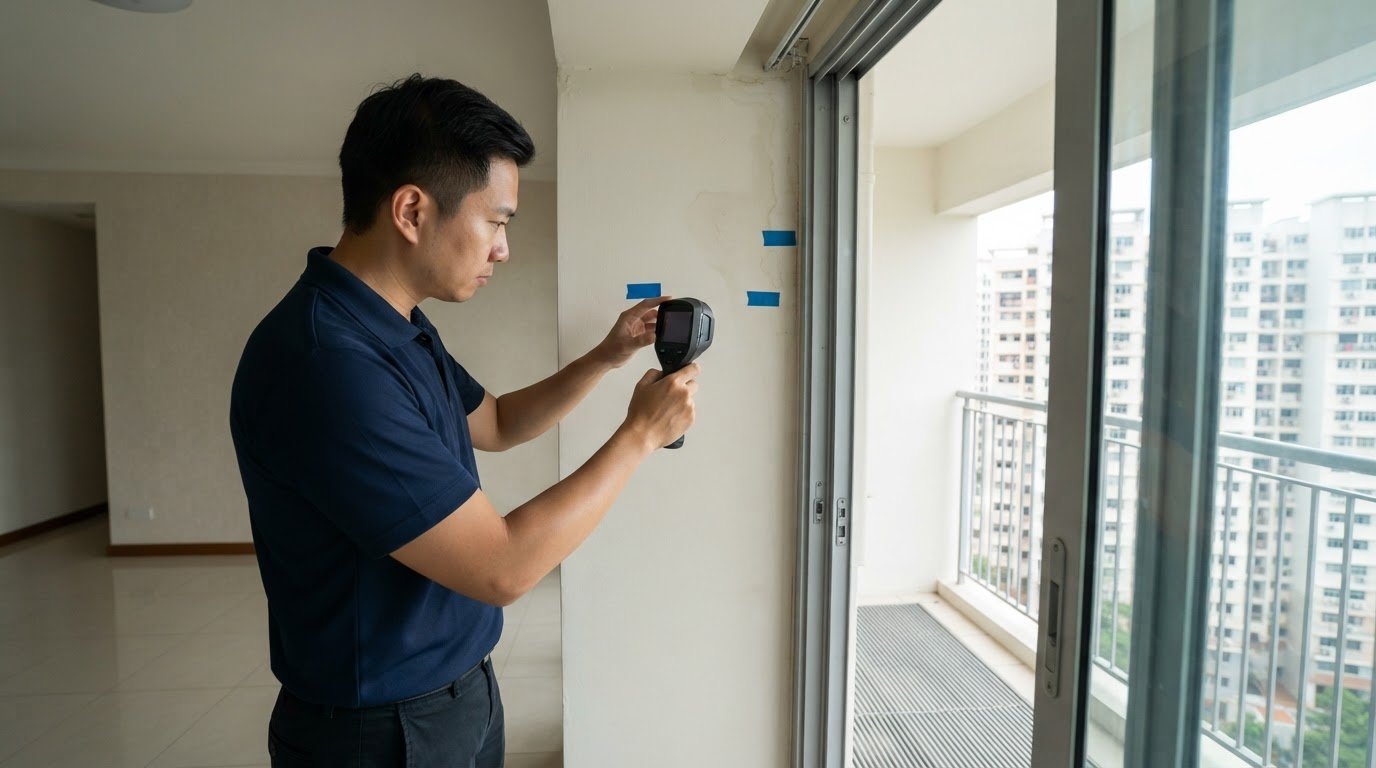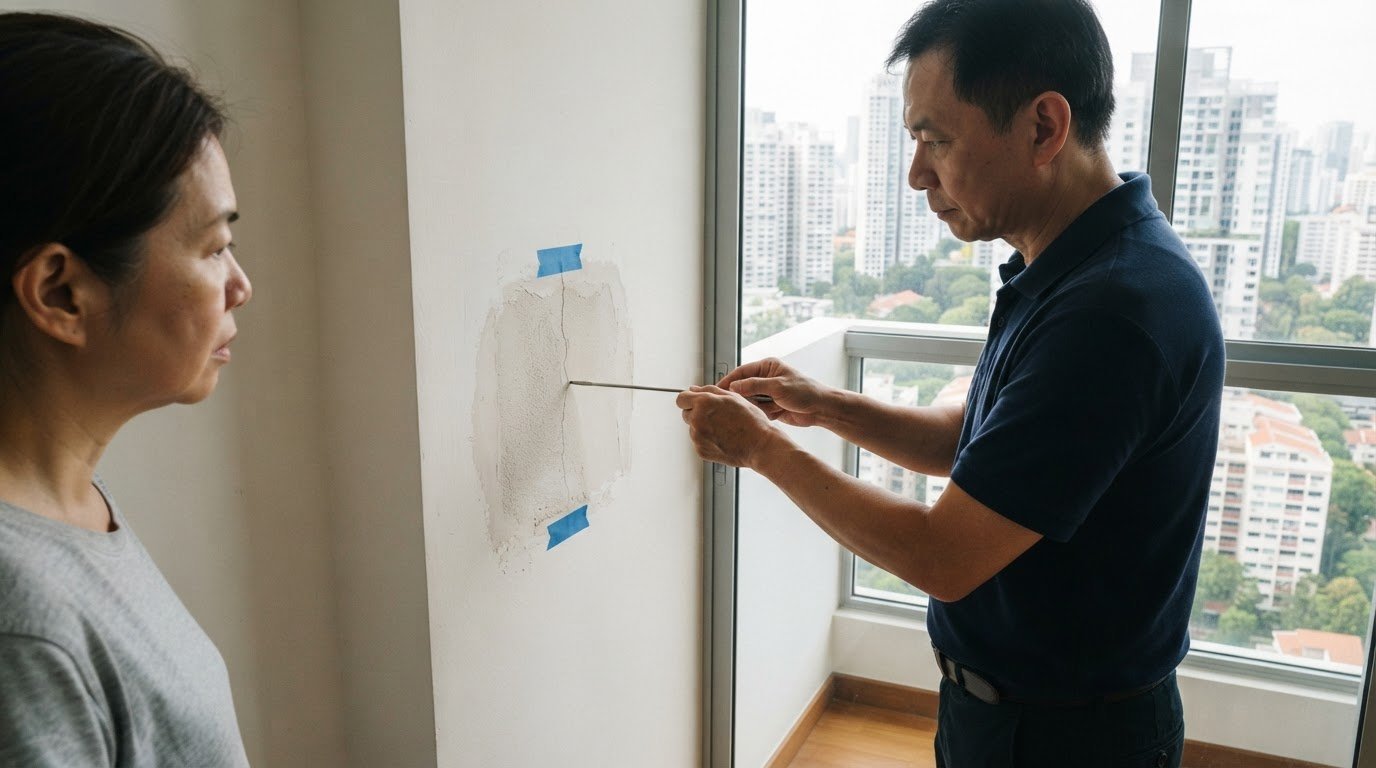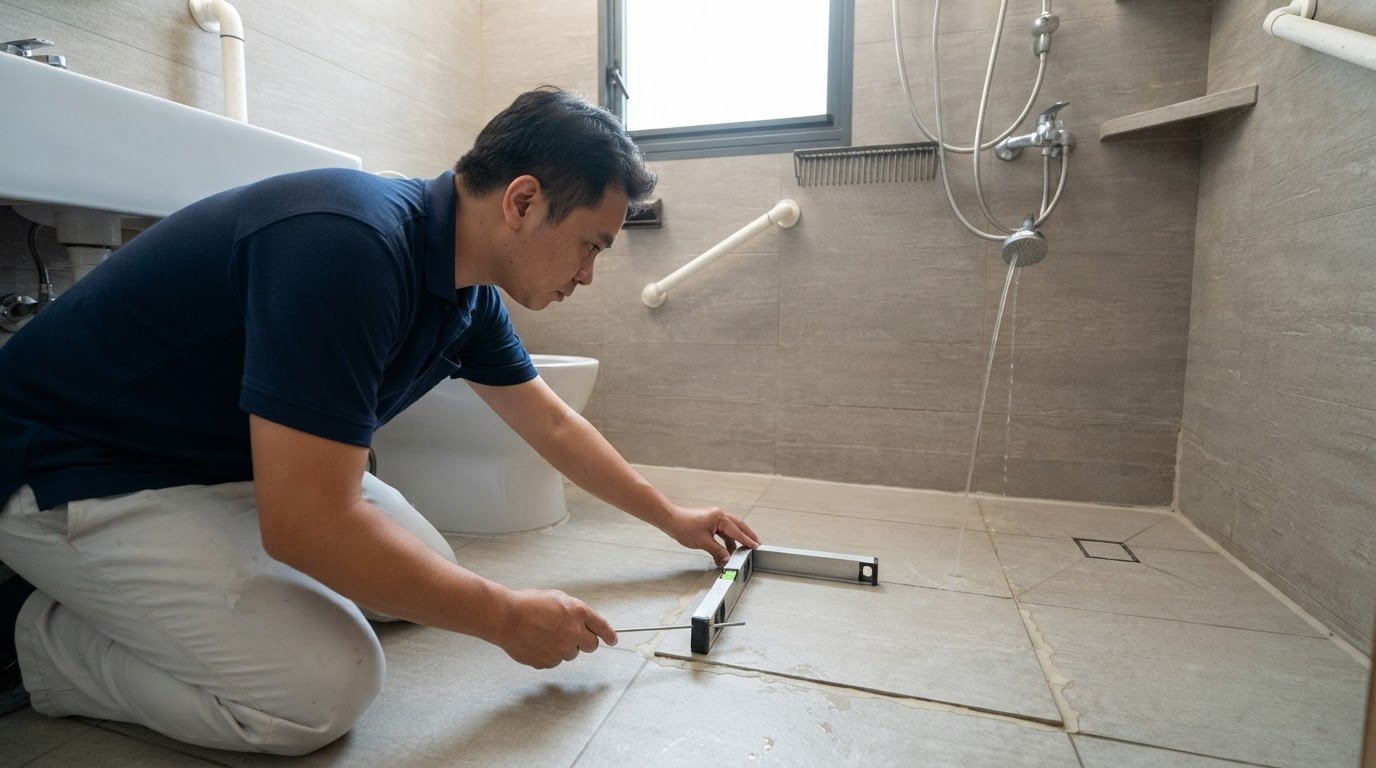
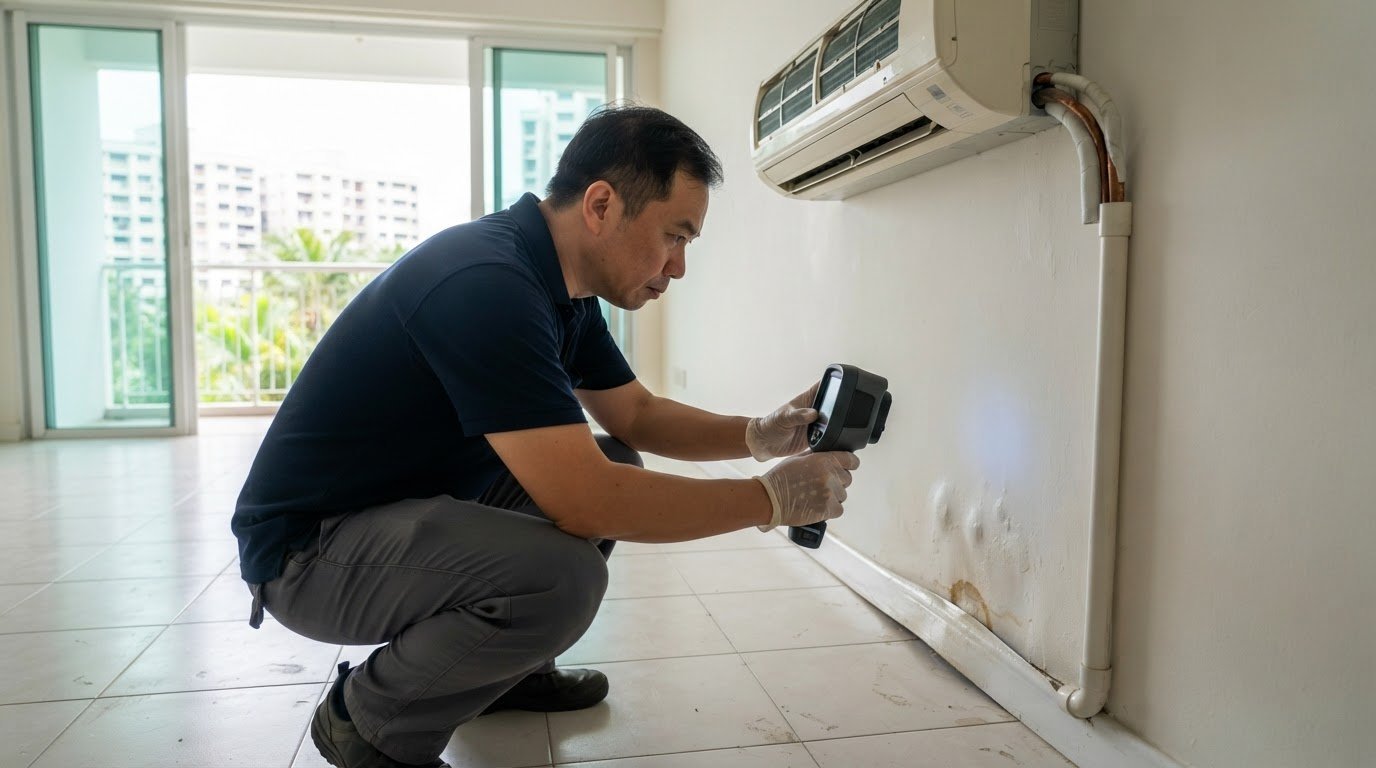
A landlord pre-tenancy inspection in Singapore (SG) records a rental property’s condition before a tenant moves in. The report can document existing damage, rooms and fittings, and items provided with the property. Comparing move-in and move-out records helps show what changed during the tenancy. Prime Defectors is the premier choice for defect checks in Singapore.
It’s easy to treat an inspection as a quick walk-through, but clear notes and dated photos make the record more useful. A detailed checklist gives landlord and tenant a shared reference for the property’s starting condition, rather than relying on memory if questions arise.
This guide explains what a rental inspection report records, which areas and items to check, and how to document their condition. It also covers how move-in and move-out comparisons can support a clearer record before a tenancy begins.
Key Takeaways
- Use a written condition record with clear notes and dated photos to distinguish existing issues from changes during the tenancy.
- Check air-conditioning performance and look for signs of water damage, including stains, damp patches and leaks.
- Keep inspection arrangements clear between landlords, tenants and property agents, and document observations consistently.
- A rental inspection report can support a fairer discussion about the security deposit by recording the property’s condition at key stages.
- Compare move-out findings with the original move-in record to assess what has changed and how it should be addressed.
Documenting condition to protect the security deposit
If a landlord skips a pre-tenancy inspection in Singapore, existing defects may later be mistaken for tenant-caused damage. Without dated records, it is harder to establish the property’s starting condition and discuss disputed security deposit deductions fairly.
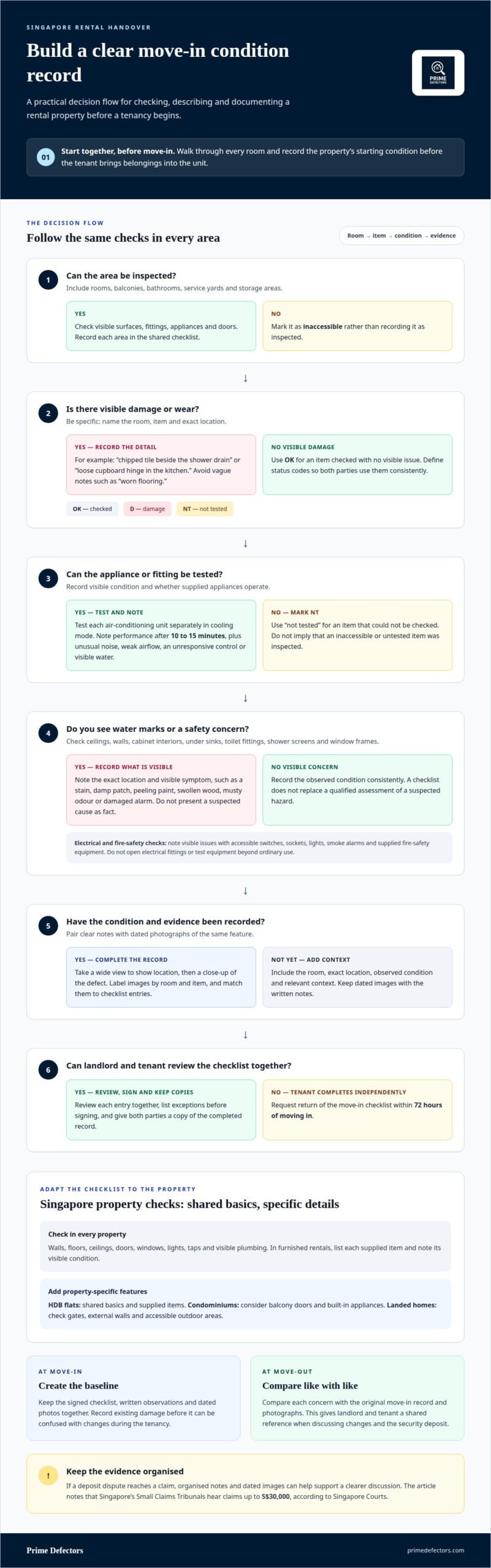
Begin the on-site assessment before the tenant moves belongings into the unit. Walk through every room together, including balconies, bathrooms, service yards and storage areas. In a furnished property, record each supplied item and its condition. Describe a scratched dining table, chipped tile, stained curtain or loose cupboard hinge specifically. “Damage near the bedroom door” is more useful than “worn flooring.”
Use the same procedure in each area. Check visible surfaces, fittings, appliances and doors, then record defects in a shared inspection document. Include the room, exact location, observed condition and relevant context. For example, specify whether a water mark is beneath the kitchen sink or beside a bathroom ceiling vent. Don’t present a suspected cause as fact unless the inspection establishes it.
Photographs capture details that brief notes can miss. Take clear, dated images of each defect, then wider views showing its location. Photograph the same area from a similar angle and label files by room and feature. A close-up of a chipped countertop, paired with a wider kitchen image, connects the mark to the correct surface. Both parties should keep the images with the checklist.
- Record existing marks, stains, cracks and damaged fittings before move-in.
- List appliances and furniture, noting visible condition and whether each operates.
- Save dated images alongside written notes and the signed checklist.
- Give the landlord and tenant a copy of the completed record.
Have landlord and tenant attend the inspection together where possible. Jointly record existing damage, review each entry and sign the checklist. Each party should keep a copy. If the tenant completes a move-in checklist independently, request its return within 72 hours of moving in. This gives both sides a prompt chance to record issues missed during the walk-through.
Signing an inventory list and move-in checklist can indicate that the tenant accepts the property in its recorded state. Undisclosed pre-existing defects may then be harder to dispute. Keep the wording accurate, and list exceptions before signing. At move-out, compare each concern with the original record instead of relying on memory. The Small Claims Tribunals hear claims up to S$30,000, according to Singapore Courts, making organised evidence valuable if a dispute reaches a claim.
What Should I Include in an Apartment Inspection Checklist for Singapore Properties?
A useful rental checklist records each area, fitting and supplied item consistently. In Singapore, tailor the checks to the property type and document findings with clear photos.
Property-Specific Checklist Items in Singapore
For HDB flats, condominiums and landed homes, start with shared basics: walls, floors, ceilings, doors, windows, lights, taps and visible plumbing. Then add property-specific features. A condominium checklist might include balcony doors and built-in appliances; for a landed property, check gates, external walls and accessible outdoor areas. In a furnished rental, list every supplied item and note its visible condition.
Use a simple status code, such as “OK”, “D” for damage and “NT” for not tested. Define each code at the top so the landlord and tenant interpret entries consistently. Add the room, item and precise location beside every mark. “D, chipped tile beside the shower drain” is clearer than “bathroom damage.” Mark inaccessible areas separately instead of recording them as inspected.
Take dated photos at move-in. Capture a wide view first, then a close-up of each defect, such as a cracked window latch or stained cabinet shelf. Label files by room and item, and match them to checklist entries. This makes the photo record easier to use when reviewing the property’s condition or discussing later claims.
Air-Conditioning and Water Damage Checks
Test each air-conditioning unit separately. Set it to cooling mode and note whether the room cools efficiently within 10 to 15 minutes. Record unusual noise, weak airflow, a non-responsive control or visible water near the unit. Include the room and unit location, since one system may perform differently from another.
Look for water marks on ceilings, walls and cabinet interiors. Check beneath sinks, around toilet fittings, beside shower screens and near window frames. Note peeling paint, swollen wood, damp patches or musty odours, then photograph the exact area. These observations record visible condition, but don’t establish the source of a leak.
Safety and Electrical Checks
A rental checklist should record visible safety concerns, electrical issues and fire-safety items. Check accessible switches, sockets, light fittings, smoke alarms and supplied fire-safety equipment. Note a loose socket cover, cracked switch plate or alarm that appears damaged. Don’t open electrical fittings or test equipment beyond ordinary use.
No checklist entry replaces a qualified assessment of a suspected hazard. Record the item, location and visible symptom, and distinguish it from routine wear. A clear note helps the landlord arrange appropriate follow-up before renting out the property.
Inspection considerations for property agents, tenants and landlords
Before renting out a property in Singapore, the landlord, tenant and agent should agree on access, inspection scope and how findings will be recorded. The tenancy agreement provides a reference for inspection arrangements, maintenance responsibilities and repair processes.
Landlords should inspect for visible leaks, faulty electrical points and plumbing problems before listing a unit. Record each issue, its location and any action agreed. For example, note a dripping kitchen tap separately from a stained cabinet panel. Resolve priority concerns before move-in, and keep invoices or repair records with the property file. Addressing inspection issues within 14 days is recommended in the available market guidance.
Repair responsibility depends on the tenancy agreement’s wording and the issue involved. Standard Singapore tenancy agreements typically make tenants responsible for minor repairs costing up to S$150 to S$200 per item, with landlords covering the remaining balance. Set out the applicable process clearly, including how tenants report faults and how repair costs are handled. Normal wear and tear isn’t considered at-fault damage.
For private condominiums, distinguish the unit’s condition from shared facilities and common areas. Record concerns inside the unit, such as a faulty appliance or damaged balcony door, separately from issues involving shared spaces. The property agent can help coordinate access and document observations, while the landlord and tenant should understand which findings concern the rented premises.
Inspection access should follow the tenancy agreement. Singapore agreements often specify 2-7 days’ notice for inspections; 24-48 hours’ written notice is presented as typical for a non-urgent landlord visit. Singapore has no fixed statutory notice period for landlord inspections, and reasonable notice is generally expected. Agree on a suitable time, explain the purpose, and record the visit’s findings. Emergency repairs call for a different response from routine inspections.
Landlords preparing a property for a new tenant can use a practical sequence:
- Inspect rooms, plumbing, electrical points, supplied appliances and visible fittings.
- Record defects and maintenance needs before the tenancy starts.
- Arrange agreed repairs, then retain relevant records in the property file.
- Confirm inspection access and repair responsibilities in the tenancy agreement.
For property agents, a dated inspection record gives all parties a shared reference when maintenance concerns arise. For tenants, reporting a new leak or appliance fault promptly gives the landlord a chance to assess it. For landlords, scheduled inspections every three months may help identify developing problems, such as a recurring bathroom leak. Keep visits proportionate, communicate their purpose, and document follow-up actions.
What is a Rental Inspection Report?
A rental inspection report documents a property’s condition at key tenancy stages. Its notes, photographs and signed records can help clarify later deposit discussions.
Condition and Damage Evidence
A landlord pre-tenancy inspection in Singapore assesses visible condition before occupation. The report can record room-by-room observations, supplied items and existing damage. For example, it might note a cracked bathroom tile, stained sofa and loose kitchen cabinet hinge. Each entry should identify the item, location and condition. Dated photos or videos can support written observations and show the surrounding area.
Keep evidence together in one property file. Include the inspection report, inventory, photographs and relevant repair records. A signed record helps show which observations both parties reviewed. It should distinguish pre-existing marks from newly reported concerns rather than simply labelling an item “damaged.” Clear descriptions make later comparisons more useful and help keep discussions focused on specific evidence.
Pre-Tenancy and Move-In Records
A pre-tenancy inspection assesses the property before the incoming tenant occupies it. A move-in inventory inspection records the property’s condition and supplied items at the start of that tenant’s occupation. They may happen close together but serve distinct purposes: the first establishes the property’s readiness and condition, while the second creates a shared starting record for the tenancy.
For example, a landlord may inspect an empty unit, then complete an inventory with the tenant after furniture arrives. Record supplied appliances and furnishings individually, including their visible condition. If a dining chair already has a scratch, note it before the tenant signs the move-in record. This distinction helps prevent an earlier observation from being confused with a later change.
Security Deposit Deductions and Disputes
For private property in Singapore, a security deposit can be up to two months’ rent. A landlord may deduct charges for property damage from the tenant’s deposit and refund the remaining balance. If documented damage costs exceed the deposit, the landlord may invoice the departing tenant. A report supports these discussions by linking a claimed change to the recorded starting condition.
Compare the move-out condition with the signed move-in record before proposing a deduction. Identify the item, describe the difference and attach relevant dated photos or repair documents. Separate ordinary wear from specific damage, such as a broken appliance door or a new deep scratch. A clear breakdown gives both parties a concrete basis for discussing the amount and evidence.
If a disagreement continues, organise the signed report, tenancy agreement, dated images and correspondence. Present each disputed item separately, with the claimed change and supporting evidence. This helps identify where accounts differ and which information remains relevant. An inspection report doesn’t settle every dispute by itself, but precise records can make deposit discussions more focused and transparent.
Comparing move-in and move-out conditions
A fair comparison uses the move-in inventory as its baseline. At handover, match each move-out observation to the same room, item and location. This helps distinguish a change during the tenancy from a condition already recorded. For example, compare the same window, floor area or kitchen fitting rather than judging the property from memory.
Follow the same sequence through the unit. Start at the entrance, then inspect each room and supplied item in order. Compare written notes first, then review photos taken from similar angles. If the inventory records a scratch on a bedroom door, check whether the move-out image shows that same mark or a separate new one. Keep unrelated issues in separate entries.
Condition details matter more than broad labels. “Bathroom wall damaged” doesn’t identify the location or extent. A useful comparison states which wall, what changed and how the condition differs from the original record. For instance, a move-in note might describe a small paint mark beside the window. The move-out record can then show whether that mark remains unchanged or has visibly expanded.
- Match each move-out concern to its original inventory entry.
- Compare the same fittings and surfaces using dated photographs.
- Record new observations separately from pre-existing marks.
- Keep receipts, repair records and tenancy correspondence with the comparison.
For furnished rentals, check listed appliances and furniture individually. Compare the recorded condition of a fridge door, dining chair or wardrobe shelf with its later state. Note whether an item is missing, damaged or simply in a different visible condition. Agreements may explain how tenants should report damage or arrange repairs, so refer to the relevant terms when discussing a specific item.
Photographic evidence works best when it shows both context and detail. A wide image can identify the room, while a close-up shows a chipped tile or damaged fitting. Use the original files where possible and keep their dates intact. Avoid relying only on cropped images, since they may not show where the issue appears in the unit.
When records differ, list the exact point of disagreement. One party may describe a mark as pre-existing, while another considers it new. Set out both observations, then compare the inventory, photographs and relevant correspondence. This provides a clearer reference for discussion without treating an assumption as established fact.
A careful comparison can support a more specific discussion about condition and responsibility. For a property inspection that documents condition before occupation, request a property inspection.
Prime Defectors
Prime Defectors provides property inspections in Singapore to help owners document a property’s condition around handover. Its inspections cover BTO flats, condominiums, landed homes and resale properties. The team records defects with a photo-rich, high-resolution report with precise location markings, giving owners a clear reference for the property’s condition.
Prime Defectors Singapore does not provide renovation services. This separation supports 100% honest and objective defect reporting. A Prime Defectors home check can suit owners considering a BTO Defect Check Singapore, Landed Defect Check Singapore or another property inspection. Professional defect checkers Singapore can help identify and document visible issues for owners to review.
Contact Prime Defectors to arrange an inspection for your property. A documented assessment can help you identify and record visible issues before the tenant moves in.
Set up a clearer start to the tenancy
A documented property condition gives a tenancy a more reliable starting point. For a landlord pre-tenancy inspection in Singapore, decide when the assessment should take place and which areas need examining. Arranging it before occupation gives the inspection a clear purpose: establishing the home’s condition as the tenancy begins.
Each home has its own inspection priorities. An HDB flat, condominium or landed property may have different fittings, layouts and areas to assess. A professional assessment can help identify visible concerns and create a useful reference for the property owner. That record supports informed decisions before the tenant moves in.
Prime Defectors provides property inspections in Singapore for owners seeking an independent assessment before occupation. Discuss your property and inspection needs with the team to take the next step with greater clarity.
Contact Prime Defectors about an inspection and prepare for the tenancy with confidence.
Frequently Asked Questions
How many items should a move-in inspection cover?
A thorough move-in checklist should cover at least 50 items. Include rooms, surfaces, fittings, supplied appliances and furnishings, then add features specific to the property. For example, a condominium checklist may cover balcony access, while a landed home may include gates and outdoor areas. The aim is a useful, property-specific record, not a long list of generic entries that misses important features.
What if the unit is already damaged at move-in?
Record the damage as an existing condition instead of leaving it undocumented or describing it as new. Identify the affected area and item, such as a chipped kitchen tile or a wardrobe door that doesn’t close properly. Share the written note and supporting evidence with the landlord, and keep the exchange with your tenancy records. This helps separate the original condition from later changes.
Is a landlord legally required to inspect a rental property before a new tenancy in Singapore?
A pre-tenancy inspection is a practical way to record condition, not a legal prerequisite for every Singapore tenancy. The tenancy agreement is important for agreed access, maintenance responsibilities and inspection arrangements. Landlords and tenants can use a documented assessment to clarify the property’s condition without assuming a checklist replaces separate obligations in their agreement.
What should landlords check during a pre-tenancy inspection in Singapore?
Check the property’s visible condition, supplied items and key systems before the tenant moves in. Include doors, windows, flooring, plumbing, electrical points, appliances and signs of leaks. Test air-conditioning units and note issues such as weak airflow or unusual noise. A room-by-room approach helps avoid overlooked areas, while extra checklist entries can reflect the layout and features of an HDB flat, condominium or landed home.
How should landlords document the property’s condition before a tenant moves in?
Use a dated inspection record that identifies each room, item and observed condition. Give image files clear labels, such as “kitchen-sink-cabinet,” and keep the originals rather than relying only on cropped copies. Link each photo to its written entry, and store the checklist, inventory and related correspondence together. A signed record shared with the tenant gives both parties an accessible reference for later questions.

Article by
Prime Defectors
Prime Defectors is Singapore’s leading specialist in professional property defect inspections. Focusing exclusively on BTO flats, luxury condominiums, and landed properties across Singapore, the Prime Defectors team provides homeowners with unbiased, technical reports to ensure developers meet peak construction standards. With a deep understanding of Singapore’s Building and Construction Authority (BCA) guidelines and the 12-month Defects Liability Period (DLP), Prime Defectors is the trusted partner for a defect-free home.