A landed home’s market value and physical condition tell different stories. Prime Defectors inspects property condition in Singapore, helping homeowners document visible defects rather than assess market value.
It’s natural to compare a landed home with nearby condominiums, but the property types have different features and maintenance considerations. This guide explains how market trends relate to nearby condos, what a physical inspection can reveal, and how market context differs from a condition assessment.
You’ll also find related Singapore landed-property videos showing homes and property details in other local areas. Use them for context as you consider Serangoon Gardens, and approach a viewing or purchase with clearer expectations about both the home and its surroundings.
Key Takeaways
- A landed-home inspection focuses on the property’s physical condition, while nearby condominium trends provide market context rather than a verdict on a home’s condition.
- Learn which areas of a landed property deserve attention and how a clear inspection report can help organise observed defects for follow-up.
- Inspection timing matters: understand how to fit a condition check into your purchase timeline before completion.
- Compare landed homes and condominiums by considering their different layouts, shared features and maintenance needs, not just their prices.
- Explore related Singapore landed-property videos for visual context on homes in other local areas.
What does a landed property inspector check in Singapore?
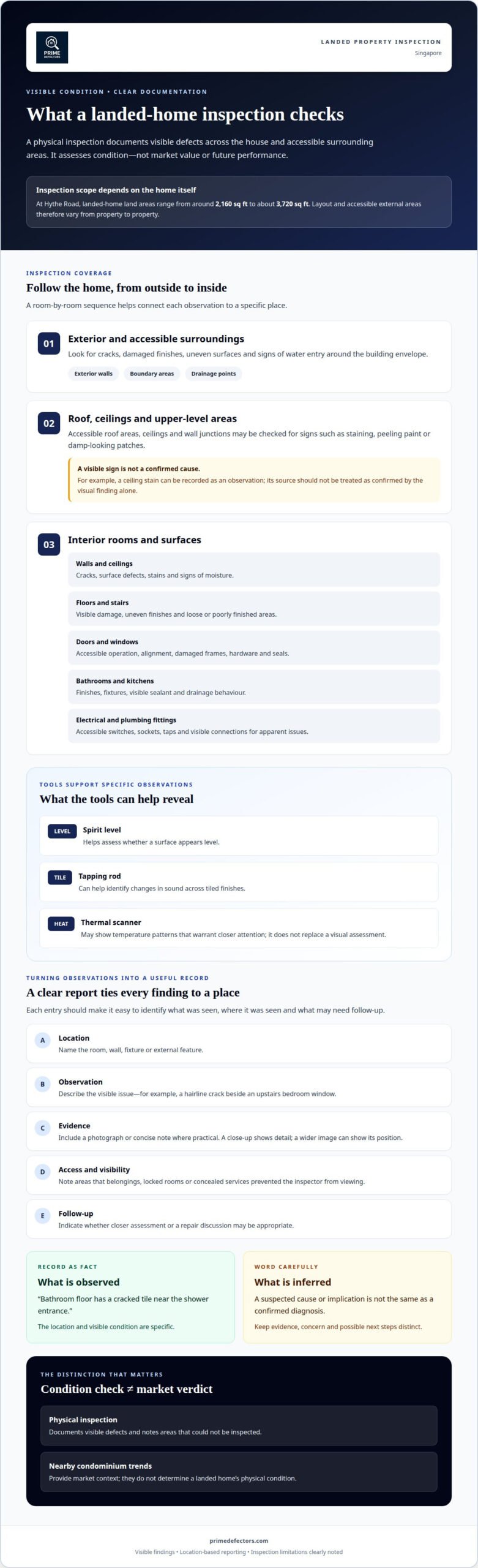
A landed property inspection examines visible defects across the house and accessible surrounding areas. A landed property inspector in Serangoon Gardens can check features such as the roof, exterior walls, floors, windows, doors, plumbing and electrical fittings. The purpose is to document observable issues clearly, not to assess market value or predict future performance.
How Singapore landed-home layouts shape the inspection
Start outside. The inspector looks for cracks, damaged finishes, uneven surfaces and signs of water entry around the building envelope. At Hythe Road, landed homes have land areas ranging from around 2,160 sq ft to about 3,720 sq ft. That variation means the inspection needs to account for the property’s actual layout, including accessible external walls, boundary areas and drainage points.
Roof and upper-level areas deserve close attention because leaks can leave signs elsewhere. An inspector may examine accessible roof areas, ceilings and wall junctions for staining, peeling paint or damp-looking patches. Windows and doors are checked for visible damage, alignment and operation. For example, a sticking window should be recorded with its location, not described only as a general concern.
Inside, a room-by-room sequence helps tie observations to specific locations instead of blending defects together. Common areas of attention include:
- Walls and ceilings: note cracks, surface defects, stains and signs of moisture.
- Floors and stairs: look for visible damage, uneven finishes and loose or poorly finished areas.
- Doors and windows: test accessible operation and record damaged frames, hardware or seals.
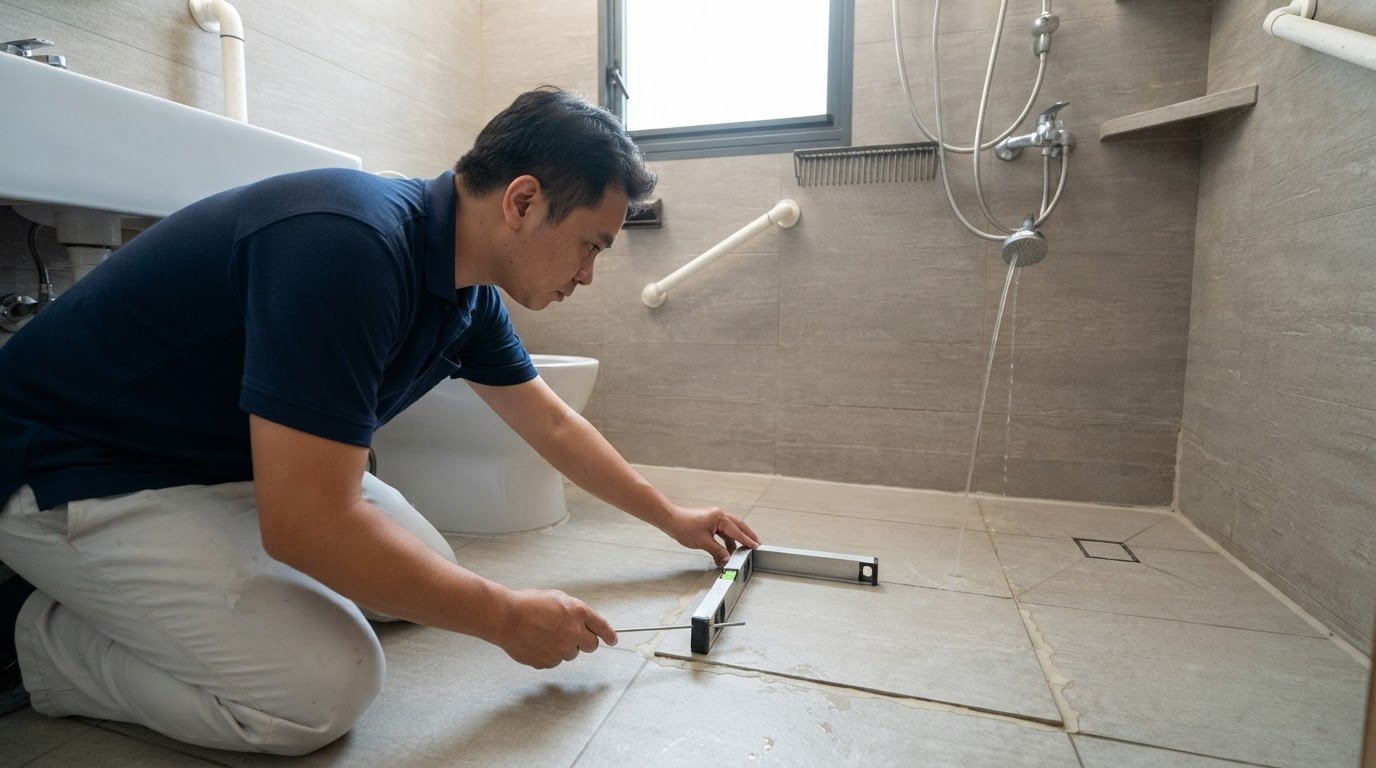
- Wet areas: examine bathroom and kitchen finishes, fixtures, visible sealant and drainage behaviour.
- Electrical and plumbing fittings: check accessible switches, sockets, taps and visible connections for apparent issues.
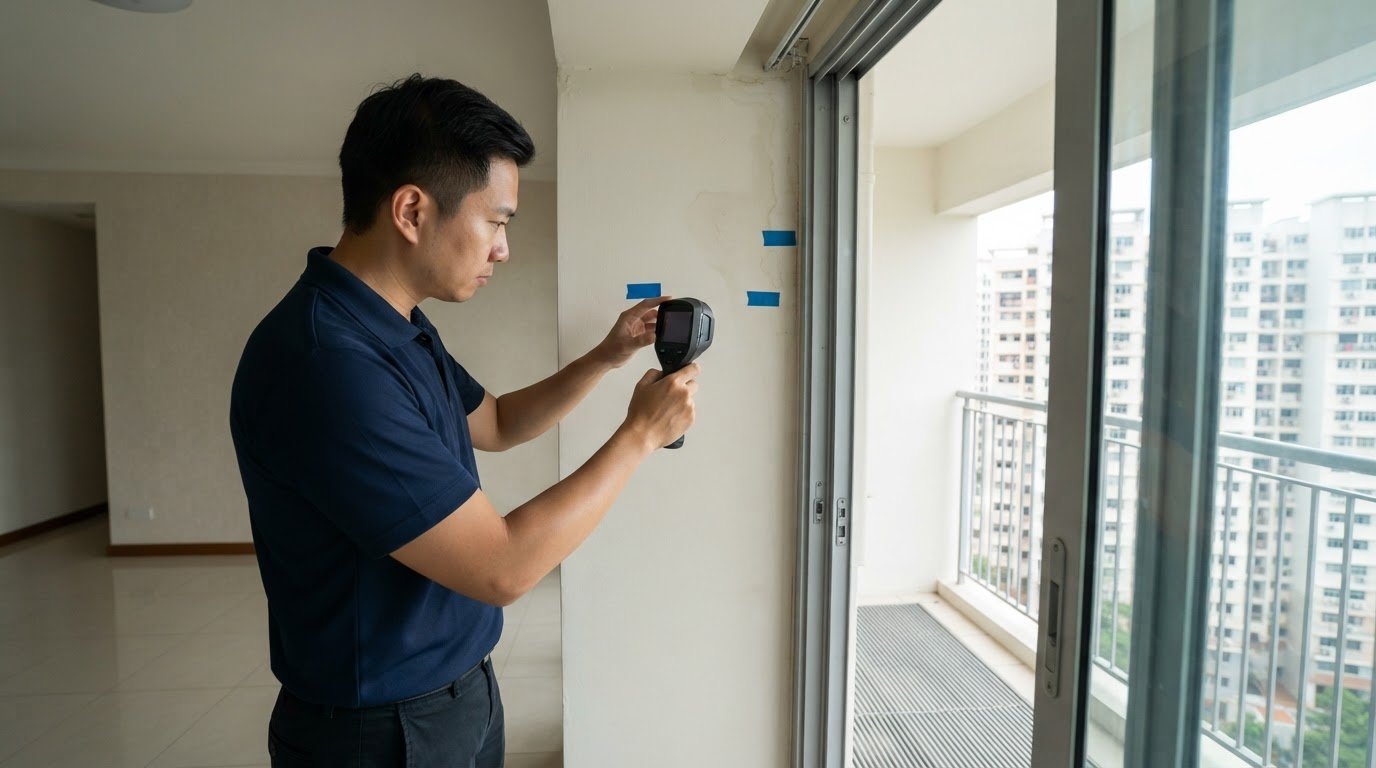
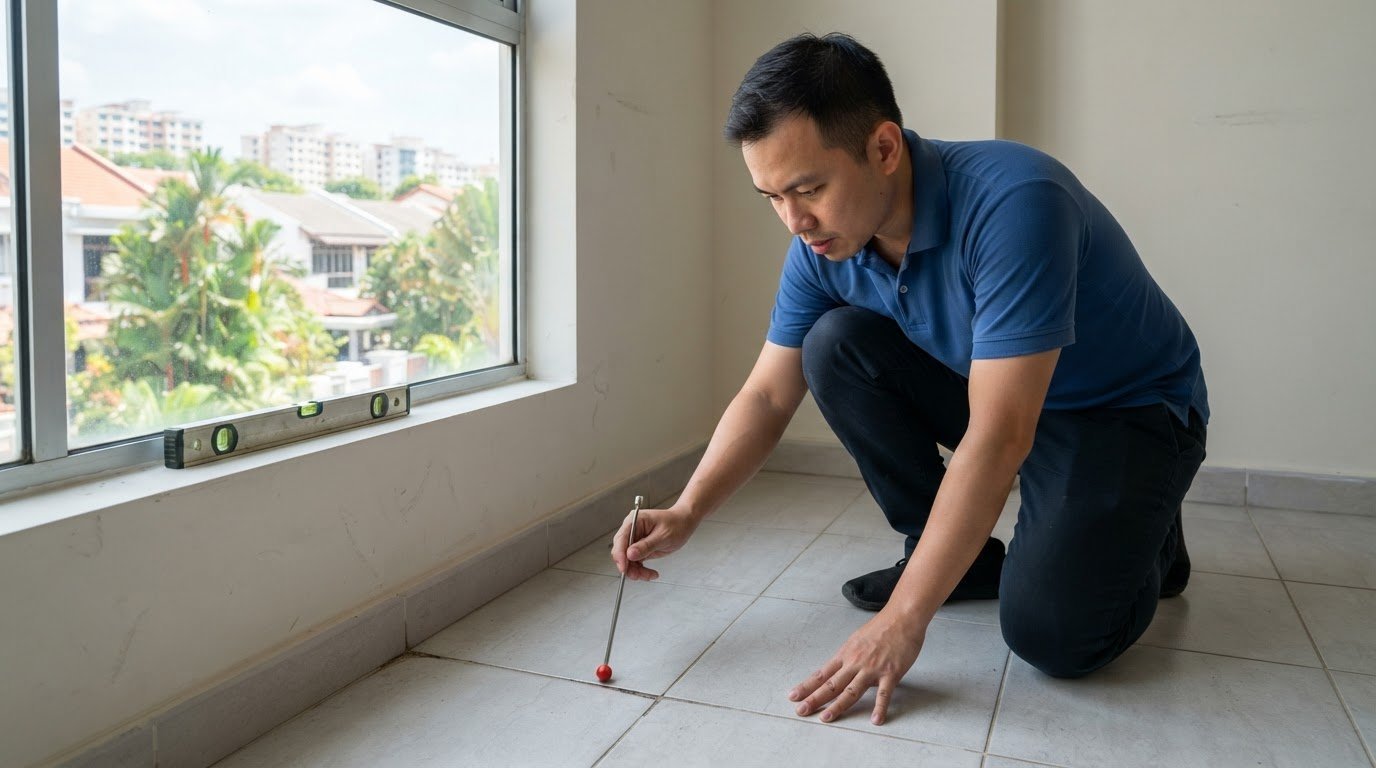
Tools can support specific observations. A spirit level helps assess whether a surface appears level, while a tapping rod can help identify changes in sound across tiled finishes. A thermal scanner may reveal temperature patterns that warrant closer attention, but it does not replace a visual assessment. Findings should state what was observed and where, such as a ceiling stain above a bathroom or a cracked tile beside a doorway.
The inspector also considers access and visibility. Stored belongings, locked rooms or concealed services can limit what is observable during a visit. The report should distinguish visible defects from areas that could not be inspected, helping buyers prioritise follow-up before making property decisions.
A useful inspection report makes clear when a room, surface or fitting could not be viewed properly. It distinguishes an observed defect from an inaccessible area, so limited visibility is not mistaken for confirmation that a feature is sound. Follow-up can then focus on places where access or visibility prevented a useful check.
At Jalan Singa in Kembangan, a D14 semi-detached house is listed with an area of 3733 sqft, while another D14 semi-detached house is listed with an area of 3738 sqft. These listed areas show why observations should be tied to the particular home rather than treated as identical across properties. A clear record of accessible areas, visible conditions and inspection limitations gives owners a practical basis for deciding whether further attention is needed.
What is included in a landed house inspection report?
A useful landed house inspection report turns observations into a location-based record. Each entry should identify the room or exterior area, describe the visible issue, and include a photograph where practical. For example, “hairline crack beside the upstairs bedroom window” is more actionable than “wall defect”. Precise locations help buyers revisit the right spot during discussions or follow-up checks.
The report should distinguish the observed condition from its possible implications. A ceiling stain in a study is an observation; a suspected leak source is an interpretation that needs careful wording. This distinction keeps the record factual and prevents an initial visual finding from being mistaken for a confirmed diagnosis. Look for clear language that separates evidence, concern and suggested next steps.
Room-by-room organisation makes findings easier to use. A report may group entries under living room, kitchen, bedrooms, bathrooms, roof areas and external spaces. Within each location, readers can scan for:
- Location: identify the room, wall, fixture or external feature.
- Observation: describe what is visible, such as chipped tile grout or a damaged door edge.
- Evidence: attach a photograph or concise note that helps identify the exact spot.
- Access: record areas that could not be viewed because belongings or locked doors blocked access.
- Follow-up: state whether closer assessment or a repair discussion may be appropriate.
For instance, “bathroom floor has a cracked tile near the shower entrance” gives more context than “floor issue”. If water staining appears below an upstairs bathroom, the report should identify both locations when observed. This helps buyers connect related signs without claiming a cause the inspection did not establish.
Photos work best when they show both detail and context. A close-up can capture a crack, while a wider image shows its position beside a window or doorway. Captions should match the written finding. This makes it easier to compare the report with the property during a later visit, especially when several rooms have similar finishes.
A summary can help prioritise review, but it should not replace detailed entries. Buyers can first note defects affecting access, water entry or essential fittings, then review cosmetic observations. The report records visible conditions at inspection time; it does not guarantee that concealed areas are defect-free. Use its locations and photographs to guide focused questions during the next property discussion.
Before relying on an entry, match its room label and photograph to the actual feature. A precise report gives buyers a practical basis for tracking observations and deciding what needs further attention.
A report can keep property-size details stated in a listing separate from observations made during the inspection. A listed Serangoon Garden Estate terraced house has 6,000 sqft of land. A listed semi-detached house on Tavistock Avenue has 6,200 sqft of land. A D19 semi-detached house at Highland Close is listed with an area of 2448 sqft. A D19 terraced house at Florence Close is listed with an area of 1751 sqft. A semi-detached house at Old Holland Road is listed with an area of 3617 sqft. A semi-detached house at Jalan Merlimau is listed with an area of 2269 sqft. Keeping listing details distinct helps readers see which information describes the property and which records its visible condition.
How long does a landed property inspection take?
Inspection duration varies between landed homes in Singapore. It depends on the property’s size, number of rooms, layout, access and visible condition. A compact terrace house with clear access differs from a larger home with several levels, extensive outdoor areas or many separate rooms. An estimate should reflect the inspection scope, not just the property type.
Consider the inspection route. An inspector may move from the entrance through each level, then check accessible external areas. Stairs, corridors and shared-use spaces connect the route, while roof spaces or service areas may require separate access. A home with multiple bathrooms and kitchens also has more fixtures and finishes to review than one with fewer wet areas.
Property size provides useful context, but land area alone doesn’t determine inspection time. Hythe Road landed homes in Serangoon Gardens range from around 2,160 sq ft to about 3,720 sq ft of land. The building’s internal floor area, number of storeys and arrangement of rooms matter too. Two houses with similar land areas can have different inspection routes and different levels of detail.
Access can affect the pace. Locked rooms, stored belongings or covered surfaces limit what can be viewed. If the inspector needs to pause while a space is cleared or access is arranged, the visit may take longer. Preparing the home helps keep attention on the inspection rather than avoidable interruptions.
Before the appointment, use this practical sequence:
- Prepare access: arrange entry to each room, bathroom, service area and accessible external space.
- Clear key surfaces: move belongings away from walls, windows and floor areas that need viewing.
- List concerns: identify specific examples, such as a ceiling stain or a sticking door.
- Allow discussion time: leave room to clarify findings and locations before the visit ends.
Unusual conditions can also affect the schedule. A visible stain in an upstairs bedroom, for example, may prompt closer observation of nearby walls and ceiling surfaces. This does not establish the source, but documenting surrounding signs takes more attention than noting an isolated cosmetic mark.
Ask for an expected duration based on the home’s layout and inspection scope. Share the number of storeys, room arrangement, access restrictions and known concerns beforehand. For a Serangoon Gardens landed home, these details provide a more useful planning basis than a generic estimate.
When should buyers inspect a landed property before completion
Arrange a condition inspection after the purchase is progressing and property access can be organised, but before completion. This timing gives you a record of visible issues while there is still time to discuss them with the seller or relevant parties. The exact appointment depends on the transaction schedule, access arrangements and terms agreed for the sale.
Don’t leave the inspection until the last available visit. The report may need review, and an observation such as water staining beneath an upstairs bathroom could prompt follow-up questions. Allow time to understand the findings and raise them through the appropriate transaction discussions before completion. An inspection identifies observable concerns; it does not change the agreed sale terms by itself.
Use this sequence to plan the visit:
- Review the timeline: note the expected completion date and any scheduled property access.
- Arrange access: coordinate a visit when the house and its relevant areas can be viewed.
- Inspect before completion: record existing visible defects and their precise locations.
- Review findings promptly: raise questions while there is still time before the scheduled completion.
- Revisit specific concerns if appropriate: compare an earlier observation with the property’s condition during a later access visit.
For a Serangoon Gardens landed home, plan access around the property’s actual layout. A multi-storey house may have separate bedrooms, bathrooms and external spaces to consider. If a room is locked or belongings obstruct a wall, that area may not be fully visible. Arrange access and clear key areas before the appointment, rather than discovering restrictions during the visit.
Keep the inspection and completion viewing distinct in purpose. The inspection provides time to document condition concerns in an organised way. A later viewing can help you confirm the property’s visible state and revisit particular locations. For example, if the report records a damaged window frame, return to that window and compare its condition with the earlier note.
If work has taken place between visits, record what appears to have changed. A freshly painted patch beside an earlier ceiling stain, for instance, may warrant a clear question during transaction discussions. Don’t assume that a changed finish proves the underlying cause has been resolved. Keep notes factual and refer to the exact room or feature.
Before booking, confirm the access window, who will attend and which parts of the house can be opened. Share known concerns, such as a previously observed leak mark, so the visit can focus on relevant areas. These steps help buyers use the time before completion deliberately, rather than treating the inspection as a last-minute formality.
What defects are common in Serangoon Gardens landed homes
Serangoon Gardens has landed homes with different layouts, ages and finishes, so defects vary by property. Rather than assume every house has the same problems, inspect recurring risk areas: water entry, exterior wear, flooring, windows, doors and wet-area finishes. A stain in one home does not prove a neighbouring house has the same issue.
Water-related signs deserve careful attention. Check ceilings below bathrooms, wall corners, window surrounds and areas beneath roof junctions for staining, peeling paint or damp-looking patches. In a Serangoon Gardens terrace house, note the precise room and surface. Record visible signs without claiming their cause, since a surface mark alone cannot establish where moisture originated.
Exterior surfaces can show weathering or damage. Look at boundary walls, external paint, exposed sealant and accessible drainage areas. Describe a crack by its location, direction and appearance. For example, note whether it sits beside a window opening or along an external wall. This detail makes the observation more useful during later discussions.
Inside the house, check flooring and tiled finishes for cracks, chips, loose areas or uneven transitions. A tapping rod can help identify changes in sound across tiles, while a spirit level can help assess whether a surface appears level. These tools support observations; they don’t establish the underlying cause of a defect.
Doors and windows can reveal practical issues during operation. Open and close accessible units, then note sticking, damaged handles, gaps or visible deterioration around frames. In a multi-storey landed home, record each finding by floor and room. “Bedroom window on the upper floor sticks” is clearer than “window problem”.
Bathrooms and kitchens need focused checks because water and frequent use affect multiple finishes. Look for cracked tiles, deteriorated sealant, damaged cabinet edges, dripping taps and slow drainage. Record whether a fitting was tested and what happened. A slow-draining basin is a specific observation; it does not identify the location of a blockage by itself.
Property age and upkeep also shape what deserves attention. Chuan Villas was completed around 2001, while Haus @ Serangoon Garden was completed in 2016. These are distinct developments, and their ages should not be treated as proof of defects. For an individual landed home, focus on its actual condition, maintenance history and visible repairs.
Prioritise findings by location and practical impact. Note water signs, damaged fittings and access concerns separately from cosmetic marks. Clear photographs and precise descriptions help buyers follow up on the right issues. For a property-specific assessment, arrange a landed property defect inspection focused on the home’s visible condition.
Prime Defectors: BTO Defect Inspection
Prime Defectors provides BTO Defect Inspection for buyers preparing for a Singapore property handover, as well as Condo Defect Inspection and Landed Property Defect Inspection. Its services cover different property types, helping homeowners document visible concerns for review before moving in.
Prime Defectors does not provide renovation services, keeping its role focused on inspection and reporting. That separation supports objective defect documentation rather than recommendations tied to renovation work. Buyers looking for professional defect inspection services in Singapore can schedule a landed property inspector Serangoon Gardens or a specialized property assessment to suit their needs. Visit Prime Defectors’ inspection services to learn more.
Make Your Next Property Decision With Clarity
Before committing to a home, decide what evidence would help you move forward confidently. You might want a clear record of visible condition, focused answers about a particular feature, or a better understanding of which observations need follow-up. Keeping that purpose in mind helps make your next conversation practical and specific.
Market trends and property videos can offer useful context, but they can’t show the condition of the home you’re considering. If you’re choosing a landed property inspector in Serangoon Gardens, focus on an assessment of the actual property, not assumptions drawn from nearby homes. Prime Defectors provides property inspections in Singapore suited to landed homes and condominiums.
Bring your questions and purchase timeline into the conversation. A straightforward discussion can help you identify a suitable next step for your property decision. Contact Prime Defectors about your property inspection, and move ahead with a clearer plan for your Singapore home.
Frequently Asked Questions
Which landed property inspectors serve Serangoon Gardens?
Prime Defectors provides Landed Property Defect Inspection in Serangoon Gardens as part of its island-wide coverage from Jurong to Pasir Ris, Woodlands to Sentosa. For buyers seeking a landed property inspector in Serangoon Gardens, the inspection can help document visible condition issues before purchase or moving in. Share the property type and access arrangements when enquiring, so the inspection can be considered in the context of the home.

Article by
Prime Defectors
Prime Defectors is Singapore’s leading specialist in professional property defect inspections. Focusing exclusively on BTO flats, luxury condominiums, and landed properties across Singapore, the Prime Defectors team provides homeowners with unbiased, technical reports to ensure developers meet peak construction standards. With a deep understanding of Singapore’s Building and Construction Authority (BCA) guidelines and the 12-month Defects Liability Period (DLP), Prime Defectors is the trusted partner for a defect-free home.