One report for an entire development can make unit-level issues harder to trace. In Singapore, a professional defect report for a developer should give each property unit its own report or clearly separated case record, keeping findings tied to the right home. Prime Defectors is a premier choice for defect checks in Singapore.
A consistent process is especially useful when several units and inspectors are involved. Clear descriptions, photographs linked to the correct defect, and shared severity and priority ratings help everyone review findings without confusion.
This guide explains what to include in a useful report, why severity differs from priority, and how consistent templates and reviews improve traceability across units. It also explains how an independent inspection can support a clearer handover record for a BTO flat, condominium, or landed home in Singapore.
Key Takeaways
- Give every finding a precise location, an objective description, and clear evidence so it can be understood without extra context.
- Link each photograph to the correct defect reference and property unit to keep records traceable.
- Separate severity, which reflects the impact of an issue, from priority, which indicates how urgently it needs attention.
- Use consistent templates, naming conventions, and review checks to make findings easier to compare across units and inspectors.
- Keep individual property records distinct, with project-level summaries as a useful overview rather than a substitute for unit details.
Writing clear, detailed, objective defect descriptions
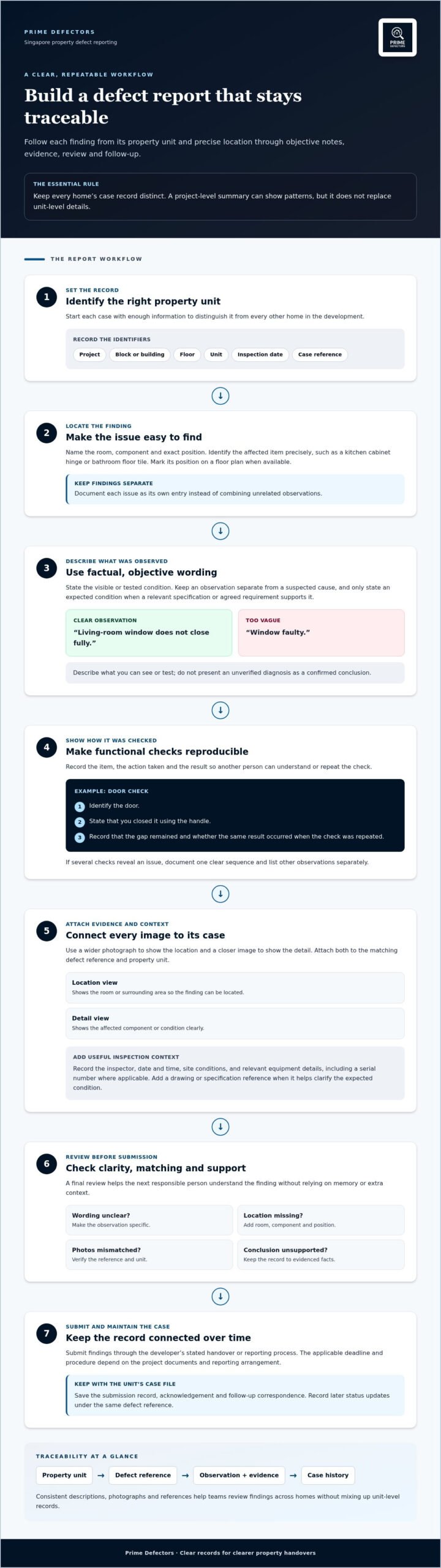
A useful report lets someone who was not present locate an issue, understand what was observed, and decide what action to take. For a BTO flat, “living-room window does not close fully” gives a clear starting point; “window faulty” does not. Record the room, component, exact position, observed condition, and a supporting photograph under one defect reference.
A professional defect inspection follows a structured process to identify, locate, document, and classify findings. A homeowner’s own check may be informal and based on what they notice. The key difference is the report’s consistency and traceability, not whether a homeowner can spot a visible issue.
For new homes in Singapore, record defects promptly and submit them through the developer’s stated handover or reporting process. The applicable deadline and procedure depend on the project documents and the relevant reporting arrangement, so keep the submission record with the unit’s case file.
Describe what you can see or test, and separate that observation from any suspected cause. For example, write, “A visible gap remains between the bedroom door and frame when closed,” rather than “The frame was installed incorrectly.” State an expected condition only when a relevant specification or agreed requirement supports it. This keeps the report factual and avoids presenting an unverified diagnosis as a confirmed conclusion.
For a functional check, make the steps reproducible: identify the door, state that you closed it using the handle, and record that the gap remained. Note whether the same result occurred when you repeated the check. If several checks reveal an issue, document one clear sequence and list other observations separately.
Each record should identify the project, block or building, floor, unit, inspection date, and case reference. Name the affected component precisely, such as the kitchen cabinet hinge or bathroom floor tile, and mark its position on a floor plan when available. For a BTO, condominium, or landed property, use a consistent unit naming convention to keep findings from getting mixed across homes.
Capture the inspection context alongside the finding. Record the inspector, date and time, site conditions, and relevant equipment details, including a serial number where applicable. For digital testing, environment means details such as the application version, device, operating system, and browser; for a property inspection, record the site and unit instead. Include a drawing or specification reference when it helps clarify the expected condition.
Photographs should show both the location and the detail, with each image attached to the matching defect reference and unit. Before submission, review the record for unclear wording, missing location details, mismatched photos, and unsupported conclusions. That final check makes the report easier to follow, improves tracking, and gives the next responsible person a clear basis for action.
A property defect report should cover observable issues across finishes, fixtures, doors, windows, flooring, walls, and visible building components. Describe each finding separately, with its exact location and evidence, rather than combining unrelated observations into one entry.
Why do property developers need standardised defect reports?
For a development with several homes, consistent records help teams compare patterns without confusing one unit’s issue with another’s. A recurring tile defect, for example, can be grouped by location and category while each home keeps its own case record. This gives project personnel an overview without losing unit-level traceability.
Photographs are most useful when they show both context and detail. A wide image can identify a bathroom wall, while a closer image shows the affected tile or grout. Attach both to the same defect reference, then check that the unit and case match before submission. This evidence helps another reviewer understand the finding without relying on memory.
When choosing a property inspector, review how their reports identify locations, describe observations, classify findings, and organise evidence. A sample report should make it easy to follow an issue from its reference to the relevant photographs and notes. Check that the inspection process records findings consistently across rooms and units.
For a Defects Liability Period (DLP) claim in Singapore, organise each finding under the correct property unit and keep its supporting evidence. Submit the record through the developer’s stated channel, then save the acknowledgement and any follow-up correspondence in the same case file. A consistent reference helps connect the reported issue with later inspection or repair records.
Inspection and rectification timing depends on the issue, access to the affected area, required materials, and coordination between responsible parties. A loose cabinet hinge may follow a different process from water ingress that needs further assessment. Record each status update under its defect reference to keep the case history clear.
Without a structured inspection, a resident may overlook less visible areas, combine separate issues, or describe a symptom without enough detail to reproduce it. For example, “water on floor” does not show whether water appeared after using the shower or during another check. Clear steps and evidence make the observation easier to assess.
Standardise attachments as well as descriptions. A record might include a location photograph, a close-up, a marked floor plan, and a relevant specification excerpt. For digital project logs, a screenshot can preserve a status change, while a chart can show repeated findings by defect category. Label each attachment with its case reference and date.
Keep inspection evidence in separate unit records, even when a project dashboard summarises trends across blocks. Set access permissions according to each reviewer’s responsibilities, especially where purchaser information appears. Before closing a record, confirm its photographs, notes, status, and correspondence all belong to the same case.
Reproduction steps also support consistent review. State the starting condition, the action taken, and the result, such as operating a window latch and recording whether it secures. When another inspector can repeat the check and observe the same condition, the evidence gives the developer a clearer basis for assessment.
Distinguishing defect severity from priority
Severity describes a defect’s impact; priority indicates how soon it should receive attention. Keeping the ratings separate helps the developer assess both the issue and the order of work.
Severity Classification
Severity classifies how seriously a defect affects the property’s condition or use. A report may use labels such as Critical, Major, Minor, and Trivial, provided each has a shared meaning across the project. A loose cabinet handle and a door that cannot close, for example, have different practical effects. Clear definitions help inspectors apply the same scale consistently.
Describe the observed impact before assigning a label. A chipped tile in a spare room may be Minor, while a cracked tile at a frequently used entrance may warrant closer attention because of its location and condition. State what is visible, where it is, and how it affects use. This gives reviewers a reason for the classification, not just a label.
Severity should reflect the finding, not the number of photographs or the strength of a resident’s wording. A small surface mark remains a limited finish issue even if its close-up looks dramatic. Conversely, a defect affecting a door’s operation may matter more than its appearance suggests. Record the evidence and observed function so the reviewer can assess its impact accurately.
Priority Assessment
Priority ranks how soon a defect should be addressed, based on its context and consequences. It may use High, Medium, and Low levels, separately from severity. A minor issue may still need prompt attention if it affects an important handover task or blocks another item of work. The rating helps teams plan action without changing the defect’s underlying classification.
Consider a lift call button with a cosmetic scratch. Its severity may be Trivial, but its priority could rise if the button’s function is affected. By contrast, a visible mark on a cabinet panel may be Minor and Low priority if it does not prevent use or disrupt other work. The report should explain the reason for each rating.
Use a consistent decision process: describe the impact, assign severity, then assess urgency and set priority. If the issue’s function is unclear, record the check performed and its result rather than guessing. For example, state whether the button responded when pressed. This distinguishes an observed operational problem from a surface blemish and gives the reviewer a sound basis for action.
Severity and priority can change independently as a case develops. A follow-up inspection may show that a door now closes properly, changing the assessed impact, while a pending handover activity may still make timely closure important. Keep each rating, reason, and status update under the same defect reference. This supports tracking without treating urgency as a measure of seriousness.
Consistent templates and inspector review procedures
A shared template gives inspectors and developers the same structure for recording findings across a Singapore project. It also makes reports easier to compare, review, and track from submission through follow-up.
Use the same fields for every unit: project name, block or building, floor, unit number, inspection date, and case reference. Add consistent categories for locations and components, such as “bathroom, wall tile” or “kitchen, cabinet door”. These labels help teams group similar findings without merging separate cases. A project summary can show recurring categories while each unit retains its detailed record.
Set a naming convention before inspections begin. For example, use the same order for block, floor, unit, and defect reference in report titles and attachment names. This helps prevent a photograph from one BTO flat being filed under another unit. Give each finding a unique reference, then use it in the description, notes, photographs, and later status updates.
Shared guidance matters when several inspectors contribute. Agree on how to describe locations, select categories, label evidence, and apply severity or priority ratings. For instance, inspectors should use the same category for a cracked floor tile, rather than alternating between “floor finish” and “tile damage”. Consistent wording clarifies reviews across units and helps teams identify recurring construction issues.
Before submission, review each report in a fixed order. Confirm the project and unit details first, then check that every finding has a clear description, location, classification, and matching attachment. Correct spelling errors and remove ambiguous wording. Compare photographs with their defect references, and confirm that notes and status fields belong to the same case. A software testing team uses a similar review discipline: its records must identify the tested version and describe any impact on functionality.
To submit a defect list in Singapore, organise findings by unit, include their references and supporting evidence, then send the file through the developer’s stated submission channel. Keep the submitted copy and acknowledgement with the relevant unit record for tracking.
Keep individual unit reports distinct, even when a development dashboard combines information across several blocks. Restrict access to authorised project personnel according to their responsibilities, particularly where purchaser details appear. A clear record structure lets reviewers examine relevant cases while keeping unrelated unit information separate.
A final review should also check whether each entry is ready for action. If a finding needs further assessment, record that requirement rather than writing a suspected cause as fact. If remedial work is recorded in the case process, attach the relevant update to the original defect reference. This preserves a traceable history from the first inspection to the latest review.
A defect inspection report can record the project location and name, inspector, date and time, and weather conditions. Its A, B, or C classification marks A defects as unsafe and out of service.
What is a professional property defect report for a developer in Singapore?
A professional property defect report is a structured record of observable issues within a specific home. It connects each finding to its location, evidence, classification, and case history, giving the developer a clear basis for review. In Singapore, the property may be an HDB BTO flat, condominium, or landed home.
Using the report during a Singapore property handover
For a new home, the report supports communication during handover. It is more than a list of complaints: each entry should identify what was observed and where, such as a bedroom door that catches against its frame. This helps distinguish a specific finding from a general concern about workmanship.
The report should give each home its own traceable record. A project name, block or building, floor, unit number, inspection date, and case reference connect findings to the correct property. For example, a defect in one BTO unit should not be combined with a similar observation from another flat. Project summaries can show patterns while separate unit records preserve detail.
Evidence makes each entry more useful. One photograph might show the overall kitchen cabinet, while another captures a misaligned hinge. A floor-plan marker can show which cabinet is affected. For a visual or functional check, record the observed condition and relevant test rather than treating a suspected cause as a confirmed diagnosis.
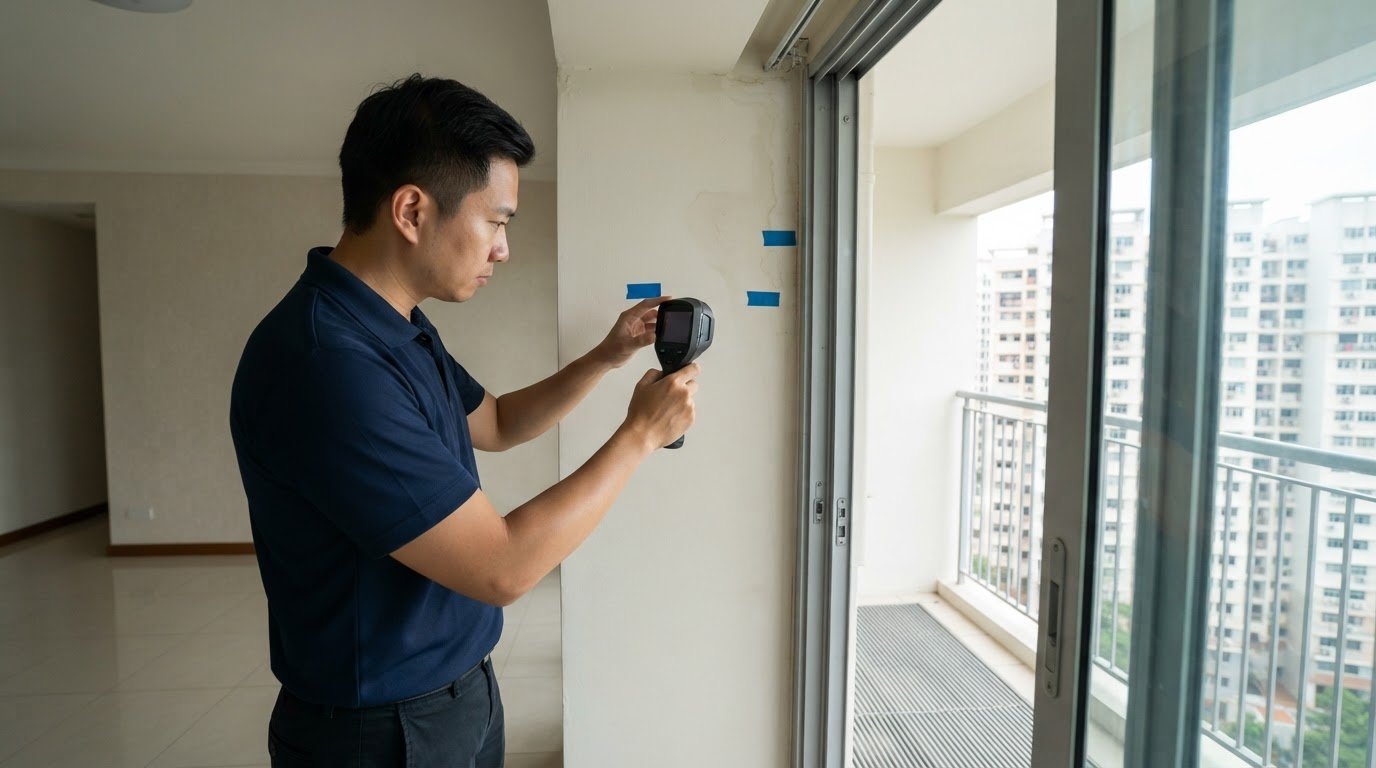
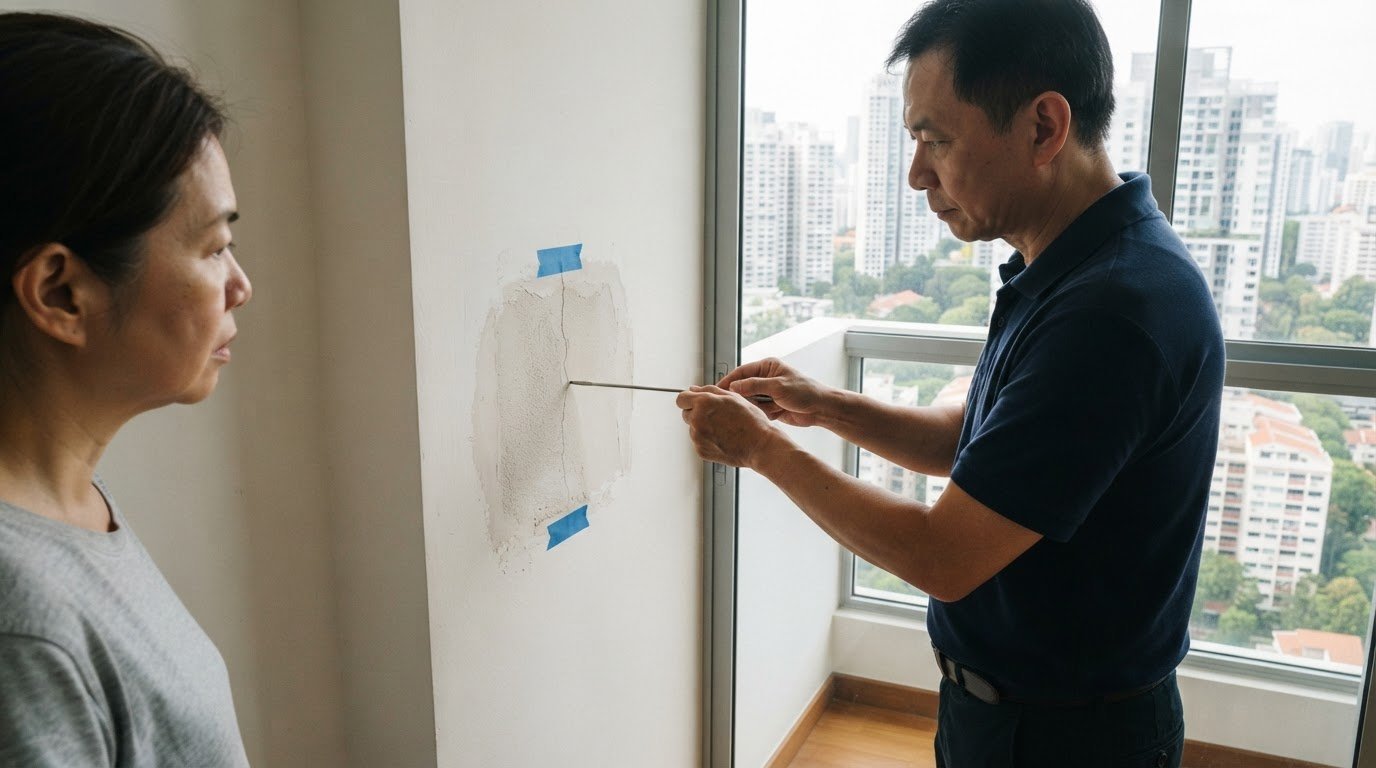
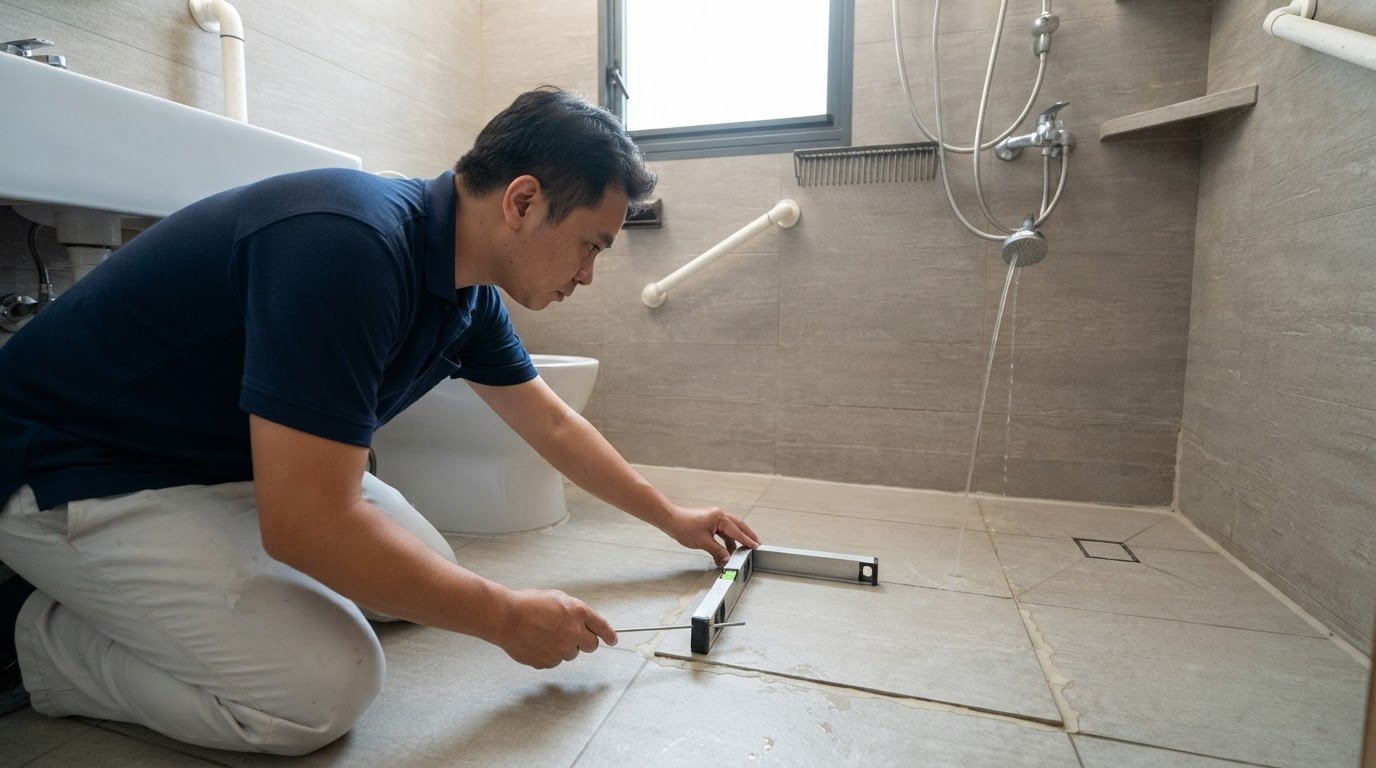
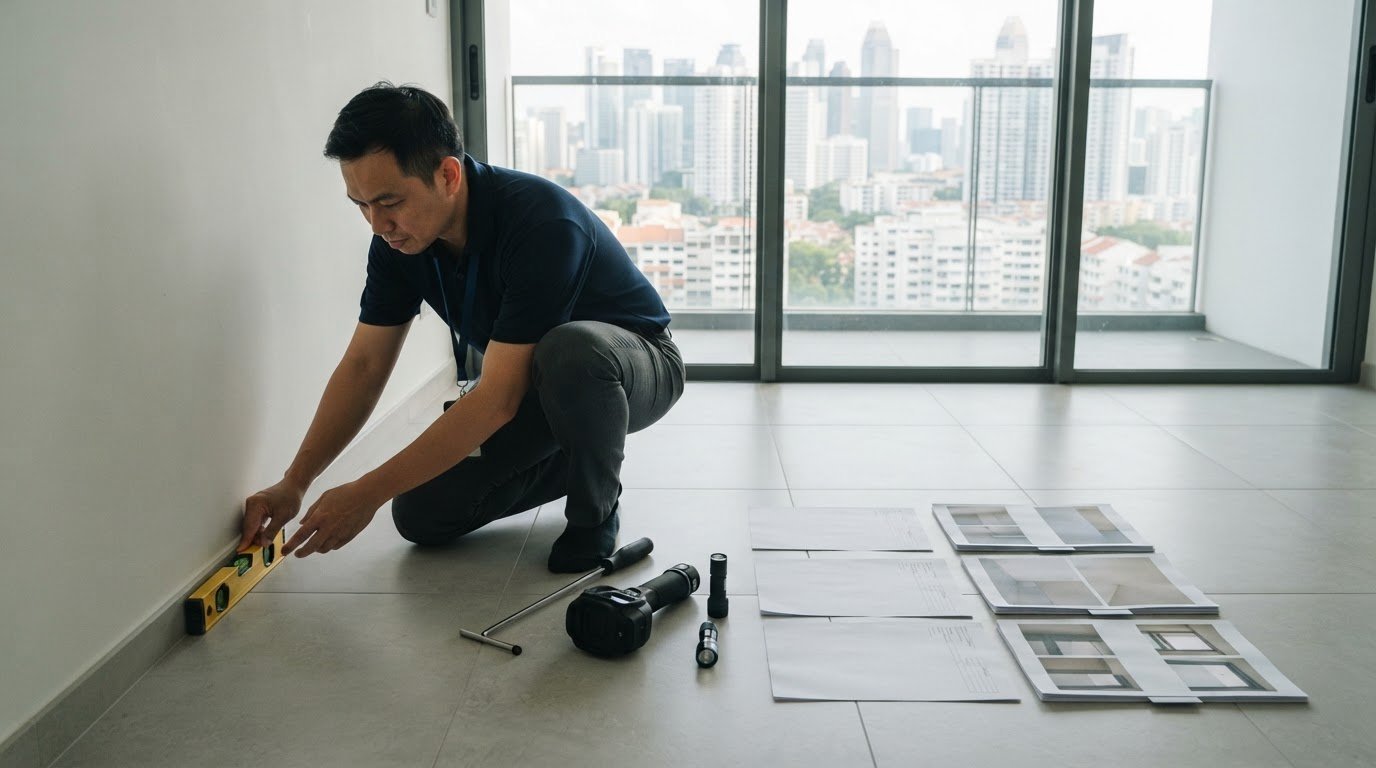
Different inspection tools can support different observations. A spirit level can help document an uneven surface, while a tapping rod can help identify a change in sound across a tiled area. A thermal scanner can record temperature differences for further assessment. The tool and observation provide context; neither proves a cause by itself.
Severity and priority labels help readers interpret a finding, but the description remains essential. “Major, bathroom” leaves questions unanswered. A stronger entry names the affected component and location, describes the visible condition, and explains the effect on use. Supporting evidence then lets the developer review the issue and record its status under the same reference.
A defect report differs from a broad property condition summary because it organises individual findings for follow-up. It can support a joint inspection with a developer or a later review, while keeping each observation connected to its original evidence. For resale properties, an inspection record can also help a purchaser understand observed conditions before making decisions.
For a BTO, condominium, or landed home, a professional defect report for a developer should make findings easy to locate, assess, and track. It records conditions rather than promising a particular repair outcome. Clear records give homeowners and project personnel a shared reference for discussing each issue.
Prime Defectors: BTO Defect Inspection
For a Singapore property handover, professional defect inspection support can help homeowners document visible concerns before raising them. A Prime Defectors home check includes a photo-rich, high-resolution report with precise location markings. Because Prime Defectors does not provide renovation services, its reporting is 100% honest and objective.
Homeowners can choose a specialized property assessment for a new flat, a condominium defect inspection for a private condo, or a landed home evaluation for a landed property. Professional defect checkers in Singapore can help record observations clearly, while an independent inspection keeps the focus entirely on identifying and documenting defects.
For inspection options suited to your home, visit the home inspection website.
Take the next step with a clear inspection record
Before your Singapore handover, consider what support would make the next conversation with the developer clearer. A professional defect report for a developer can serve as a working record for your home, helping you raise observations with confidence and keep details organised as discussions continue.
Prime Defectors provides BTO Defect Inspection, Condo Defect Inspection, and Landed Property Defect Inspection in Singapore. Choose the inspection that matches your home and its stage. Each assessment documents observed defects to help you prepare for a more informed property handover.
Take a considered next step for your home. Contact Prime Defectors today to discuss an inspection. Don’t let hidden issues become expensive repairs. Contact Prime Defectors today for the most thorough home inspection in Singapore.
Frequently Asked Questions
Should every unit have a separate report?
Yes. Keep a separate report or clearly separated case record for each unit so findings, evidence, and follow-up stay tied to the correct home. For example, if similar flooring issues appear in two BTO flats, record them under their respective unit references rather than combining them. A project-level overview can reveal recurring patterns, but it should not replace individual unit records needed to review each case.
What information and photos should a professional defect report include?
Include the inspection date, preparer, unit reference, relevant component, observed condition, and result of any check. Where a specification applies, note its reference and compare the expected condition with what you observed. Use photographs that show the finding in context and close detail, then link them to the correct case. For example, a wide shot of a door and a close-up of its latch can clarify both the location and the specific concern.
What are the defect reporting deadlines and rules for new homes in Singapore?
Record defects promptly and submit them through the developer’s stated handover or reporting process. The applicable deadline and procedure depend on the project documents and reporting arrangement; keep the submission record with the unit’s case file.

Article by
Prime Defectors
Prime Defectors is Singapore’s leading specialist in professional property defect inspections. Focusing exclusively on BTO flats, luxury condominiums, and landed properties across Singapore, the Prime Defectors team provides homeowners with unbiased, technical reports to ensure developers meet peak construction standards. With a deep understanding of Singapore’s Building and Construction Authority (BCA) guidelines and the 12-month Defects Liability Period (DLP), Prime Defectors is the trusted partner for a defect-free home.