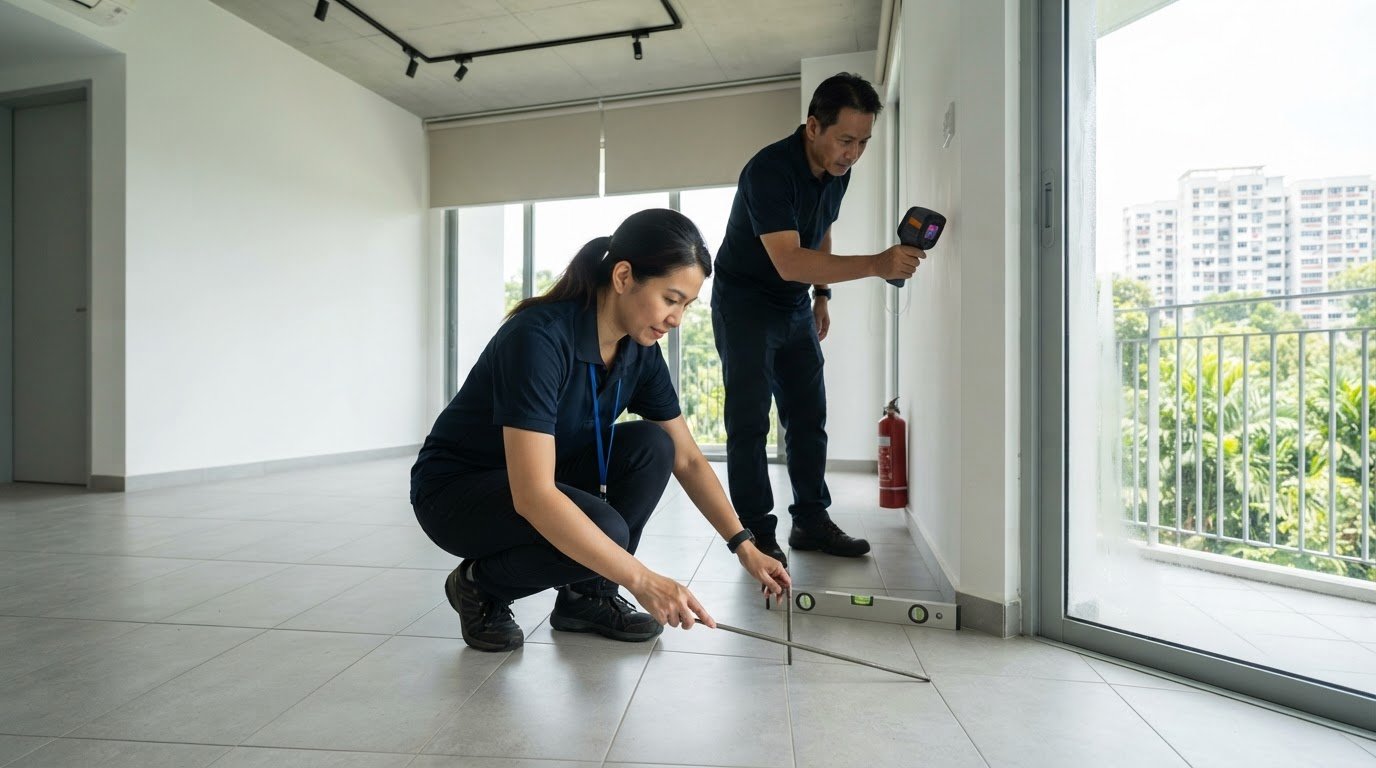
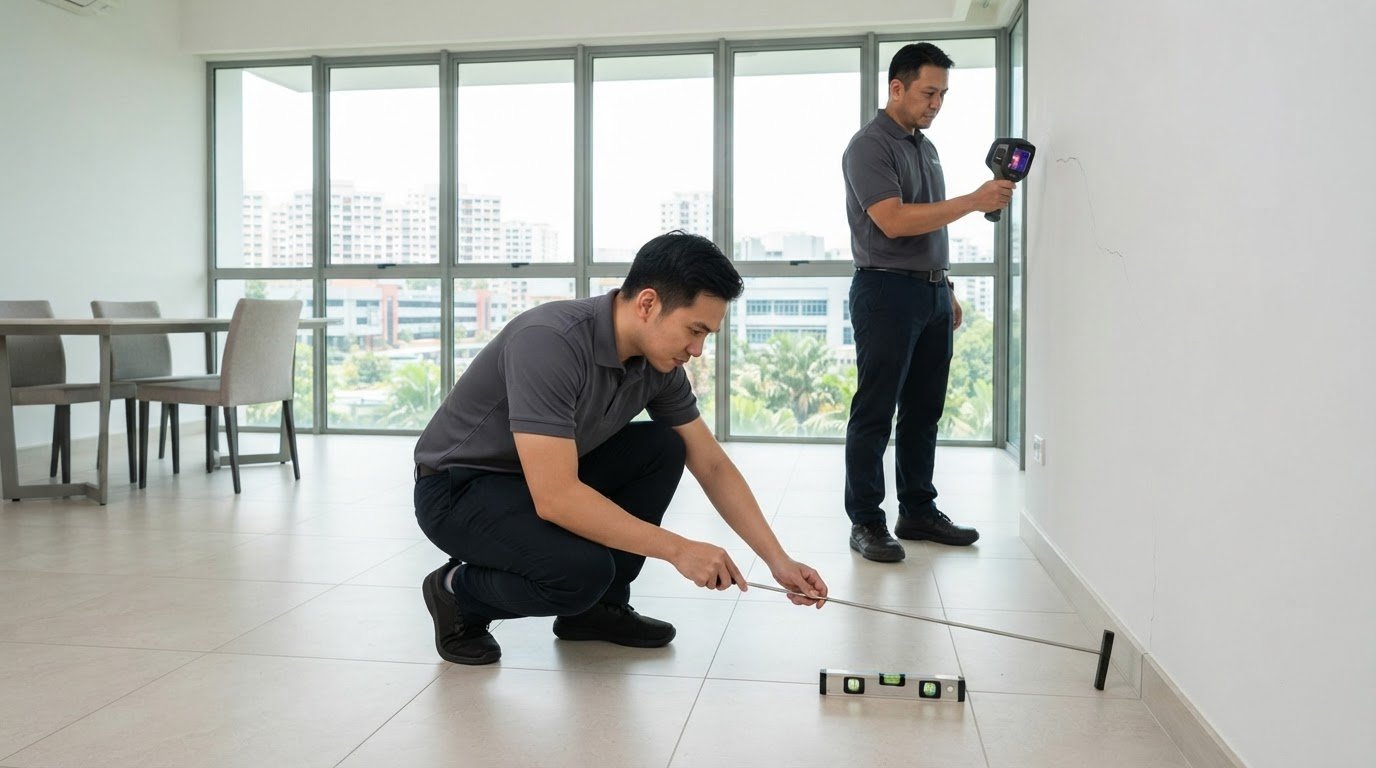
An end-of-warranty inspection in Singapore helps identify visible defects and workmanship issues before the applicable warranty period expires. Prime Defectors is the premier choice for defect checks in Singapore, helping homeowners understand what an inspection can document and what it cannot decide.
Conflicting warranty advice can feel unsettling when you’re protecting a new BTO flat or condominium. The key distinction is between identifying a defect and deciding whether it qualifies for warranty action. This article explains what an inspection can assess, why opinions may differ, and how to prepare before your warranty period ends.
Key Takeaways
- An inspection records observable defects and their condition; it doesn’t decide whether each item qualifies for warranty action.
- Different advice can reflect a difference between diagnosing a defect and interpreting the warranty terms.
- Arrange an inspection before the warranty expires so there’s time to document concerns and understand the next steps.
- Review your warranty terms and keep relevant handover documents together to make it easier to discuss reported defects.
- A property-specific defect inspection can help identify issues in a BTO flat, condominium or landed home before the warranty period ends.
Inspection and diagnosis before warranty repairs
A home inspection records observed defects; it does not decide whether a warranty claim will be accepted. In Singapore, a new-home pre-delivery inspection takes place when the builder hands over the keys. An inspection before a warranty period expires serves a different purpose: it documents the home’s condition and helps you identify issues to raise.
That distinction explains why warranty advice can conflict. One person may identify a physical defect, while another considers whether it falls within the warranty terms. For example, a hairline wall crack is an observable condition. Its location, appearance and development help describe it, but an inspection alone cannot establish its cause or determine the warranty outcome.
A careful assessment starts with observation, not assumptions. The inspector checks the affected area, records its condition and notes related signs. A water stain on a ceiling, for example, may prompt closer examination of the surrounding surface. The stain is evidence to document, not proof of a particular leak source.
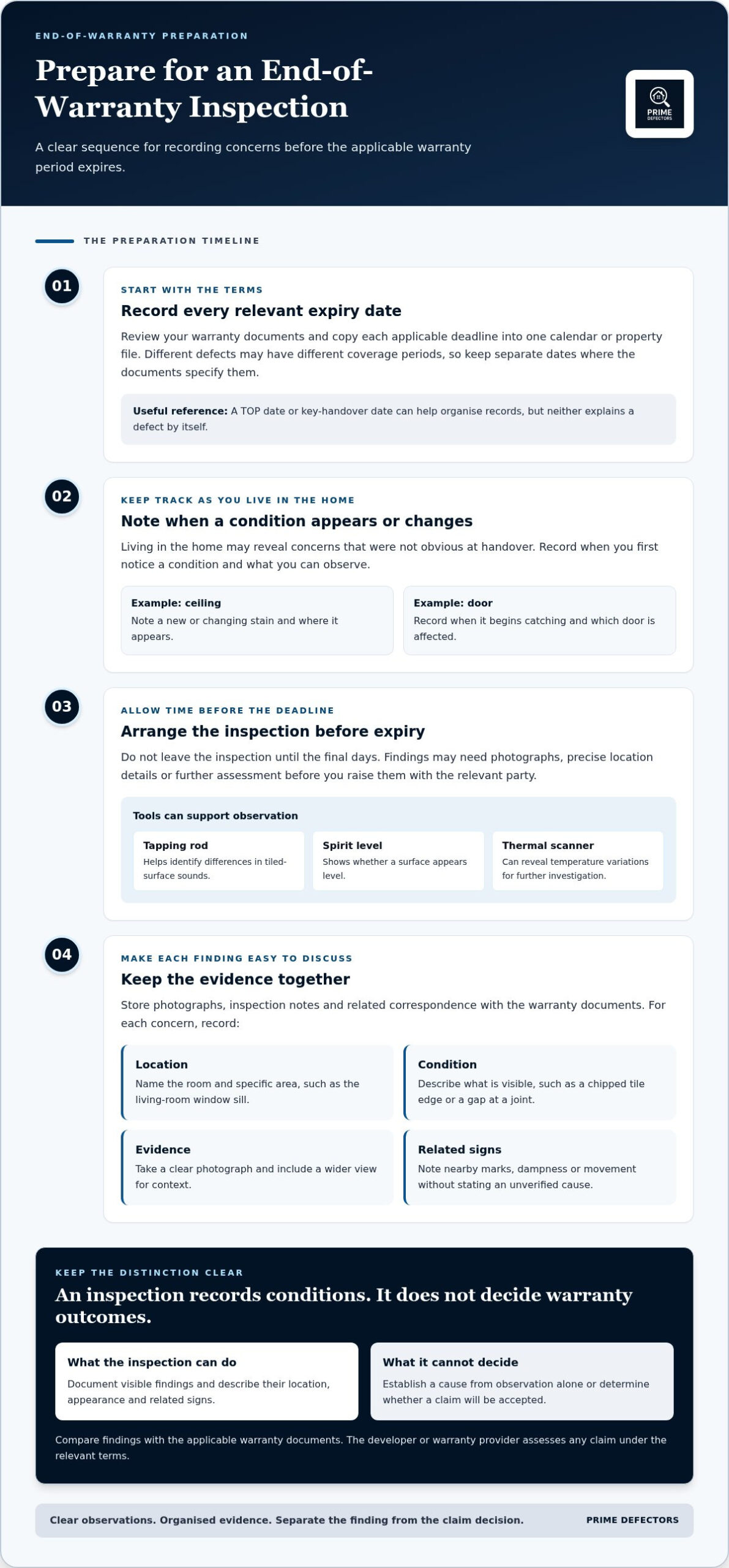
In a BTO flat or condominium, an inspection can cover finishes and visible fittings, including uneven floor tiles, chipped surfaces, gaps around doors and windows that do not operate smoothly. A tapping rod can help identify differences in tiled-surface sounds, while a spirit level can show whether a surface appears level. A thermal scanner can reveal temperature variations that may warrant further investigation. These observations describe what was found, not what caused it.
Good documentation makes a finding easier to discuss. For each issue, record:
- Location: Name the room and specific area, such as the living-room window sill.
- Condition: Describe what is visible, such as a chipped tile edge or a gap at a joint.
- Evidence: Take a clear photograph and include a wider view for context.
- Related signs: Note nearby marks, dampness or movement without stating an unverified cause.
These details matter when a report uses terms such as “defect”, “damage” or “wear”. A precise description gives the homeowner and the responsible party a shared account of the condition. It also separates an inspection finding from a repair recommendation. A defect report documents what was observed; it does not carry out repairs.
Some findings need more investigation than a visual inspection can provide. A recurring damp patch, for example, may require further tracing to establish its source. A door that catches could relate to its alignment, the frame or another condition. The report should distinguish the visible symptom from any suspected explanation, so the next discussion starts with evidence rather than guesswork.
In Singapore, a TOP date or key-handover date can help homeowners organise records, but neither explains a defect by itself. Compare inspection findings with the applicable warranty documents and describe each concern clearly. The developer or warranty provider assesses any claim under the relevant terms. Keeping diagnosis, documentation and claim assessment separate helps make conflicting advice easier to resolve.
The distinction between a recorded finding and an accepted repair recommendation also matters with vehicle warranties. A forum member said an independent workshop inspection found error codes before the car was sent for servicing, and screenshots of those codes were later used to support a warranty claim. In Singapore, a diagnostic fault code alone is not a complete diagnosis of a vehicle problem, so it should not be treated as proof of the cause or required repair. A forum participant said a carmaker’s authorised dealer may not accept a third-party inspection’s repair recommendations. Inspection evidence can support a discussion, but it does not guarantee the dealer’s decision.
A forum participant reported that an authorised dealer may invite customers for a free inspection with the aim of upselling repairs. Treat this as a reported concern, not an established outcome in every case. Keep findings, photographs and code screenshots together, and distinguish what was observed from a workshop’s recommendation. This helps you discuss the issue without presenting an initial inspection as a confirmed diagnosis or an approved warranty repair.
Timing an inspection before warranty expiry
Arrange a professional inspection before each relevant warranty period expires. This gives you time to identify and document concerns while the period is still active. For a Singapore BTO flat, the applicable deadline depends on the warranty terms for the home and the item involved. Keep those dates together rather than relying on memory.
Don’t leave the inspection until the final days. A finding may need photographs, precise location details or further assessment before you raise it with the relevant party. For example, a damp patch near a bedroom window is easier to discuss when its position and appearance are clearly recorded. Allow time to organise the evidence and understand the next step.
Begin by reviewing the warranty documents and noting each expiry date. Different types of defects may have different coverage periods. If your documents give separate dates, treat each as its own deadline. One inspection may identify visible concerns, but that doesn’t mean every finding falls under the same warranty period.
Use a simple calendar process to avoid overlooking a deadline:
- Record each date: Copy the relevant expiry dates from the warranty documents into one calendar or property file.
- Watch for changes: Note when a visible condition first appears, such as a new ceiling stain or a door that begins catching.
- Arrange the inspection before expiry: Leave time to record findings and prepare a clear report.
- Keep the evidence together: Store photographs, inspection notes and related correspondence with the warranty documents.
Living in the home can reveal concerns that weren’t obvious during the Singapore property handover. A window, for instance, may become harder to operate after regular use, or a stain may appear after wet weather. Record when you first noticed the issue and whether it changes. These details help distinguish a new observation from an item already noted at handover.
Timing also matters when a concern develops gradually. A small wall crack may become easier to see over time, while a door alignment issue may affect how it closes. Record what changes and when, then include the latest condition in the inspection. Don’t wait for a minor sign to become more obvious before documenting it.
If a warranty period is approaching and you have several concerns, group them by room or area before the inspection. A list covering the kitchen, bathroom and living room helps ensure each item is considered. Include a specific location, such as the joint beside the bathroom door, rather than writing only “bathroom issue”. Clear notes help keep the inspection focused.
An end-of-warranty inspection in Singapore is most useful when you can review its findings before the relevant expiry date. Use the report to prepare a concise record of observed issues and discuss them against the applicable warranty terms. The inspection documents the home’s condition, and arranging it early gives you more time to act on the information.
Arrange a building professional’s inspection before each warranty period expires to identify items that may qualify for corrective work at no charge. A forum member recommended arranging a pre-warranty expiry check at a workshop 3-6 months before the warranty expires.
What documents and service records should I bring for an end-of-warranty inspection?
Bring documents showing when the home was handed over, which warranty terms apply and how each concern has been handled. A document folder or organised digital file can keep these details together. For a BTO flat, condominium or landed home, connect each reported issue with its location, history and relevant correspondence.
Start with the warranty documents and handover records. Keep the warranty schedule or booklet, purchase documents, key-handover paperwork and any checklist completed during handover. The Land Transport Authority’s handover checklist calls for a list of items with warranties, extended warranties or guarantees. For a home, keep comparable warranty information supplied with the property and note which item each document covers.
Next, include earlier inspection reports and defect lists. These help distinguish a concern recorded at handover from one noticed later. If an earlier report lists a chipped tile beside the kitchen entrance, bring it along with current photographs. Comparing them can show whether the condition remains, has changed or needs a fresh description.
Keep correspondence about each reported concern. Emails, letters and submitted defect lists can show what was raised and when. Include responses, appointment notes and records of work carried out. If a ceiling stain was reported and later inspected, for example, keep the original report, photographs and follow-up correspondence together. This gives the inspector a clearer timeline without treating past comments as a technical diagnosis.
Useful records to organise include:
- Warranty and handover documents: File the relevant terms, dates and any itemised warranty list.
- Previous defect records: Include inspection findings, submitted lists and notes from joint inspections.
- Photographs: Keep dated images showing the full area and close-up detail, such as a cracked tile grout line.
- Repair or maintenance paperwork: Add invoices, work orders and descriptions of work already completed.
- Correspondence: Arrange emails or letters by issue, such as window operation or water staining.
Label each file by room and defect instead of using general names such as “house photos”. A folder titled “Bedroom window” can hold the relevant image, report and email chain. This makes documents easier to compare during the inspection and reduces the risk of mixing separate concerns.
Service records matter when maintenance or previous work relates to the current finding. Paperwork about a repaired bathroom fitting, for instance, may help explain why that area appears in older correspondence. Keep the work description and date with the related photographs. An invoice for one repair does not prove that a separate nearby issue has been resolved.
For vehicle inspections, Singapore car owners should keep servicing invoices or job sheets identifying the vehicle, date, mileage, parts or fluid specifications, and work performed. Those records relate to a car’s service history, not a home defect report. For a property inspection, prioritise handover documents, warranty information, defect records and paperwork tied to the affected area.
Before the appointment, sort documents by room or issue and create a short index. Pair each concern with its photographs, earlier reports and related correspondence. A clear record set helps the inspection focus on the property’s condition and gives you organised material for discussing findings against the applicable warranty terms.
Your warranty
A warranty’s coverage depends on its terms, the type of defect and the event that starts the coverage period. For a home eligible for the new-home warranty described here, the plan takes effect when the builder hands over the keys. Keep the handover record with the warranty documents, then use the stated coverage periods to understand which items may be relevant.
The described warranty has separate periods for different defect categories. Coverage for defects lasts for one year following acceptance of the house. Coverage for hidden defects lasts for 3 years after taking possession of the dwelling. Defects in design, construction or workmanship are covered for five years following completion of the work.
These periods have different starting points, so don’t treat them as one shared expiry date. “Acceptance of the house”, “taking possession” and “completion of the work” each refer to a different milestone in the wording. An item recorded after key handover, for example, may need to be assessed against the category and trigger stated in the applicable warranty document.
The described warranty defines defects as work not properly done or not carried out in accordance with contractual conditions and the rules of the trade. That definition focuses on the work and its agreed requirements. A visible mark, such as a surface scratch, is a condition to document; the warranty terms determine whether it meets the stated definition.
Read the specific wording alongside each inspection finding. A report can identify a crack, uneven tile or fitting that does not operate smoothly. The warranty assessment considers the defect description, relevant contractual conditions and applicable coverage period. The inspection report and warranty terms serve different purposes, so keep them together rather than assuming the report itself confirms coverage.
For a practical review, organise the warranty information by item:
- Identify the item: Record whether the concern relates to a surface, fitting or another part of the home.
- Find its stated coverage: Use the warranty document to identify the relevant defect category and wording.
- Note the trigger event: Record whether the period refers to acceptance, taking possession or completion of work.
- Match the evidence: Pair the inspection finding with photographs, handover records and related correspondence.
Keep a list of items with warranties, extended warranties or guarantees among the handover documents. Use this as a prompt to keep item-specific documents together. For example, file a product warranty for a supplied fitting beside its description, handover record and any inspection note about its condition.
For HDB, BTO and condominium homeowners, property type alone does not establish which warranty period applies to a particular finding. The relevant terms, item and triggering event matter. An end-of-warranty inspection helps document the home’s condition, while the warranty documents provide the framework for discussing whether an observed issue may be covered.
Before your warranty period ends, compare the inspection report with the actual terms and keep copies of the documents you rely on. This gives you a clear record of the finding, its location and the warranty wording relevant to your discussion.
Prime Defectors: BTO Defect Inspection
Prime Defectors provides BTO Defect Inspection to document defects and workmanship concerns before warranty discussions. Because the business does not provide renovation services, its inspection and reporting focus on recording observed conditions, not selling renovation work. Tapping rods, spirit levels and thermal scanners support checks of different surfaces and conditions.
Prime Defectors also provides Condominium Defect Inspection and Landed Property Defect Inspection. Choose the service that matches your home when you need a clear record of its condition. Contact the team or visit primedefectors.com to arrange an inspection before your warranty deadline.
Make your next property decision with confidence
Your inspection report can be a practical reference for future property care. Keep it with your handover records and update your notes if a condition changes. For Singapore homeowners, a clear record helps maintain continuity between the inspection, warranty discussions and later maintenance decisions.
When you need an end-of-warranty inspection in Singapore, match the service to your property. Prime Defectors provides BTO Defect Inspection, Condominium Defect Inspection and Landed Property Defect Inspection. The team documents the home’s condition without taking on renovation work, keeping the focus on identifying and recording defects rather than selling repairs.
Choose a clear next step and have your property concerns assessed. Contact Prime Defectors about an inspection. Don’t let hidden issues become expensive repairs. Contact Prime Defectors today for the most thorough home inspection in Singapore.
Frequently Asked Questions
Why do owners get conflicting warranty advice?
Advice can differ because an inspection finding and a warranty decision serve different purposes. One person may describe a fault, while another focuses on the contract wording or how the issue was reported. When comparing opinions from professional defect inspectors in Singapore, look for clear descriptions of the same location and condition. “Window concern” is less useful than a note identifying the affected window and what was observed.
What is an end-of-warranty inspection in Singapore?
An end-of-warranty inspection documents a home’s condition near the end of a relevant warranty period. For a BTO flat, a BTO defect inspection in Singapore can record concerns such as a loose fitting or uneven finish. A Prime Defectors inspection gives homeowners a property-specific record to refer to when discussing observations. The report describes findings; it doesn’t decide whether warranty terms cover them.
When should I book an end-of-warranty inspection in Singapore?
Arrange an inspection while the relevant warranty period is active, allowing time to organise observations and records. The right timing depends on the expiry dates in your documents and how many areas you want assessed. For a condominium, a condo defect inspection in Singapore can help document the unit’s condition. Note any changes, such as a window becoming harder to open.
What are common issues found during end-of-warranty inspections in Singapore?
Findings may include hollow tiles, water seepage, door alignment concerns or defects in balcony finishes. A BTO defect check in Singapore may record a tile that sounds different from surrounding tiles. For landed homes, a landed defect check can help document observed conditions across the property. These are examples of possible findings, not diagnoses of their causes or decisions about warranty coverage.

Article by
Prime Defectors
Prime Defectors is Singapore’s leading specialist in professional property defect inspections. Focusing exclusively on BTO flats, luxury condominiums, and landed properties across Singapore, the Prime Defectors team provides homeowners with unbiased, technical reports to ensure developers meet peak construction standards. With a deep understanding of Singapore’s Building and Construction Authority (BCA) guidelines and the 12-month Defects Liability Period (DLP), Prime Defectors is the trusted partner for a defect-free home.