A high wall reading is a warning sign, not a mould diagnosis. In Singapore, plaster readings below roughly 17 to 20% WME are generally considered dry, while readings above 20% WME suggest excess moisture worth investigating. The number needs context because readings vary by material.
It’s understandable to worry about a high result, especially if you’ve noticed staining, peeling paint or a musty smell. Prime Defectors provides property defect inspections in Singapore to help homeowners document concerns and understand what needs closer attention.
This guide explains what wall meter readings mean, why meter percentages differ from true moisture content, and which signs may point to concealed damp or mould. You’ll learn how to interpret a reading and decide on a practical next step.
Key Takeaways
- Read wall moisture results in the context of the material and meter type; one percentage doesn’t mean the same thing on every surface.
- Understand why a wall reading in WME is not the same as the wall’s actual water content.
- Look beyond the meter for clues such as staining, peeling paint, musty odours or changes to built-in carpentry.
- Use patterns across the affected area and surrounding signs to judge when a reading needs closer professional assessment.
- Learn how a property defect inspection can help document moisture concerns during a BTO, condominium, landed or resale property check.
What Is a Bad Moisture Reading for Walls in Singapore?
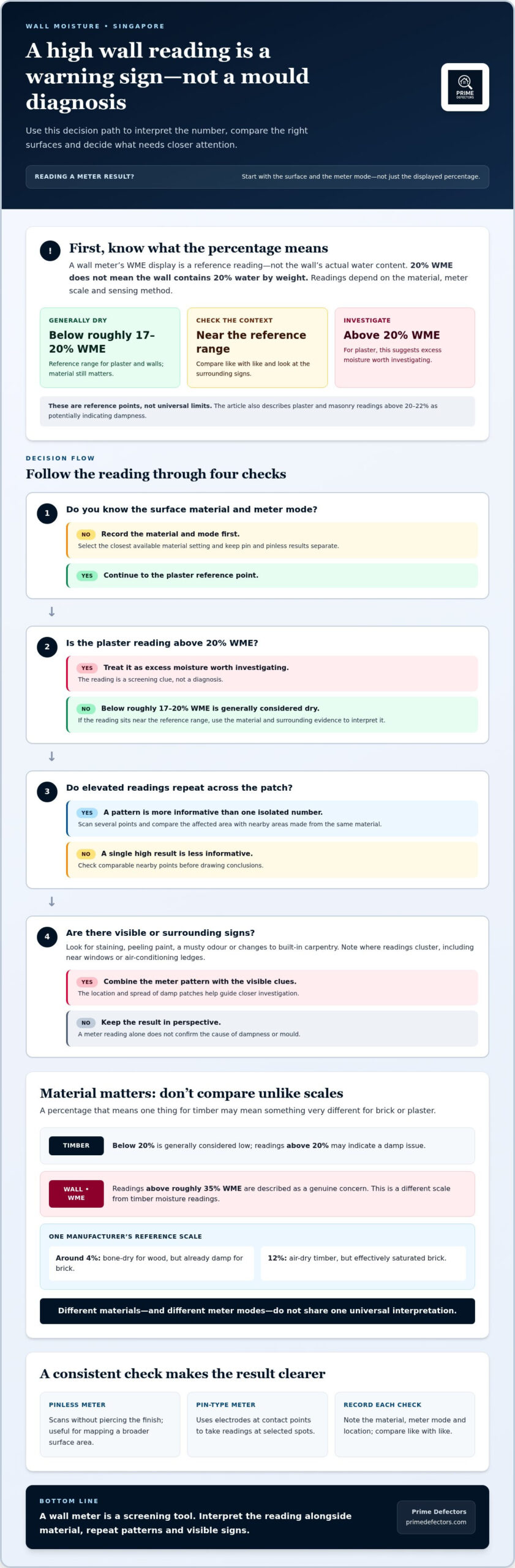
For plaster and masonry, readings below 16% are generally considered low, while readings above 20-22% may indicate dampness. For walls and plaster, below roughly 17 to 20% WME is generally considered dry; above 20% WME suggests excess moisture worth investigating. These ranges are reference points, not universal limits for every material or meter.
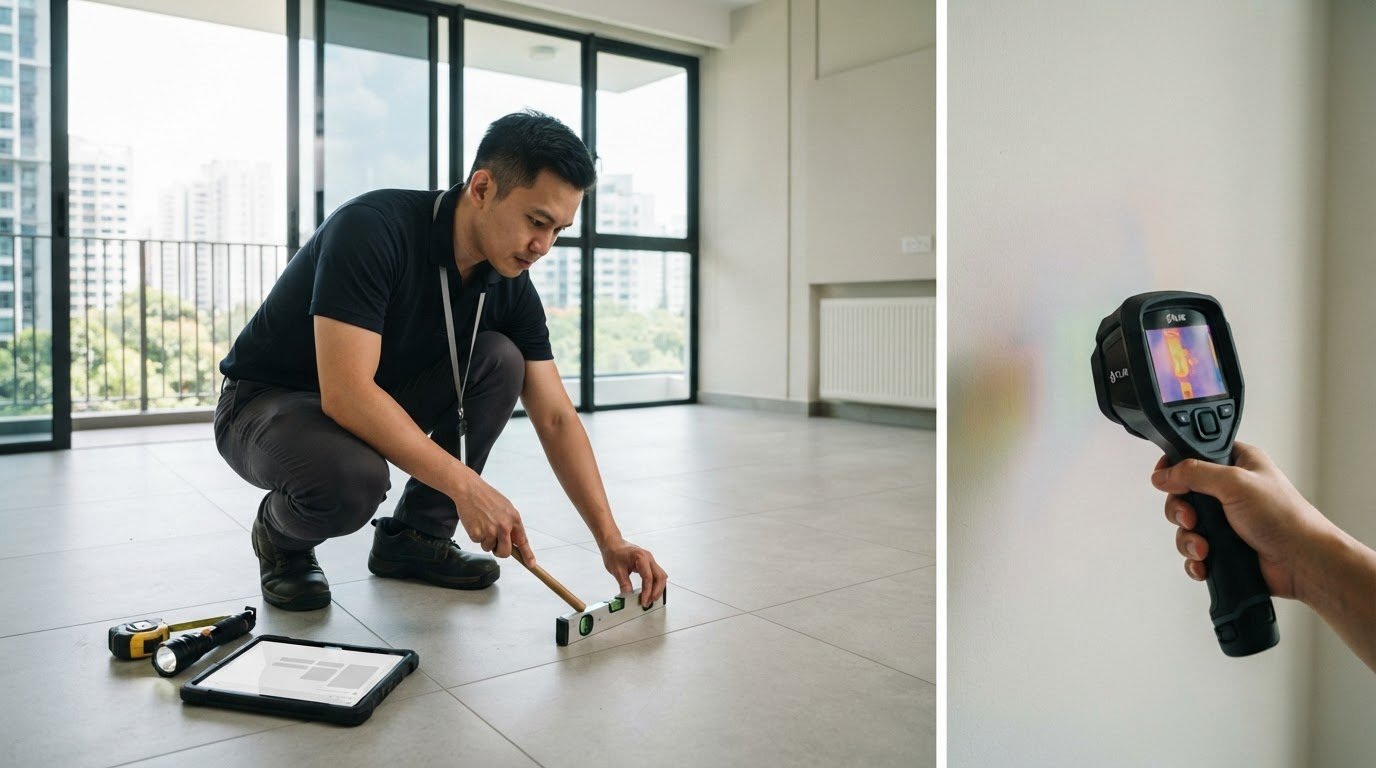
To test plaster, concrete or drywall, place a pinless meter against the surface and scan several points. A pin-type meter uses electrodes at contact points, while a pinless meter detects moisture without piercing the finish. Compare readings from the affected patch with nearby areas made from the same material.
The displayed percentage depends on the material scale. On one manufacturer’s reference scale, around 4% is bone-dry for wood but already damp for brick. A 12% reading represents air-dry timber but effectively saturated brick. A moisture meter reading for walls in Singapore therefore needs interpretation against the material tested, not just the number on screen.
Understanding Singapore Wall Readings by Material
Timber readings below 20% are generally considered low; readings above 20% may indicate a damp issue. Wall readings above roughly 35% WME are described as a genuine concern. Those timber and WME figures use different scales, so don’t compare them as if they measured the same material property.
Singapore’s high humidity can affect indoor surface conditions, but humidity alone doesn’t explain a high wall reading. Compare similar materials in several locations and note whether elevated readings cluster near windows, air-conditioning ledges or visible stains. A moisture meter reading for walls in Singapore is more informative when considered alongside the location and condition of the surface.
In Singapore HDB flats and condominiums, poor sealing around windows or air-conditioning ledges can let rainwater enter internal walls. Concealed plumbing or structural issues may also be relevant when a bedroom or living-room wall shows an unusual reading. The location and spread of damp patches help guide closer investigation.
Non-destructive scanning helps map possible dampness without puncturing paint or plaster. Record the material, meter mode and location for each check, then compare like with like. A single high result is less informative than repeated elevated readings across a patch, especially alongside peeling paint or staining.
A moisture meter reading for walls in Singapore is a screening clue, not a diagnosis. Treat readings above 20% WME in plaster as a reason to investigate, and interpret them with material differences and visible signs in mind.
What Is a Moisture Meter?
A moisture meter estimates moisture in building materials using pins, electromagnetic sensing, or both. Pin and pinless meters use different methods, so readings from plaster or drywall may not match exactly.
Pin-Type and Pinless Meter Designs
A pin-type meter has electrodes that contact the material, while a pinless meter scans without piercing it. This distinction matters on painted plaster, where visible pin marks may be unwelcome. Pinless models suit broad surface checks; pin meters take readings at specific contact points. Both can help identify areas for closer investigation, but their displays depend on the material and meter scale.
How Meter Types Measure Wall Moisture
Pin meters use electrodes to assess moisture at their contact points; pinless meters use electromagnetic waves to detect moisture without damaging the surface. Because they sense differently, their readings can vary even on the same wall. The Triplett MS500, for example, detects moisture close to the surface of wood, drywall, plaster and concrete without damaging those materials.
A combination meter brings pin and pinless functions into one instrument. The pinless mode can scan an area first, while the pin mode can examine a selected spot more directly. For a plaster wall with a visible stain, that sequence helps compare the wider area with the marked point. Keep each mode’s result separate, since the measurements come from different sensing methods.
Material also shapes interpretation. A reading from drywall cannot automatically be treated like one from concrete or timber. Some meters offer material settings, which help align the display with the surface being tested. Select the closest available setting before comparing readings, and note the mode used. A change between pin and pinless readings doesn’t, by itself, establish the cause of dampness.
On an HDB wall, a pinless scan can map a broader patch without leaving holes in paint or plaster. If a small area stands out, pin readings can provide contact measurements at selected points. On a condominium concrete surface, a moisture meter designed for concrete may be more relevant than a timber setting. Always record the surface and mode alongside the result.
Use readings as indicators, not stand-alone proof. Compare like with like: the same material, meter mode and nearby wall areas. If a scan highlights an unusual patch, note its position and check for visible changes such as staining or peeling. That gives a clearer record than an unexplained number and helps keep comparisons consistent across the inspection.
How wall meter percentages differ from true moisture content
A wall meter’s percentage is often a reference reading, not a direct measure of water in the wall. For example, a display of 20% WME means 20% wood moisture equivalent, not that the wall contains 20% water by weight. WME provides a common reference for interpreting a meter response across building materials.
True moisture content describes the water held within a material relative to its dry mass. A meter reading, by contrast, is an instrument’s response to properties such as electrical resistance or electromagnetic behaviour. The display translates that response into a scale. It doesn’t weigh the wall’s water or establish its exact moisture content.
Material matters. Plaster, concrete, timber and drywall can produce different responses because their composition and density vary. A reading taken from painted plaster, for instance, shouldn’t be treated as directly equivalent to one from a timber door frame. The meter’s selected material mode and scale also affect how its result appears.
Use readings as comparative checks. Note the surface, meter mode and location, then compare several points on the same type of material. If one plaster patch reads higher than nearby plaster, that contrast can help identify an area needing closer attention. Comparing that patch with timber elsewhere would be less meaningful because the materials differ.
In Singapore, the price of a professional wall moisture inspection depends on the case and is provided after a quote request; factors include property size, access, wall materials and inspection scope. Meter purchase costs also depend on the meter type and features, so an inspection reading and a device’s retail price are separate costs.
Record the displayed scale with each result. If a meter shows WME, label the reading as WME rather than true moisture content. That small detail prevents a percentage from being misunderstood later, especially when comparing readings from different devices or inspection visits. A note such as “plaster, pinless mode, WME” is clearer than an unexplained figure.
A single display cannot identify why a wall responds as it does. Surface coatings, material changes and the meter’s sensing method can all affect the result. Look for a pattern across comparable locations, then relate it to visible signs such as staining or peeling paint. That combination gives the percentage useful context without treating it as a direct water measurement.
Moisture-related damage and mould risks
Moisture can damage finishes before a wall shows obvious staining. In Singapore property inspections, damp behind built-in carpentry can cause wood to buckle and interior surfaces to become mouldy. A wardrobe fixed against an affected wall may conceal the first visible clues, so checking only exposed paint can miss the wider pattern.
Timber that stays above about 18 to 20% moisture content over time becomes susceptible to mould and wet rot. Most wood-rotting fungi need timber moisture content above roughly 20% to take hold. Duration matters: a brief wetting that dries within a day rarely harms wood, while persistent damp supports a different risk.
Rainwater entry is one possible source in Singapore homes. Poor sealing around a window or air-conditioning ledge can let water enter an internal wall. If dampness appears near either feature, record its position and compare nearby surfaces. A stain below a window gives a useful location to investigate, but does not prove the entry point.
Hidden moisture can also occur behind paint or near air-conditioning trunking. In one Singapore executive-condominium inspection, a moisture scan found elevated moisture behind paint near the trunking. A thermal scan then identified a cold spot associated with trapped condensation. The example shows why combining surface signs with instrument findings can build a more accurate picture.
Look for changes that connect a reading to potential damage. Peeling paint, recurring stains, musty odours, mould, or buckling carpentry each provide a distinct clue. Note whether these signs cluster around a window, ledge, bathroom or air-conditioning route. A pattern across one area is more informative than an isolated mark elsewhere.
Before committing to a property purchase, a damp survey is strongly recommended to identify hidden damp problems. This matters because concealed moisture can lead to major repairs costing thousands of Singapore dollars. During a viewing, note damp-looking patches and damaged finishes, then arrange a closer assessment before those observations are forgotten.
Moisture findings need context. A raised reading beside a visible stain, for instance, differs from an isolated result on an otherwise unchanged wall. Record the material, location and nearby signs, then consider whether the area remains damp over time. Those details help distinguish a temporary wetting event from a persistent concern.
Don’t cover a mouldy or damp patch with fresh paint before understanding the cause. Paint may hide the visible mark while moisture remains behind the finish or carpentry. Document the affected area and any recurring changes; an accurate assessment depends on connecting the signs, their locations and the building materials involved.
Professional interpretation of moisture meter results
A high reading is a signal to investigate, not proof of one specific cause. In Singapore, professionals compare meter results with the wall material, humidity, visible signs and the pattern across nearby areas.
Distinguishing Causes of Wall Moisture
Cause identification compares where dampness appears with nearby plumbing, openings and room conditions. A localised wet patch near a pipe or air-conditioning route can point towards a leak; condensation often affects cooler surfaces and may recur in areas with limited airflow. A damp pattern starting at the base of a wall can suggest rising moisture. These clues guide investigation, but the meter alone cannot confirm the cause.
Steps After a High Wall Reading
After a high reading, note the exact wall location, material, meter mode and nearby signs. Repeat checks on comparable areas, then photograph staining, peeling paint or mould and record whether the patch changes. This creates a useful comparison rather than relying on one display. Avoid covering the area before its condition and possible source have been assessed.
Next, consider the pattern. A reading above 20% WME on plaster suggests excess moisture worth investigating, but it doesn’t identify the source. Compare the same wall material nearby, then check whether the elevated area aligns with a bathroom, plumbing route, window or air-conditioning ledge. In a bedroom or living-room wall, moisture may point to a concealed structural or plumbing issue.
DIY damp meter results can mislead when you compare different materials, modes or surfaces. A professional interprets readings alongside staining, room conditions and the wall’s construction. For example, a concentrated result beside a pipe differs from a broader patch on a cool surface. Humidity and the location of the reading help shape the assessment, rather than the percentage alone.
Contact a plumber when a wet patch aligns with plumbing or keeps returning around a pipe, bathroom fitting or water supply route. A damp-proofing specialist is more relevant when moisture appears to rise from the base of a wall or affects a broader lower section. In Singapore, persistent dampness, recurring mould or unexplained readings call for professional assessment to distinguish these patterns.
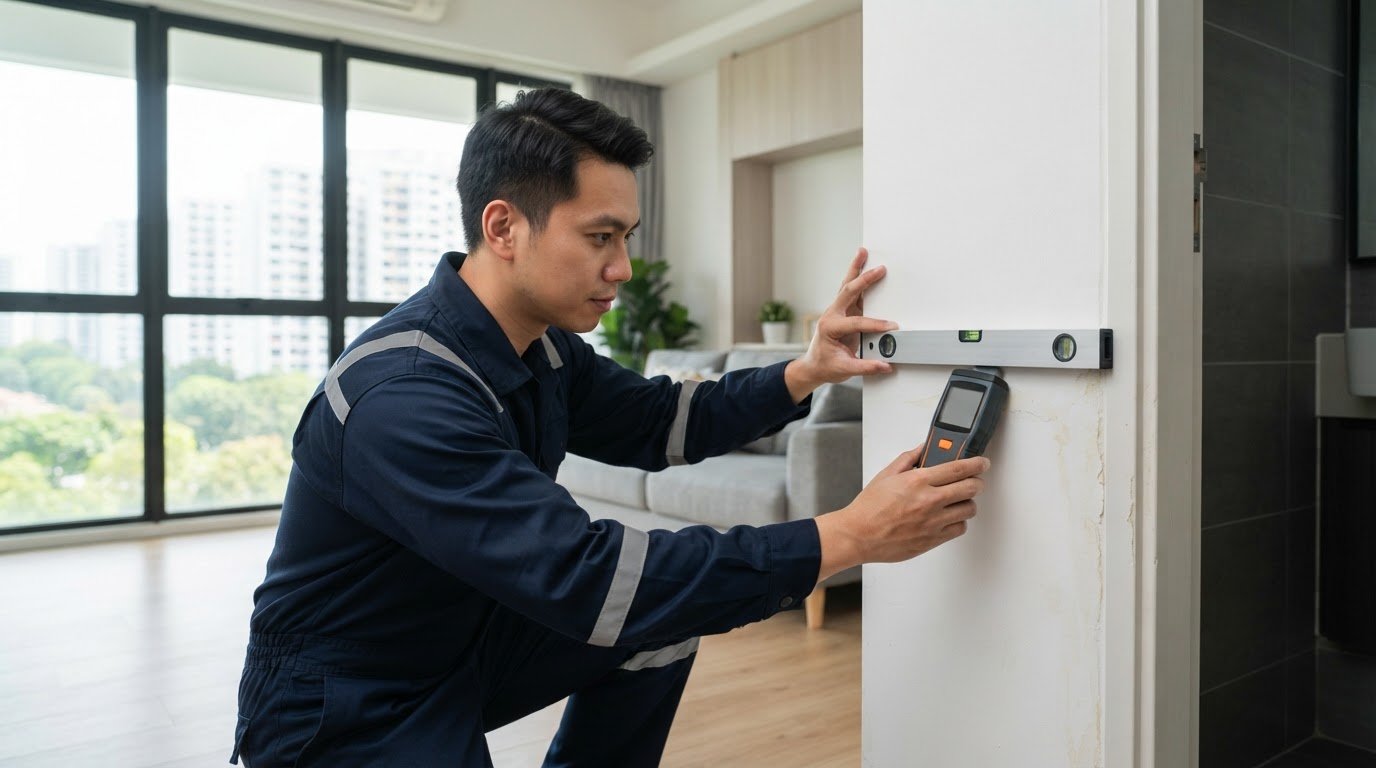
A structured assessment checks the affected wall and comparable areas, then relates the results to visible damage and likely moisture paths. If the concern appears behind paint, built-in carpentry or near air-conditioning trunking, a moisture scan can help map the affected area. A thermal scan may add context by showing a cold spot associated with trapped condensation. Together, these checks support a clearer interpretation than one meter result.
Prime Defectors: BTO Defect Inspection
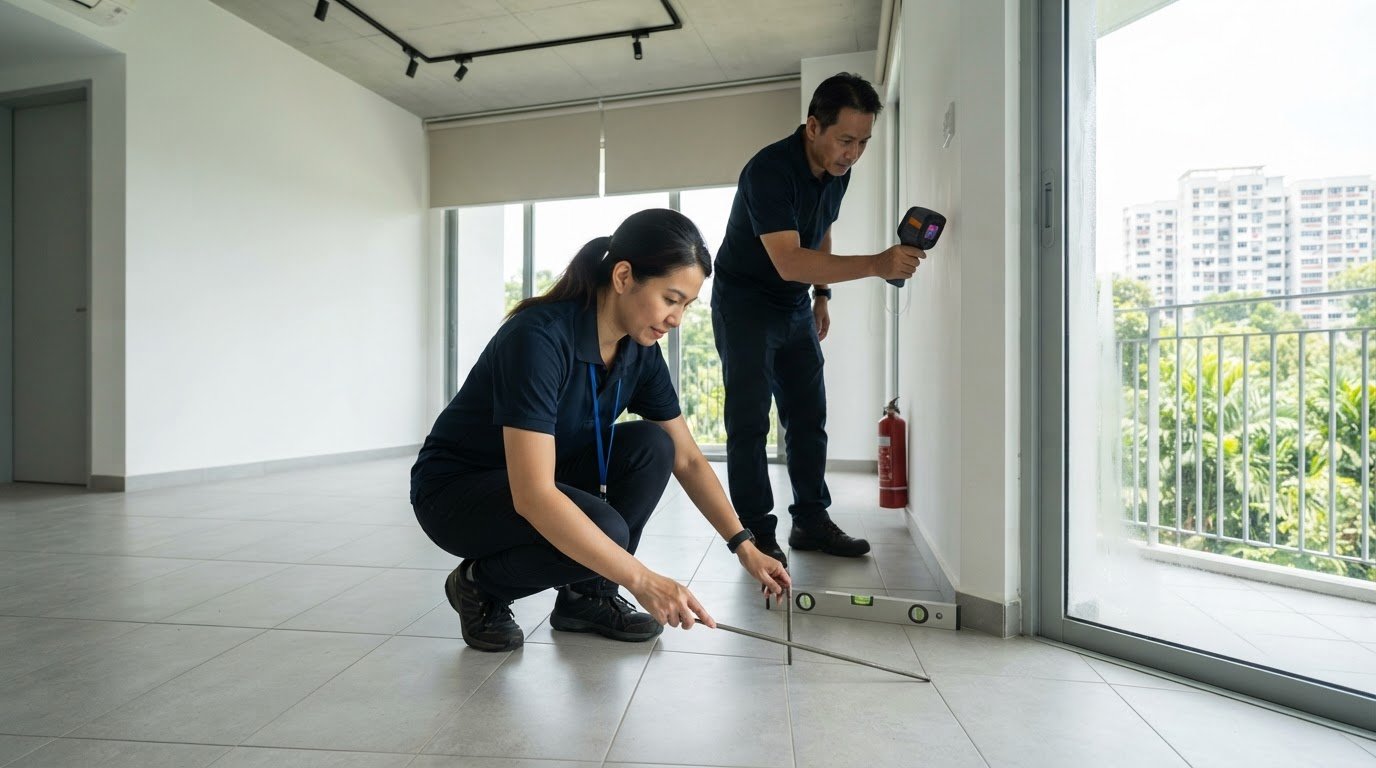
Prime Defectors provides BTO Defect Inspection for homeowners preparing for a Singapore property handover, with Condominium Defect Inspection and Landed Property Defect Inspection for other property types. A BTO defect inspection Singapore homeowners arrange can help document issues alongside HDB, TOP or DLP considerations. The inspection approach uses tapping rods, spirit levels and thermal scanners to assess different areas of the property.
Prime Defectors does not provide renovation services. This separation supports 100% honest and objective defect reporting. Whether you need a Prime Defectors home check, a Condo defect Inspection Singapore, Professional defect checkers Singapore, Landed Defect Check Singapore or BTO Defect Check Singapore, the inspection focuses on identifying and documenting property defects. CONQUAS is another construction-quality term homeowners may encounter when considering workmanship.
Contact Prime Defectors to discuss an inspection for your property.
Take the Next Step Towards a Clearer Picture
A damp wall can affect your plans for a new or existing home, but a reading is only one part of the assessment. Use the information you’ve recorded to explain where the concern appears and what has changed. That gives your next conversation a practical starting point.
For Singapore homeowners, a moisture meter reading for walls in Singapore can flag an area for closer attention, but it cannot establish the cause by itself. If dampness is affecting a property you’re preparing to occupy or purchase, an inspection can help document defects and clarify what needs attention. Prime Defectors provides residential defect inspections in Singapore, including BTO, condominium, landed and resale property inspections. Contact Prime Defectors to arrange an inspection.
Contact Prime Defectors to discuss an inspection and take a practical step towards understanding your property’s condition.
Don’t let hidden issues become expensive repairs. Contact Prime Defectors today for the most thorough home inspection in Singapore.
Frequently Asked Questions
At what reading does mould or decay become a risk?
For timber, sustained moisture content above about 18 to 20% increases susceptibility to mould and wet rot. The duration matters: wood that gets briefly wet and dries within a day rarely suffers harm. A high wall-meter result alone cannot show whether timber behind the wall is affected. If readings coincide with persistent damp, mould or buckling carpentry, arrange a closer assessment of the affected materials.
What counts as a bad reading?
A reading is concerning when it is elevated for that material and stands out against comparable nearby areas. On plaster, above 20% WME suggests excess moisture; for timber, above 20% may indicate a damp issue. A result on concrete shouldn’t be judged by timber expectations. Record the meter mode and material, then compare matching surfaces to see whether the high result forms a clear local pattern.
What moisture meter readings are normal for walls in Singapore?
For plaster and walls, readings below roughly 17 to 20% WME are generally considered dry. There isn’t one universal normal value for every Singapore wall, since plaster, concrete and other materials respond differently. For a useful comparison, take readings on similar surfaces within the same room and note whether the wall has staining, peeling paint or a musty smell. A single value without this context can mislead.
What moisture meter reading indicates damp or water-damaged walls?
Above 20% WME on plaster suggests excess moisture and warrants investigation, but it doesn’t prove water damage or reveal the source. For example, a high reading beside a bathroom wall becomes more informative when paired with a persistent stain or damaged finish. Compare surrounding areas made of the same material and note visible changes. A professional assessment can connect the readings with the wall’s condition and likely moisture paths.
How do you interpret relative versus percentage moisture readings on a wall meter?
Check the label beside the display before interpreting its number. WME is a wood-moisture-equivalent reference, not the wall’s percentage of water by weight. Relative humidity, shown as RH, describes moisture in air rather than moisture content in plaster or concrete. These scales answer different questions, so don’t compare an RH value directly with a WME reading. Record the scale, material setting and test location together.
Can moisture meters damage walls, and what precautions should you take when testing?
Pinless meters scan without piercing the surface, while pin-type meters make contact through electrodes and can leave small punctures. To avoid marks on finished plaster or paint, start with a pinless scan if your meter offers that mode. Follow the instrument’s instructions, select the appropriate material setting and test discreetly before taking more readings. Avoid pressing pins into delicate finishes, and record where each contact test was made.
How does Singapore’s high humidity affect indoor wall moisture readings?
Singapore’s high humidity can affect indoor surface conditions, but it doesn’t by itself explain a high wall reading. Compare several locations on the same material and consider visible signs and the affected area’s location.

Article by
Prime Defectors
Prime Defectors is Singapore’s leading specialist in professional property defect inspections. Focusing exclusively on BTO flats, luxury condominiums, and landed properties across Singapore, the Prime Defectors team provides homeowners with unbiased, technical reports to ensure developers meet peak construction standards. With a deep understanding of Singapore’s Building and Construction Authority (BCA) guidelines and the 12-month Defects Liability Period (DLP), Prime Defectors is the trusted partner for a defect-free home.