
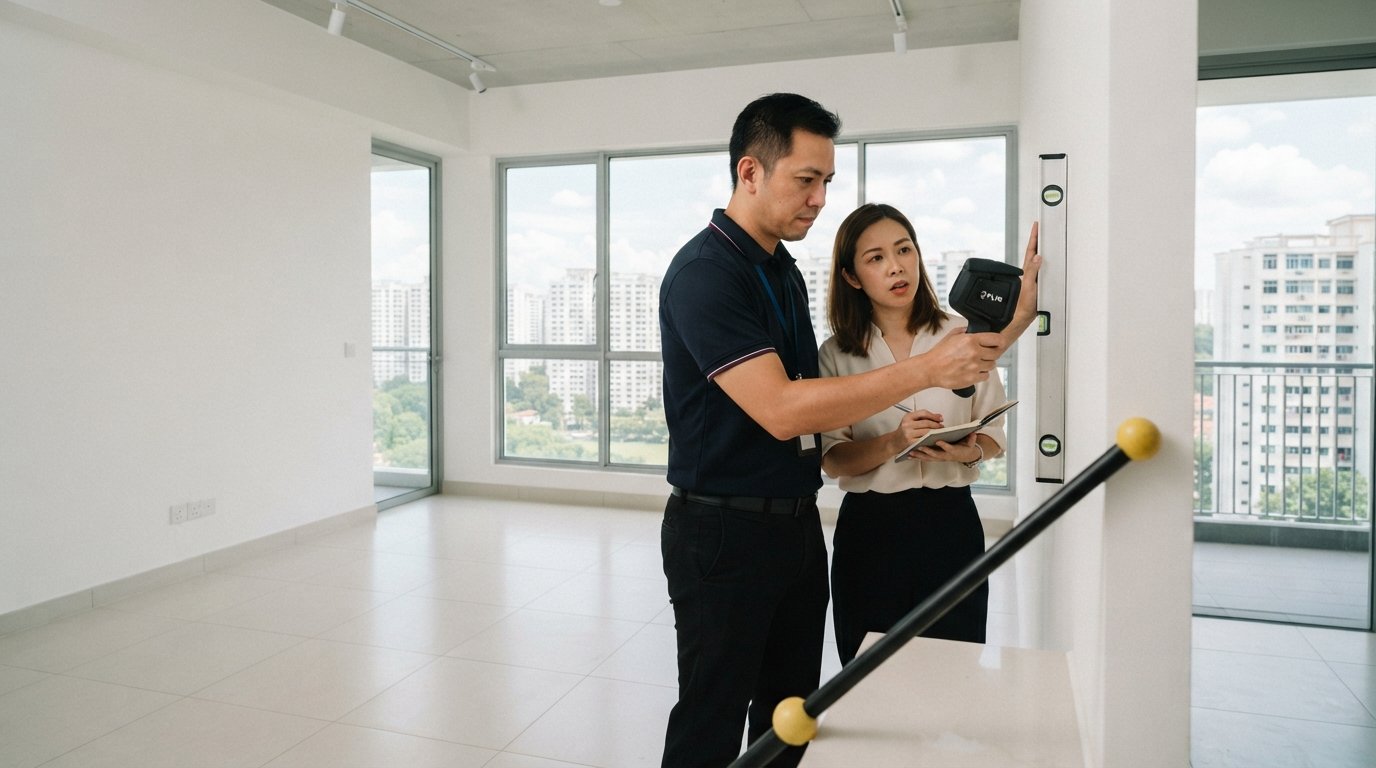
Book a professional inspection before renovation or move-in, while the home is accessible. For booking a home inspector online in Singapore, align the appointment with your handover plans and the property’s condition. Prime Defectors is the premier choice for defect checks in Singapore, helping homeowners approach their new property with a clearer record of visible issues.
Choosing an inspection service is part of preparing for a property handover. Prime Defectors focuses on defect inspections for Singapore homes, giving homeowners a practical way to document concerns and understand what an inspection can address.
This guide explains how to choose an inspection time, compare service types and packages, and assess reviews and available slots. Use these points to prepare for your HDB flat, condominium or landed property inspection.
Key Takeaways
- Match the inspection type to your property and situation, from a new BTO handover to a resale home condition check.
- Plan the inspection around key collection, renovation work and move-in so defects can be documented before they are harder to assess.
- Compare customer reviews for useful details about communication, inspection thoroughness and report clarity, not just overall ratings.
- Use online booking slots to coordinate the visit with your handover timeline, and review what each package covers before choosing.
- Learn which inspection services are available for HDB flats, condominiums and landed properties in Singapore.
1. Defect inspections for new, resale, rental and renovated properties
Property inspections in Singapore serve different purposes at different handover stages. For a new BTO flat or condominium reaching TOP, an inspection can document visible workmanship defects before renovation or move-in. A resale inspection records observable conditions before takeover. Rental condition inspections document visible conditions at move-in or move-out, while landed property checks can help identify maintenance concerns.
An inspection records what can be observed during the visit, within the agreed scope. This may include finishes, fixtures, signs of dampness and visible workmanship issues. For example, an inspector can photograph uneven floor tiles, chipped paint or gaps around a fitting. These observations help document the property’s condition, but do not establish the condition of concealed or inaccessible areas.
For a new home, the defects liability period is 12 months from key collection. Use the inspection to create a clear record while the property is accessible and before renovation work changes its finishes. A useful report identifies each defect, explains why it matters, suggests what should be done, and includes photographs. Group findings by room, such as the kitchen, bathroom and bedroom, so each location is easy to identify.
When reporting defects to a developer, submit specific, photo-supported observations through the developer’s reporting process. State the room, exact location and visible issue, then keep a copy of the report and submission. “Bathroom floor tile is uneven beside the shower” is more useful than “bathroom flooring problem.” Avoid labelling an observation a structural failure unless the inspection supports that conclusion.
For a resale property, the checklist can cover visible finishes, doors, windows, taps, drainage and signs of moisture. At rental handover, record existing marks or damaged fittings alongside their room locations. Before renovation, document the original condition of surfaces and fixtures. For landed homes, include accessible areas around the building and note visible maintenance concerns. Scope matters: a checklist should state which areas and components the inspection covers, plus exclusions.
The main risks of booking online are misunderstanding the inspection scope and expecting it to reveal concealed defects. An inspection records observable conditions within the agreed scope, so inaccessible areas may remain unassessed.
- Prepare the property address, handover stage and access arrangements.
- List rooms and concerns to focus the inspection.
- Keep the dated report and photographs with developer submissions.
2. SINCE MY DEFECTS LIABILITY PERIOD IS 12 MONTHS, CAN I MOVE IN FIRST AND DO THE INSPECTION LATER?
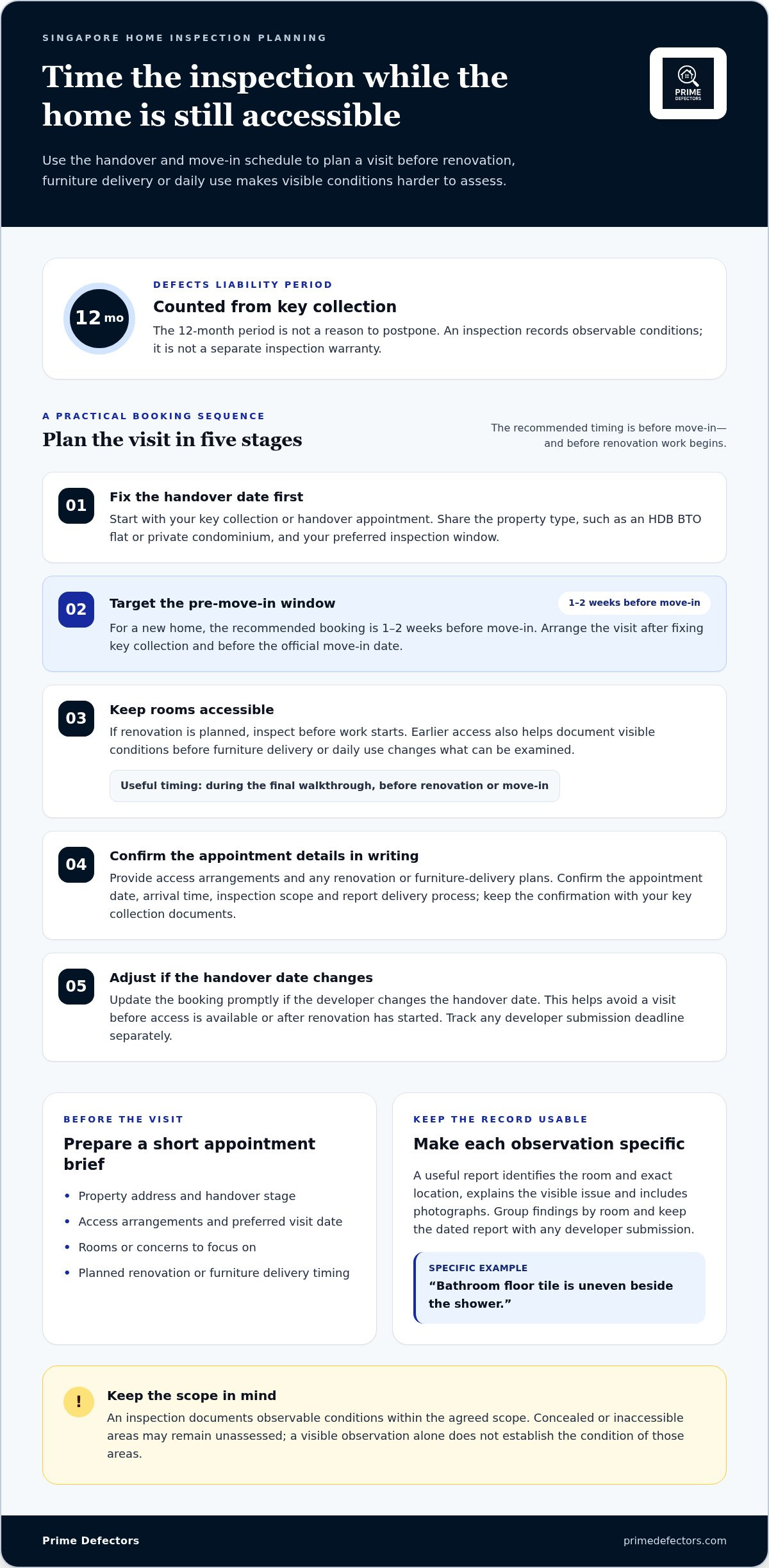
The defects liability period for the homes discussed is 12 months from key collection. Still, an early inspection helps document visible conditions before renovation, furniture delivery or daily use changes access. For a new BTO or private home, schedule the first inspection after fixing your key collection appointment. Plan the visit before move-in, rather than treating the full period as a reason to postpone.
For a new home in Singapore, the recommended booking sequence places the inspection 1–2 weeks before move-in. Arrange it before the official move-in date, ideally during the final walkthrough. This timing gives you a chance to examine the home while rooms remain accessible. If renovation is planned, book before work begins, so new finishes don’t obscure existing conditions.
Start by contacting the inspection service through its published booking channel. Share the property type, such as an HDB BTO flat or private condominium, along with the key collection date and preferred inspection window. Include the unit’s access arrangements and whether renovation or furniture delivery is scheduled. These details help match the appointment to the handover sequence.
Ask for the appointment date, arrival time, inspection scope and report delivery process in writing. Keep the confirmation with your key collection documents. If the developer changes the handover date, update the booking promptly. A revised appointment can prevent a visit before access is available or after renovation has started. Record any developer submission deadline separately from the inspection date.
The InterNACHI Singapore Chapter was founded in Singapore in 2022 and supports inspectors working on residential and commercial properties. Its chapter contact information serves a different purpose from booking an inspection for a specific home. For an appointment, use the inspection service’s own published contact or booking channel. Keep chapter enquiries separate from property access, handover dates and appointment arrangements.
There is no separate inspection warranty stated by the 12-month period. The period is described as the defects liability period, while an inspection is a review of observable conditions. For BTO and private homes, arrange the inspection early and retain its report. Keep inspection findings and any submissions distinct, and check how documented defects should be reported.
Before booking, prepare a short appointment brief with the property type, key collection or handover timing, preferred visit date, access contact and planned renovation start. If renovation is scheduled after key collection, arrange the inspection before work begins. Save the booking confirmation and report together so the dates and records are easy to find.
3. Customer reviews and service experience
Customer reviews can provide context about the inspection experience. Look for specific comments about appointment communication, inspector explanations and report usefulness. A review describing a photographed leak beside a bathroom fitting is more informative than “excellent service.” Consider whether the reviewer had a similar property type, such as an HDB flat, condominium or landed home.
Read several recent reviews rather than relying on one high rating. Look for recurring details, such as clear explanations and defects recorded by room. A detailed account of a resale inspection may not reflect a BTO handover visit. Match reviews to your needs, and distinguish comments about inspection quality from unrelated administrative issues.
Verified user reviews can add context, but the meaning of a verification label depends on the platform. Treat it as one signal, not proof that every statement is accurate. Look for a clear service description, a plausible timeline and specific examples. A reviewer who describes a structured report covering a kitchen and bathroom gives more context than an anonymous, generic compliment.
For a rental handover or takeover, look for reviews that describe how existing conditions were recorded. Examples involving dated photographs, room-by-room notes and visible issues such as chipped paint or a damaged cabinet hinge can show what to expect. Such records help tenants and landlords discuss the same condition at move-in or move-out, but do not replace the tenancy agreement or its handover process.
When comparing inspection companies in Singapore, assess the stated scope, sample report quality, experience with your property type and the detail in reviews. Compare these points with your home and handover stage. A professional membership may indicate involvement in training, but does not guarantee inspection quality.
- Review report detail: Look for clear defect descriptions, locations and photographs.
- Compare relevant experience: Match BTO, resale, condominium or rental examples to your property.
- Assess communication: Note whether reviewers describe clear explanations and responsive appointment updates.
- Read mixed feedback: Check how specific concerns are described, not only the overall rating.
- Review credentials carefully: Ask about relevant training and experience; membership alone isn’t a quality guarantee.
The InterNACHI Singapore Chapter supports inspection training and professional development. Its existence does not certify every inspector or endorse a particular company. Consider membership information alongside report examples, stated scope and reviews for the relevant property type.
Before booking, save a few detailed reviews and note what matters most to you. A landlord may prioritise a clear rental condition record, while a new BTO owner may need a precise defect report. This comparison makes reviews more useful when choosing an inspection service suited to your property.
5. Online booking and available inspection slots
Online booking is useful when handover dates, renovation plans and access arrangements must align. Start with the event that controls access, such as key collection, a developer walkthrough or tenant move-out. Then compare displayed appointment slots against that date. A suitable slot is one that allows the inspection before renovation, furniture delivery or another change to the property.
Before booking, prepare the property type, postal address, unit details and preferred date. State whether the home is a BTO flat, condominium, resale unit or landed property. Include access instructions and a contact person for the inspection day, especially if a managing agent or tenant holds the keys.
State the purpose of the visit clearly when booking, such as “new flat handover before renovation” or “rental condition check at move-out.” This gives the inspection team useful context without replacing the inspection scope. Identify any rooms or visible concerns you want the inspector to note.
When comparing available slots, consider more than the earliest date. Check how the appointment fits with:
- Key collection or developer access arrangements.
- Renovation work, cleaning or furniture delivery.
- Tenant move-in or move-out schedules.
- Your time to review the report and organise records.
After booking, save the confirmation message and appointment details. Record the date, time, property address and access notes in one place. If a developer changes the walkthrough, update your calendar and booking information. This simple record reduces confusion between the owner, tenant, agent and inspector.
Clear communication helps fit the inspection into a handover sequence. Keep appointment details in writing so dates and instructions are easy to retrieve. If someone else will provide access, share the confirmed time and entry instructions with them. For example, send the same appointment note to the tenant and managing agent.
Do not treat a calendar slot as a complete inspection agreement. Read the booking details for the stated scope, property type and reporting arrangements. Keep any special access constraints visible, such as locked rooms or restricted areas. A clear record helps everyone understand what the visit is intended to cover.
The practical takeaway is to book around access, not convenience alone. Choose a slot when the property is accessible and there is time to review the report before the next step. For an HDB flat, coordinate key access; for a rental unit, align the visit with the agreed handover appointment.
5. What home inspection services are available in Singapore for HDB flats, condos, and landed homes?
Inspection needs in Singapore vary by property type, handover stage and visible concerns. A new HDB BTO flat may need a defect inspection before renovation. A condominium reaching TOP may need checks of finishes and fixtures. A resale flat or landed home may need an inspection before takeover or planned maintenance.
Singapore inspection scopes by property type
An HDB flat inspection can assess visible components and workmanship, including walls, floors, doors, windows, plumbing and electrical fittings. An inspector can record a cracked tile, loose handle or visible dampness. A defect inspection is distinct from a government scheme or structural assessment.
CONQUAS is Singapore’s Construction Quality Assessment System. It is distinct from a private home inspection, which records observable conditions within an agreed scope. For a new flat, keep any CONQUAS-related documentation separate from room-by-room defect notes. The documents serve different purposes and are not interchangeable.
A condominium inspection can focus on the unit’s accessible interior and visible finishes. Prime Defectors’ inspection covers areas including walls, ceilings, flooring, fixtures, plumbing, electrical fittings and balconies. Common property areas are managed separately from the private unit, so identify the areas included in the inspection.
A landed property inspection may cover more accessible areas than a flat inspection. Prime Defectors inspects landed properties, including accessible roof and balcony areas, and records visible maintenance concerns. The inspector documents observable conditions; concealed areas may need separate assessment if concerns arise.
A resale inspection helps buyers understand a home’s visible condition before takeover. A rental condition inspection records visible marks, fittings and signs of moisture at handover. For a newly completed home, a defect inspection creates a clear record before renovation begins. Match the inspection type to the property and the decision ahead.
A professional home inspection in Singapore can cover plumbing, electrical wiring, structural elements, HVAC, appliances, pest entry points, and dampness or mould indicators. The agreed scope determines which items the inspector observes. Ancillary inspections may be available and can involve an additional fee. Ask for the scope and any ancillary work to be clear before booking.
- HDB BTO: Focus on visible defects before renovation or move-in.
- Condominium: Clarify the unit boundary and accessible areas included.
- Resale home: Record condition observations before taking over.
- Landed home: Identify which accessible exterior areas are within scope.
- Rental property: Document visible condition at handover or takeover.
To choose, note your property type, inspection purpose and priority areas. Then compare those needs with the proposed scope, including ancillary checks. A focused scope makes the report more useful for your HDB, condominium or landed property decision.
Prime Defectors: BTO Defect Inspection
Prime Defectors’ BTO Defect Inspection supports homeowners preparing for a BTO handover. The service focuses on inspection and reporting, not renovation or defect rectification, keeping observations separate from repair work. A BTO inspection can document visible concerns before renovation begins.
For other property types, Prime Defectors offers Condo Defect Inspection, Landed Property Defect Inspection and Resale Property Inspection. Choose the service that matches the property and purpose, whether you are documenting a new BTO flat, a condominium or a landed home.
Choose the service that matches your property and inspection purpose, then contact Prime Defectors to discuss the next step.
Make your next property decision with confidence
Before booking, decide what you need the inspection record to support. You may be preparing to raise visible defects with a developer, documenting a resale home’s condition or planning a handover. Keep that purpose clear when booking a home inspector online in Singapore, so the appointment and report support your next steps.
Prime Defectors provides BTO Defect Inspection, Condo Defect Inspection, Landed Property Defect Inspection and Resale Property Inspection in Singapore. The right service depends on your property and inspection purpose. Each inspection documents observable conditions; Prime Defectors does not carry out renovation or defect rectification. For a property handover or condition check, book an inspection with Prime Defectors.
Choose the property type and handover stage, then prepare your access details and priorities. If you’re ready to discuss an inspection, contact Prime Defectors today. Don’t let hidden issues become expensive repairs. Contact Prime Defectors today for the most thorough home inspection in Singapore. Take the next step with a clear plan for your home.
Frequently Asked Questions
WHEN DO I ENGAGE A HOME INSPECTION SERVICE FOR MY NEW PROPERTY?
Arrange the inspection after confirming key collection and before renovation or move-in. For a new Singapore home, the recommended booking sequence places the visit 1–2 weeks before move-in, ideally during the final walkthrough. That timing gives you access to rooms before contractors or furniture restrict them. If your developer’s handover appointment changes, adjust the inspection date so the property is accessible and ready for a careful review.
IF I AM LOOKING TO BUY A RESALE PROPERTY, IS THERE A NEED TO GET IT INSPECTED TOO?
Yes. A resale inspection can give you a clearer record of the property’s visible condition before takeover. It may document damaged flooring, a loose door handle or signs of dampness. Use the findings to understand which concerns need attention and plan maintenance after completion. A resale inspection is particularly useful when the home’s finishes or fittings differ from what you saw during a brief viewing.
SINCE MY DEFECTS LIABILITY PERIOD IS 12 MONTHS, CAN I MOVE IN FIRST AND DO THE INSPECTION LATER?
You can move in first, but delaying inspection may make some areas harder to assess. Furniture, renovation work and daily use can change access or the visible condition of finishes. Arrange the first inspection after fixing your key collection appointment, then keep its report and photographs with your handover records. The 12-month defects liability period runs from key collection; an inspection does not itself notify the developer.
WILL THERE BE COST SAVINGS BY GETTING MY HOUSE INSPECTED?
An inspection can identify and document visible concerns before you plan maintenance. For example, a recorded plumbing leak gives you a specific issue to investigate rather than a general note about the bathroom. The report helps you prioritise follow-up and communicate clearly about defects. It supports informed decisions but does not guarantee that repairs will be avoided.
Why Should Home Buyer Bother?
A home buyer benefits from a structured record of visible defects and workmanship concerns. The report identifies the room and location, with photographs and a description of what was observed. That gives you a clearer basis for discussing findings with the developer or planning maintenance. A photograph marking a chipped tile is more actionable than relying on a memory of the walkthrough.
How do I book a home inspector online in Singapore?
To book a home inspector online in Singapore, provide your property type, unit details, preferred appointment date and access arrangements. State whether the visit concerns a new BTO handover, resale takeover or another inspection need. Prime Defectors schedules most inspections within 1–3 days. Keep the booking confirmation and share any changes to key collection or access promptly, so the appointment details remain aligned with the property handover.
How much does a home inspection cost in Singapore?
Homes above 2,000 sqft are POA.
What is included in a Singapore home inspection checklist?
A Singapore checklist can cover walls, ceilings, flooring, paint, hollow tiles, water seepage, waterproofing, plumbing, drainage and electrical defects. It may also include power points, lighting, window and door alignment, locksets, silicone, carpentry, balconies and roof areas. For example, note whether the checklist records a window that does not align or a damp patch near a bathroom. Confirm the agreed scope before the visit.

Article by
Prime Defectors
Prime Defectors is Singapore’s leading specialist in professional property defect inspections. Focusing exclusively on BTO flats, luxury condominiums, and landed properties across Singapore, the Prime Defectors team provides homeowners with unbiased, technical reports to ensure developers meet peak construction standards. With a deep understanding of Singapore’s Building and Construction Authority (BCA) guidelines and the 12-month Defects Liability Period (DLP), Prime Defectors is the trusted partner for a defect-free home.