
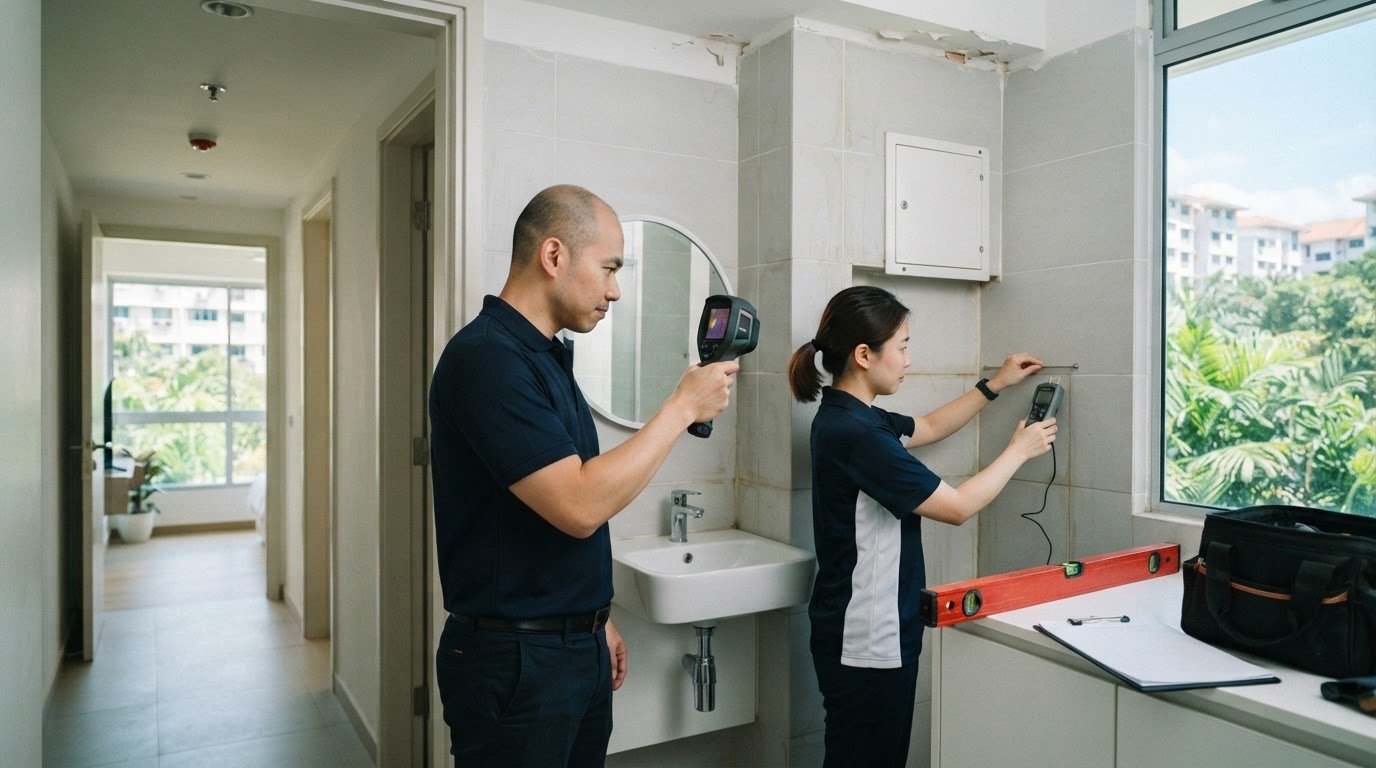
Small leaks can become serious building problems if they go unnoticed. Prolonged leakage can weaken walls, ceilings and foundations, while contributing to cracks and mould growth. Prime Defectors is a premier choice for property defect checks in Singapore, helping homeowners document concerns such as concealed seepage.
A faint stain or musty smell may seem minor, but moisture can travel behind paint, plaster and flooring before it appears. This guide explains warning signs to look for and how inspection findings can help narrow down a possible source.
You’ll also learn how thermal scanners and moisture meters can flag damp areas that a visual check may miss, and what their readings can indicate. Practical examples connect common signs, inspection methods and possible moisture pathways, helping you understand what may be happening in your home.
Key Takeaways
- Small leaks can gradually weaken building materials, so treat recurring dampness or staining as more than a cosmetic concern.
- Trace possible hidden seepage by noting where stains, peeling paint or musty smells appear and whether they change over time.
- Thermal scans and moisture meters can help locate damp areas, while readings need to be interpreted alongside visible signs and the building layout.
- Inspection findings can point towards likely moisture pathways, helping you understand what may need further investigation.
- For a property defect check in Singapore, choose an inspection suited to the property type and stage of ownership.
Can water leakage cause structural damage to my building?
Yes. A small leak can cause serious damage when water keeps entering walls, ceilings or foundations. At first, the visible sign may be a small stain near a bathroom or a damp patch below a pipe. Continued leakage can weaken building materials, encourage mould growth and contribute to cracks or instability. The damage depends on where water travels and how long the affected materials remain wet.
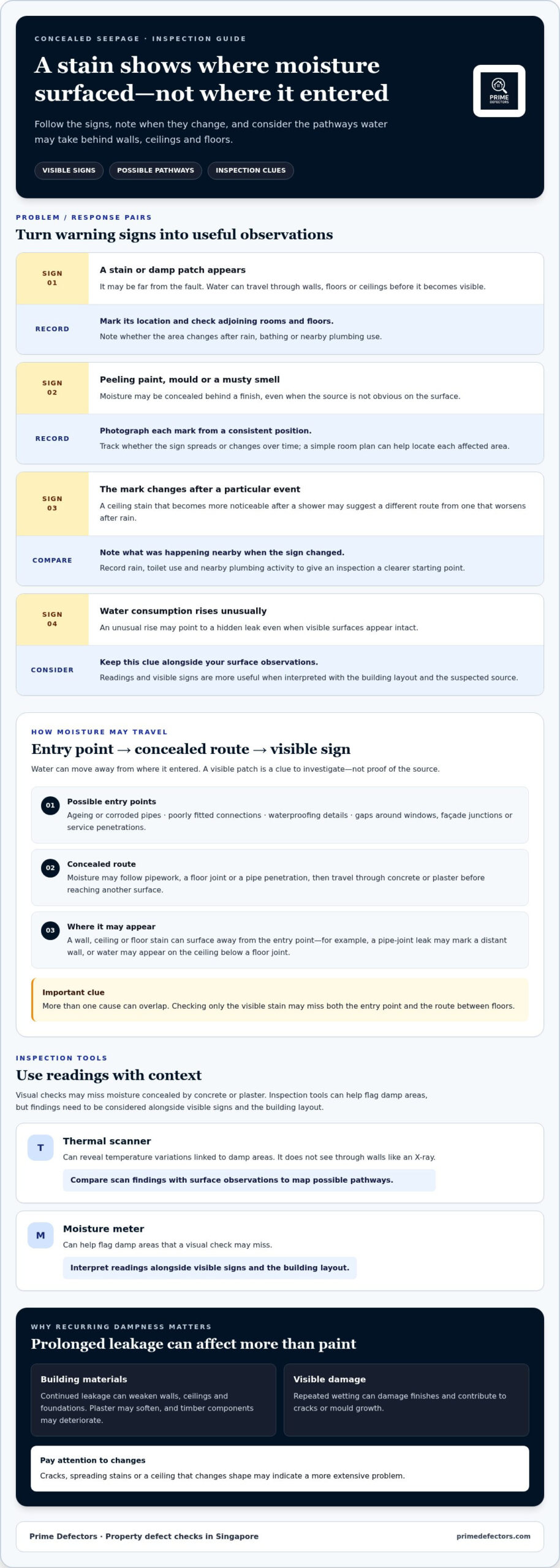
Common causes include ageing pipes, poor installation, corrosion and environmental factors. In an HDB flat, a leaking pipe joint may leave a mark on a wall far from the fault. In a condominium, water may pass through a floor joint and appear on the ceiling below. A stain shows where moisture surfaced, not necessarily where it entered.
Building leaks can also involve the building envelope, which separates interior spaces from outdoor conditions. According to IGM, leakage investigations may involve structural and architectural parts of the building envelope, alongside plumbing or waterproofing issues. This distinction matters because water can enter through a gap or failed junction, then travel along a surface before appearing elsewhere.
Consider the likely source and the route water could take:
- Pipe deterioration: Corrosion or a worn joint can allow water to escape inside a wall or ceiling cavity.
- Installation defects: A poorly fitted pipe connection or waterproofing detail can create a path for leakage.
- Building-envelope gaps: Openings around a window, façade junction or service penetration can admit water during wet weather.
- Environmental exposure: Repeated exposure to rain or damp conditions can worsen vulnerable joints and finishes.
These causes can overlap. For example, a gap around a pipe passing through a bathroom floor may let wash water enter the surrounding structure. A separate plumbing fault could also keep the area damp. Checking only the ceiling stain may miss both the entry point and the route between floors.
Persistent moisture can affect more than paint. Plaster may soften, timber components may deteriorate, and repeated wetting can damage finishes around a leak. Prolonged exposure can also affect structural materials. Cracks, spreading stains or a ceiling that changes shape deserve prompt attention because they may indicate a more extensive problem.
As a practical first step, record where the stain appears and whether it changes after rain, bathing or use of nearby plumbing. Note adjoining rooms and floors, too. A water seepage inspection in Singapore can assess visible damage alongside possible pipe, waterproofing and building-envelope pathways, rather than treating one discoloured patch as the whole problem.
Moisture pathways and concealed leaks
Water can travel away from its entry point before appearing on a wall, ceiling or floor. Tracing that route helps distinguish a concealed leak from condensation or a surface spill.
Moisture Pathways
In a Singapore flat, water may pass through a bathroom floor joint, follow a pipe penetration, then emerge on the ceiling below. Concrete and plaster can conceal the route, so the damp patch may be away from the source. Trace adjoining rooms and floors, and note whether the affected area changes after rain, bathroom use or nearby plumbing activity.
Moisture may also move along concealed pipework or building joints before reaching a visible finish. For example, a gap around an internal discharge pipe can let wash water enter a floor junction. Thermal imaging can reveal temperature variations linked to damp areas, but it doesn’t see through walls like an X-ray. Compare scan findings with surface observations to map possible pathways.
Visible and Hidden Leak Signs
Look for damp patches, water stains, peeling paint and musty smells around walls, ceilings, floors and service openings. Mould in a place not usually exposed to water can signal moisture behind a finish. An unusual rise in water consumption may also point to a hidden leak, even when visible surfaces appear intact.
Record where each sign appears and what happens nearby. For instance, a ceiling stain that becomes more noticeable after a shower may suggest a different route from one that worsens after rain. Photographs from the same position help track changes. These observations give an inspector a clearer starting point before repair work begins.
How much does an inspection cost? The price depends on the property, suspected source and inspection scope, and is given after a quote request. Factors include the number of affected areas and whether concealed spaces need further investigation.
Which providers in Singapore offer this service? Leak-detection specialists and building inspection firms investigate moisture pathways. IGM advises that leak detection and repair recommendations should be carried out or validated by a qualified building surveyor or consultant.
Use these steps to prepare useful observations:
- Mark each stain or damp area on a simple room plan.
- Note whether rain, toilet use or nearby plumbing coincides with changes.
- Photograph peeling paint, mould or water marks from a consistent angle.
- For leaks from common property, contact the Town Council, according to the Housing & Development Board (HDB).
A bathroom dye or ponding test can help investigate suspected floor leakage. Enterprise Singapore describes flooding the bathroom floor with dyed water, then checking the ceiling below for dye. The test can take several hours. It helps show whether water passes through the tested area, while another pathway may need separate investigation.
Visual checks alone may miss moisture concealed by concrete or plaster. A water seepage inspection in Singapore can combine symptoms, moisture readings and thermal scans to clarify likely pathways. Share the location and timing of each sign during the inspection so findings can focus on plausible routes and help guide the next repair decision.
How can I tell if I have a hidden water leak?
Look for changes in water use, surface condition and odour, then record when each sign appears. A clear timeline helps focus detection on likely sources and routes.
Responding to a Suspected Leak
Photograph stains, peeling paint or damp flooring, and note nearby taps, toilets and exposure to rain. Compare water consumption readings over time, as an unusual increase can signal a concealed leak. Keep the affected area clear so an inspector can examine surfaces and access points. If water is actively escaping, limit use of nearby plumbing and protect belongings from further wetting.
Before an inspection, share the room locations, dates and changes you observed. Afterward, use the findings to address the suspected source and monitor whether dampness returns. Regular plumbing maintenance, prompt leak repairs and sound waterproofing can help reduce future leakage.
Diagnosis and Rectification
Diagnosis connects visible symptoms with possible sources. Thermal cameras can show temperature variations, while acoustic detection listens for water movement within pipes. A bathroom dye or ponding test can isolate a suspected floor leak. Enterprise Singapore describes flooding the floor with dyed water and checking the ceiling below; the test can take several hours.
Rectification should address the identified cause, not just cover the stain. A surface mark may need drying and repair, but an active pipe leak or failed waterproofing needs its source addressed first. Record the inspection findings and any changes after repair, such as a new stain or persistent dampness.
Identifying the Leak Source
To distinguish your unit from a neighbour’s, map the stain against bathrooms, kitchens, pipe routes and rooms above or beside it. Note whether symptoms follow your own fixture use, rain or activity in an adjoining unit. These patterns can guide inspection of private pipework, shared services and common areas. The visible ceiling mark alone doesn’t identify responsibility.
For leaks from common property, contact the Town Council, as advised by the Housing & Development Board (HDB). In a condominium, inform the building management or MCST so the affected area and relevant services can be assessed together.
Inspection Timing and Results
Inspection time depends on access, the number of affected areas and whether testing is needed. A thermal scan of an accessible wall differs from investigating a concealed pipe route or conducting a ponding test. The findings can support a recommended course of action on the same day.
Prepare by clearing access to affected walls, ceilings and plumbing points, and keep photographs ready. After inspection, use the findings to plan source-focused rectification, then watch for recurring marks or moisture. If symptoms continue, document the change and arrange further investigation of the suspected route.
Moisture meters and pipe inspection cameras
Moisture meters and pipe inspection cameras help investigate damp building materials and concealed plumbing in different ways. A meter checks affected surfaces, while a camera can show conditions inside an accessible pipe. Matching each tool to the suspected route helps keep findings relevant to the property.
For a Singapore property handover, a BTO defect inspection Singapore homeowners arrange can document seepage alongside other visible defects. A Condo defect Inspection Singapore can also involve checking affected finishes and nearby services. The inspection focus depends on the property type, access and symptoms.
Moisture Meter Checks
A moisture meter measures moisture levels in walls, ceilings and floors, helping identify areas affected by seepage. An inspector can compare readings from a stained section with nearby surfaces, then map where readings change. For example, a ceiling mark may have damp readings extending beyond its visible edge.
Readings help locate affected materials, but they don’t establish the leak source on their own. Consider the pattern alongside plumbing routes, adjoining rooms and visible conditions. During a Prime Defectors home check, observed defects are documented to help homeowners understand which areas need attention and what may require further investigation.
Detecting Hidden Leaks
Thermal scanners show temperature variations across surfaces and can help flag suspected damp areas. They don’t see through walls like an X-ray. Acoustic detection listens for water movement within pipes, while ultrasonic equipment can pick up high-frequency sounds from pressurised water escaping. Comparing these findings can help focus investigation on a likely route.
A pipe inspection camera can reveal internal cracks, corrosion or blockages in accessible pipework. It complements surface checks rather than replacing them: the camera examines a pipe’s interior, while a moisture meter assesses surrounding materials. This distinction can help separate a pipe concern from moisture affecting nearby finishes.
Property-specific checks keep findings useful. A Landed Defect Check Singapore may involve different accessible pipe routes from those in a flat. A BTO Defect Check Singapore can document defects around relevant rooms and fittings. Professional defect checkers Singapore residents engage should explain how readings relate to observed conditions, rather than treating one instrument result as a complete diagnosis.
Ask for findings that identify affected locations, recorded readings or images, suspected pathways and recommended next steps. Prime Defectors offers BTO, condominium and landed property defect inspections, with inspection and reporting kept separate from repair work. A clear record helps connect observed defects to follow-up decisions without assuming that every damp area has the same cause.
Example seepage inspection findings
Two Singapore condominium investigations show why a visible ceiling mark doesn’t always reveal the source. In one, residents noticed staining below a bathroom. Thermal scanning identified cooler areas around the bathroom discharge pipe. In another, gaps around an internal discharge pipe and floor joint allowed water to enter when the toilet was washed.
These findings are useful because they connect three observations: where damage appeared, where scanning identified a change, and how water could travel. In the first example, the stain was below the bathroom, while the scan highlighted an area around its discharge pipe. That relationship gives the inspection a focused route to investigate, rather than treating the ceiling mark as the source.
A cooler area on a thermal image is a clue, not a picture of the inside of a wall. The scan detects surface temperature differences associated with suspected moisture. Inspectors can compare the flagged area with the visible stain and nearby pipe locations. A matching pattern supports further examination of that route, but the image alone doesn’t establish exactly where water entered.
The second condominium finding identifies a more specific pathway. Gaps around a discharge pipe and floor joint created an opening for water ingress during toilet washing. This shows why the circumstances matter: recording that seepage appears after washing can help connect the symptom with a water source and nearby junction.
For a useful inspection record, note the affected location and activity associated with the leak. Include the room above or beside the stain, nearby plumbing points, and whether water use preceded the change. Photographs can show how the mark develops. These details help an inspector compare observed damage with likely entry points and assess relevant areas.
- Ceiling stain below a bathroom: Compare its position with the bathroom discharge pipe and thermal scan findings.
- Moisture after toilet washing: Examine pipe penetrations and floor joints along the suspected route.
- Different surface and scan locations: Treat the mismatch as a reason to trace water movement, not to assume the visible mark is the source.
In both examples, the value came from linking evidence, not relying on one sign. A stain points to where moisture surfaced; a thermal scan highlights a temperature pattern; and a gap can indicate a possible entry route. Together, these observations help narrow the investigation and direct attention to the relevant junction or pipe.
Use the same evidence-based approach at home. Record the timing, photograph affected surfaces and identify nearby plumbing or floor joints. Then compare those observations with inspection findings before deciding on repair work. A focused water seepage inspection in Singapore can help connect concealed pathways with visible defects and clarify what needs further investigation.
Prime Defectors: BTO Defect Inspection
Prime Defectors conducts BTO Defect Inspections to document property defects during a new-flat handover. The inspection role is independent of renovation work: Prime Defectors does not provide renovation services, supporting 100% honest and objective defect reporting. Findings help homeowners identify and record issues for follow-up.
For other property types, Prime Defectors also offers Condominium Defect Inspection and Landed Property Defect Inspection. Choose the inspection that matches your home and the concerns you need documented. To discuss an inspection, contact Prime Defectors or visit primedefectors.com.
Take the Next Step Towards a Clearer Property Picture
Base your next decision on documented findings, not guesswork. Keep a record of where dampness appears, when it changes, and which rooms or fixtures are nearby. That context can help focus a water seepage inspection in Singapore and give you a clearer basis for deciding what to do next.
For a new BTO flat, a defect inspection can help document issues during handover. Condominium and landed property inspections provide a structured check suited to those property types. Prime Defectors Singapore offers BTO Defect Inspection, Condominium Defect Inspection and Landed Property Defect Inspection. Its role is inspection and reporting, separate from renovation work, supporting an objective record of observed defects.
When you’re ready to arrange an inspection, contact Prime Defectors about your property. A clear record is a practical first step towards protecting your home and planning what comes next.
Frequently Asked Questions
Can small leaks lead to significant problems?
Yes. A slow leak can keep building materials damp and allow damage to spread beyond the first visible mark. IGM describes leaks as latent defects that may become visible several years after a property is taken into possession. If a stain returns after cleaning or repainting, record when it reappears and which nearby fixtures were used. That timeline can help distinguish a recurring moisture issue from an isolated mark.
Can water leakage affect the resale value of my property?
It can affect a buyer’s view, especially if stains, peeling finishes or musty odours remain during viewings. Buyers may ask about the source, repair history and whether the issue has returned. Keep dated photographs, inspection findings and repair records together. This documentation can help explain the property’s condition and the steps taken, though resale value also depends on the home’s overall condition and the buyer’s assessment.
What does a seepage inspection in Singapore include?
A water seepage inspection in Singapore examines affected areas and considers likely sources and pathways. Depending on the concern, an inspection may include visual checks, moisture readings, thermal scanning or acoustic detection. For a suspected pipe issue, a camera may help examine accessible pipe interiors. The findings document observed conditions and support decisions about further investigation or repair, rather than relying on a stain alone.
What are common causes of water seepage in Singapore homes and buildings?
Common causes include ageing or corroded pipes, poor installation, failed waterproofing and gaps at building junctions. For example, an opening around a discharge pipe or floor joint may allow water into surrounding materials during bathroom use. Water can then follow a concealed route before appearing elsewhere. Note nearby plumbing, wet areas and external openings when documenting a leak, since the visible patch may not mark its source.
What are the steps to arrange a water seepage inspection in Singapore?
To arrange a water seepage inspection in Singapore, first note the affected rooms, when the signs appear and any nearby water use. Gather photographs and identify accessible plumbing points or adjoining areas. Then describe the property type and concern when arranging the inspection. Once findings are available, use the documented locations and suspected pathways to plan appropriate follow-up or repair work.
What risks can untreated water seepage cause, including mould and structural damage?
Untreated seepage can damage paint and plaster, while prolonged moisture may weaken building materials and contribute to cracks or instability. Damp conditions can also support mould growth; humidity above 50% can provide enough moisture for mould to grow. Pay attention to recurring musty odours, soft finishes or changes in a ceiling or wall. These signs help indicate when the affected area needs prompt investigation.
How do water seepage inspection methods and prices compare in Singapore?
Thermal scans reveal temperature variations, moisture meters measure dampness in surfaces, and acoustic detection listens for water movement in pipes. Inspection pricing depends on the property, suspected source and scope, including the number of affected areas and whether concealed spaces need investigation; a quote is provided on request.

Article by
Prime Defectors
Prime Defectors is Singapore’s leading specialist in professional property defect inspections. Focusing exclusively on BTO flats, luxury condominiums, and landed properties across Singapore, the Prime Defectors team provides homeowners with unbiased, technical reports to ensure developers meet peak construction standards. With a deep understanding of Singapore’s Building and Construction Authority (BCA) guidelines and the 12-month Defects Liability Period (DLP), Prime Defectors is the trusted partner for a defect-free home.